
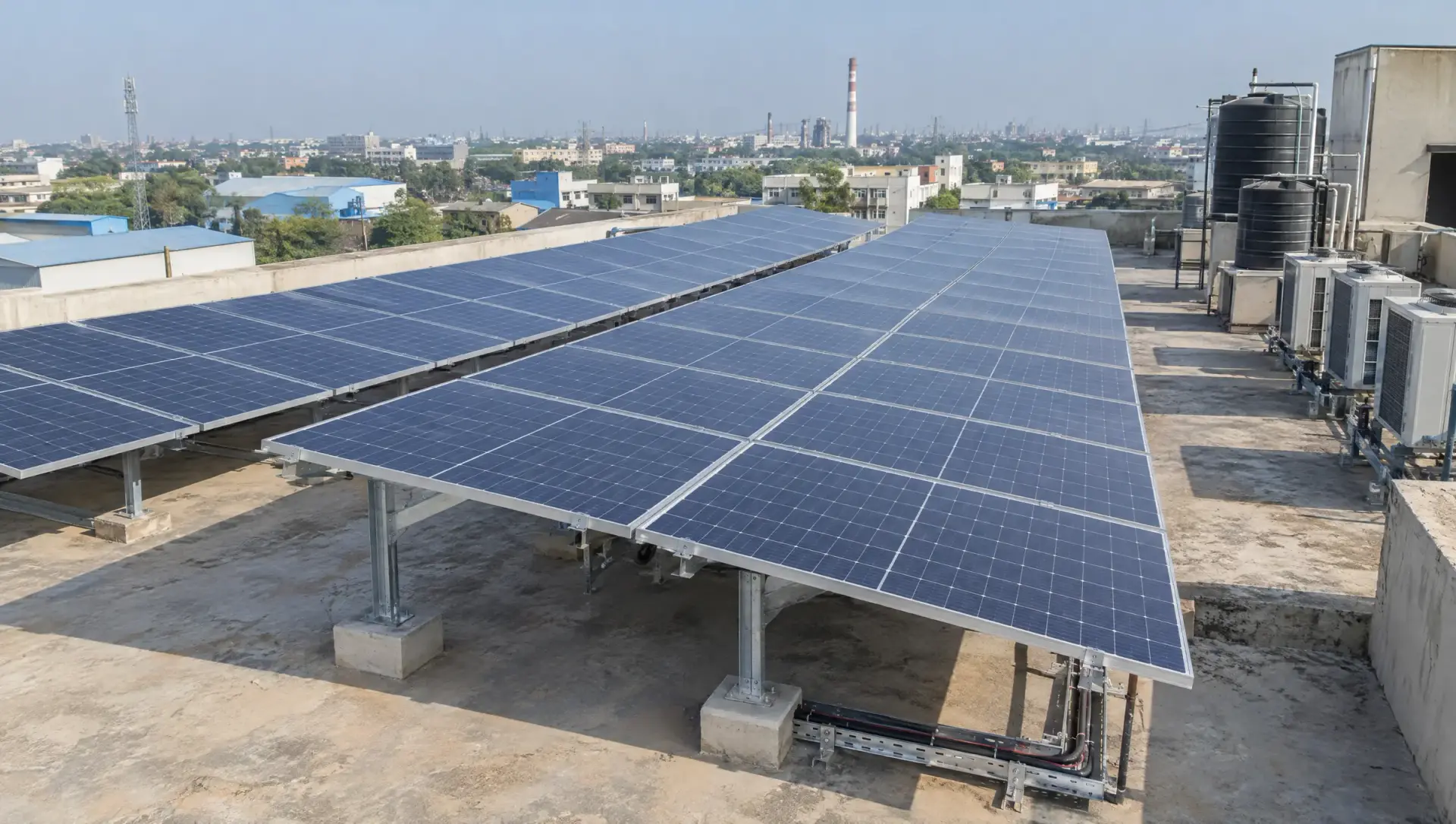
Top 5 Zero Capex Solar Companies In India (2026)
Looking for zero capex solar? Five companies offering rooftop solar with no upfront investment to commercial and industrial businesses in India.
Zero capex solar lets a commercial or industrial business install a solar plant without paying for it upfront. A developer or financing partner funds the plant, and the business pays either a per-unit tariff or a fixed monthly rental. Under standard OPEX or PPA contracts, tariffs typically sit at ₹3.50-5.50 per kWh against grid tariffs of ₹8-12 per kWh.
Five zero capex solar companies are covered below, starting with PowerMore.
PowerMore
PowerMore offers zero capex solar through Solar On Lease: a fixed monthly rental over five years, no upfront investment, and ownership of the plant transferring to the business at zero additional cost. PowerMore designs and installs the plant, while a financing partner holds ownership during the lease term.
Unlike per-unit PPAs that run 15-25 years, the five-year term gives a defined path to ownership. Site assessment, shadow analysis, design and installation stay with PowerMore’s in-house team, and the same team remains responsible for plant performance through the lease.
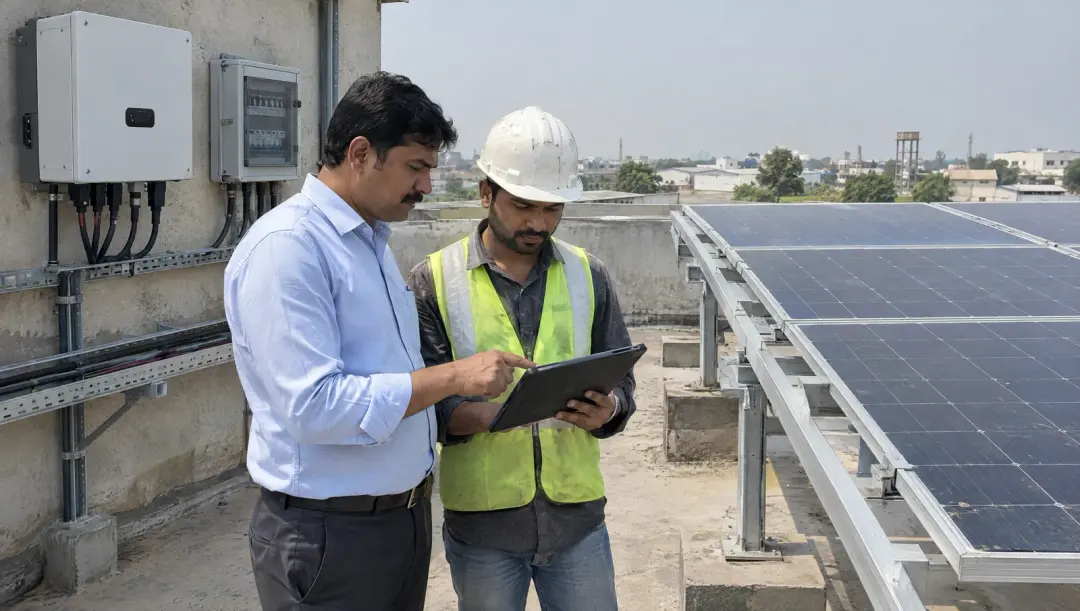
Factory owner and engineer reviewing plant monitoring beside a rooftop solar array and string inverter.
Which Solar Model Fits Your Business?
Capex, Opex PPA, or Open Access — get a site-specific recommendation with system size, savings, and payback in 24 hours.
Roofsol Energy
Maharashtra-based solar EPC company that also invests in OPEX rooftop projects through its own power-producer arm. In 2026 it signed OPEX PPAs for a 10.44 MWp steel plant in West Bengal and a 17 MWp electronics facility in Karnataka.
Guna Solar
Chennai-headquartered solar EPC company with offices in Bengaluru and New Delhi, offering CAPEX, lease, deferred CAPEX and OPEX models. It commissioned a 994.2 kW rooftop plant at a Sriperumbudur manufacturing unit, financed by SIDBI under the OPEX model with no upfront investment from the customer.
The BrightQ Solutions
EPC partner on Solfin’s Performance-Linked Lease for C&I businesses in Himachal Pradesh and Punjab, launched in September 2026. Under the lease, which runs up to 10 years, customer payments are linked to the power the system generates.
Thermax
Engineering company whose solar business offers an OPEX “pay as you consume” model with zero upfront investment. It also offers a lease option in which a leasing company funds the plant and Thermax builds it on an EPC basis.
How Zero Capex Solar Models Differ
| Model | Upfront Cost | Plant Owner During Term | Payment | Ownership At End |
|---|---|---|---|---|
| OPEX / RESCO PPA | Zero | Developer | Per-unit tariff for electricity consumed | Typically stays with the developer unless a buyout is negotiated |
| Lease-to-own (Solar On Lease) | Zero | Financing partner | Fixed monthly rental | Transfers to the business at zero additional cost |
| CAPEX (for comparison) | Full system cost | Business | Not applicable | Business owns from day one |
What To Check Before Choosing A Zero Capex Solar Provider
Tariff And Escalation
Whether the tariff is flat or escalates annually, and how it compares with expected grid tariff increases over the full term.
Tenure And Exit Terms
Contract length, with most PPAs running 15-25 years, and what happens on early exit, relocation or sale of the facility.
Buyout Option
Whether a pre-agreed formula allows conversion to ownership later.
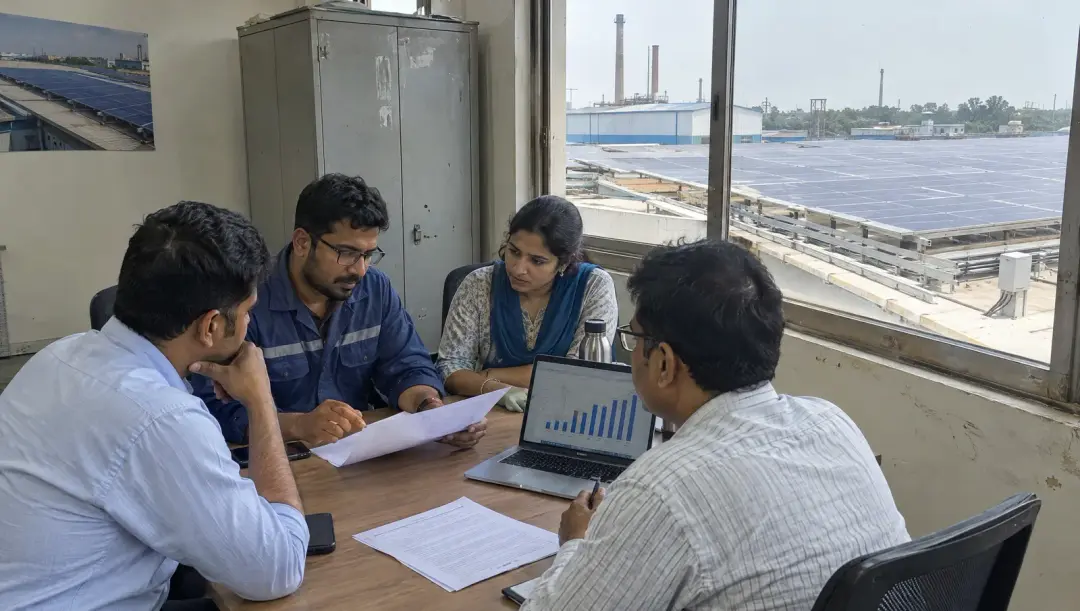
Business team reviewing a solar lease agreement in a factory office.
Generation Guarantee
Whether a minimum generation commitment exists, and what compensation applies if the plant underperforms.
Maintenance Responsibility
Who handles cleaning, servicing and repairs, and the response time for faults.
Roof Rights
For leased premises, landlord consent should be documented before the contract is signed.
Questions buyers ask us.
A way to install solar without paying for the plant upfront. A developer or financing partner funds it, and the business pays per unit or a fixed monthly rental.
It depends on the model. Under OPEX or PPA, the developer typically owns the plant for the full contract. Under lease-to-own, ownership transfers to the business after the lease term.
Generally yes. PPA tariffs typically range from ₹3.50 to ₹5.50 per kWh against grid tariffs of ₹8 to ₹12, though savings depend on the state, the tariff and the escalation terms.
Under OPEX or PPA, the asset owner generally claims it, so the benefit rests with the developer. Treatment under lease-to-own depends on the structure and should be confirmed with a tax advisor.
That depends on the exit terms in the contract, which should be checked before signing.
Per-unit PPAs suit businesses that want the lowest monthly cost and have no interest in owning the plant. Lease-to-own suits businesses that want a fixed rental and eventual ownership. PowerMore compares both against the facility’s tariff and load before recommending either.
Speak To Our Team To Compare Zero Capex Options For Your Facility.