
Solar For Rice Mills: How Much Can You Actually Save?
Rice mills run heavy, continuous loads on expensive industrial tariffs. Here's how much a rice mill can realistically save with solar, and how fast it pays back.
A rice mill doesn't run on light loads. Hullers, polishers, graders, and dryers pull power through 10-12 hour shifts, often longer during peak season, and every one of those hours shows up on an industrial electricity bill that's already among the highest tariff categories in the country.
That combination, heavy continuous load plus expensive industrial tariffs, is exactly why solar for rice mills tends to deliver some of the fastest payback periods of any commercial sector in India.
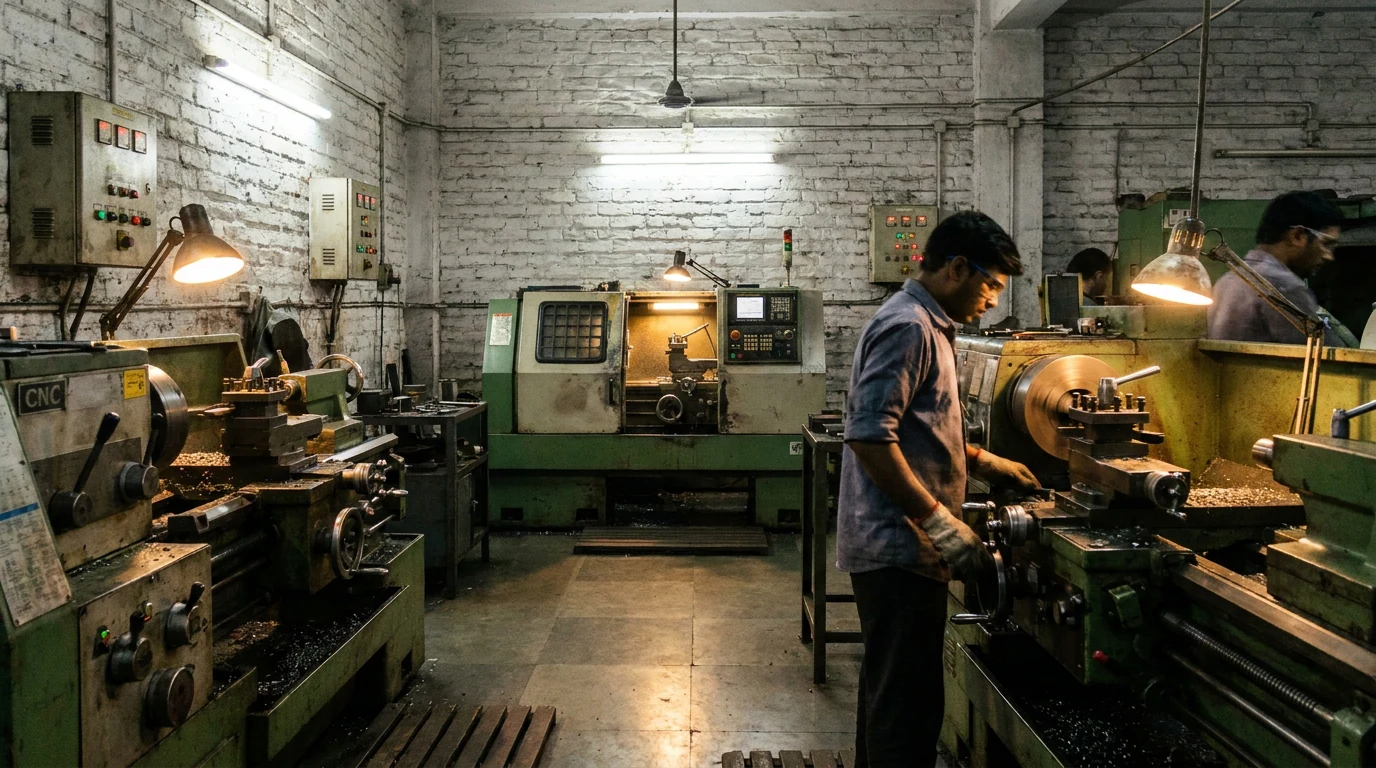
Interior of an Indian mill floor with heavy machinery running under industrial lighting.
Why Rice Mills Are Such Heavy Power Consumers
Rice milling consumes roughly 19.5 kWh per tonne of paddy processed, driven by dehusking, polishing, grading, and drying, stages that run almost continuously through a typical 12-hour operating day. Electricity commonly accounts for 20-40% of a mill's total operational cost, a share large enough that even modest efficiency gains translate into meaningful bottom-line impact.
Many rice mills, particularly those in rural or semi-rural locations, also lose grid power for 2-3 hours daily, forcing reliance on diesel generators that cost considerably more per unit than grid power.
Which Solar Model Fits Your Business?
Capex, Opex PPA, or Open Access — get a site-specific recommendation with system size, savings, and payback in 24 hours.
What Solar Actually Saves, In Real Numbers
Grid power for rice mills typically costs ₹7.5-12 per unit depending on state and connection type, with LT industrial connections generally running ₹6.5-7.5 per unit and HT connections carrying additional demand charges on top of energy charges.
Diesel backup, used during the outage hours most rural mills experience, costs considerably more, typically ₹16-22 per unit once fuel, maintenance, and generator wear are factored in.
Solar displaces both, and the savings compound specifically during outage hours: shifting even 25% of a mill's annual consumption from diesel to solar can save ₹13-19 per unit on that portion alone, a meaningful chunk of total operating cost for mills currently leaning on generators.
A Realistic Savings Example
For a mid-sized mill, a 60 kWp solar system, a common starting point sized to typical rice mill consumption, costs roughly ₹27 lakh to install and delivers annual savings in the ₹7-10 lakh range. That works out to a payback period of 3-4.5 years before tax benefits, compressing further to 2.5-3.5 years once accelerated depreciation is factored in.
At smaller scale, even a 25-50 kW system can cut monthly electricity bills by 25-40%, a meaningful reduction for smaller mills not yet ready for a larger installation.
Larger mills scale accordingly. Real-world rooftop installations in the 800 kW to 1.8 MW range for rice and food processing operations have delivered annual savings between ₹88 lakh and nearly ₹2 crore, with ROI in the 29-31% range and payback periods consistently landing between 3.3 and 3.5 years, demonstrating that the underlying economics hold up at scale, not just for smaller pilot installations.
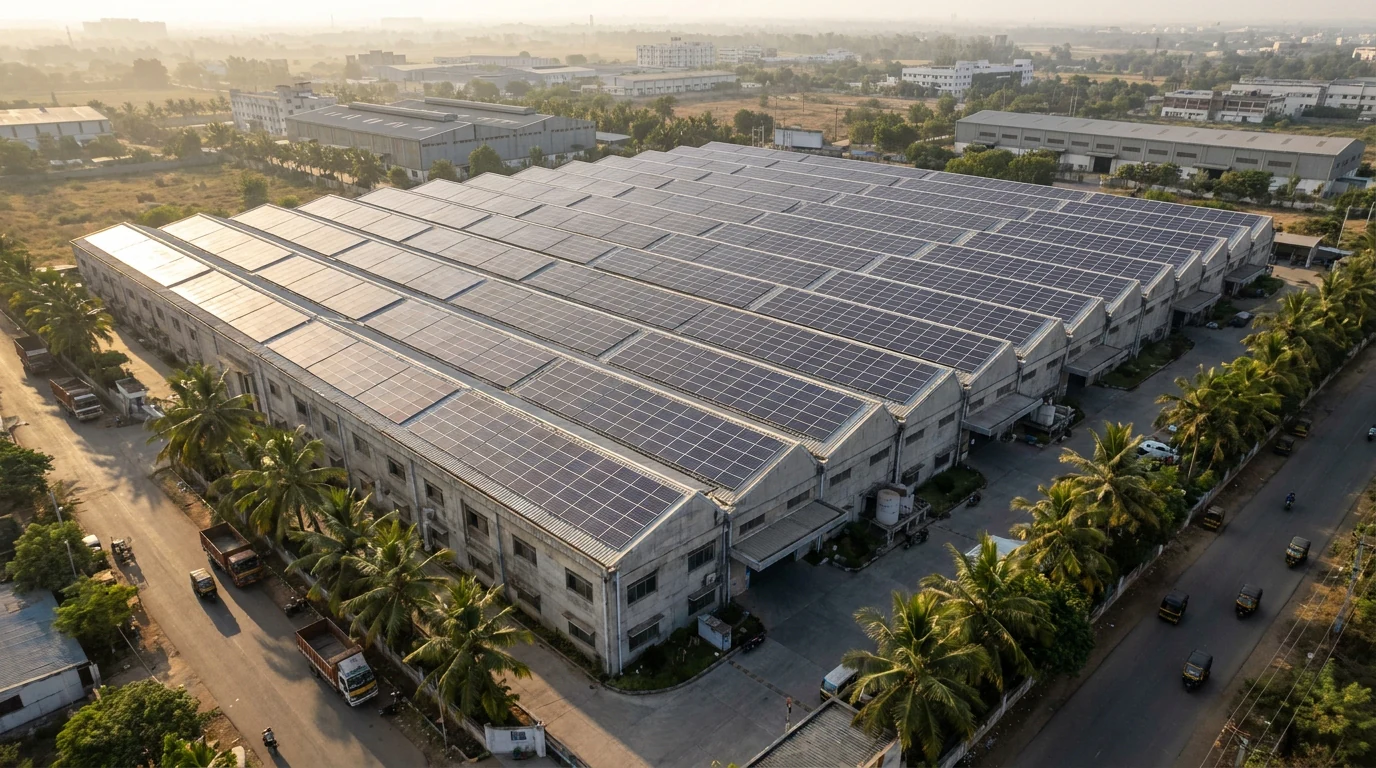
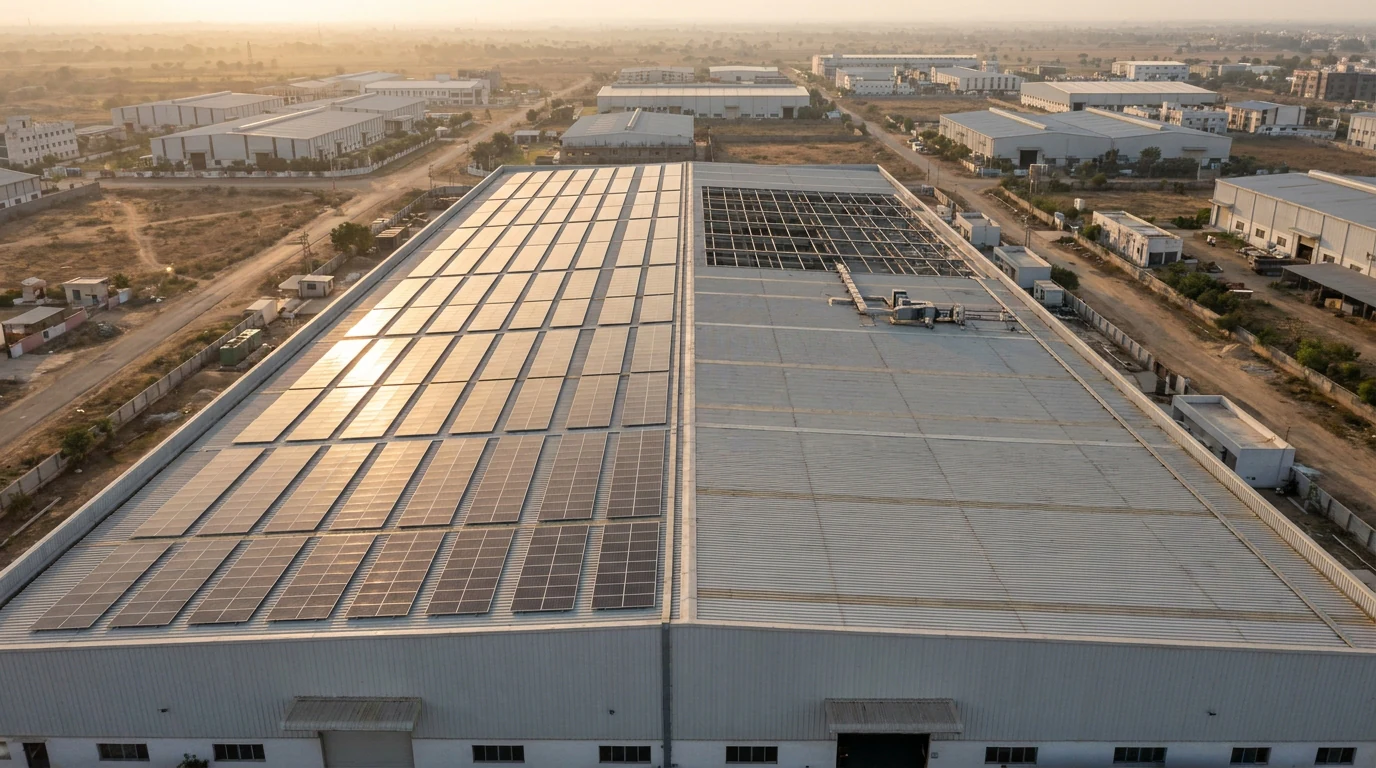
Rooftop solar array over an industrial facility roof, catching morning light.
Why Rice Mills See Faster Payback Than Many Other Sectors
Three factors specifically work in a rice mill's favor:
Daytime-Heavy Operations
Milling typically runs during daylight hours, aligning closely with solar generation, meaning a larger share of consumption gets offset directly rather than relying on grid export credits.
High Baseline Consumption
Since electricity already represents a large share of operating cost, even a partial solar offset translates into substantial absolute rupee savings, not just a modest percentage improvement.
Accelerated Depreciation Access
Under the CAPEX ownership model, rice mills can claim accelerated depreciation of up to 40% in the first year on solar assets, meaningfully reducing taxable income and shortening effective payback beyond what the raw savings number alone would suggest.
What Financing Options Apply?
PM-KUSUM, India's flagship agricultural solar scheme, does not directly subsidize rice mills, since it's structured primarily around farm-level irrigation and standalone agricultural pumps. Instead, rice mills typically finance solar through standard industrial net metering, MSME-focused loan schemes, and the accelerated depreciation benefit available under CAPEX ownership.
Should A Rice Mill Consider Hybrid Solar?
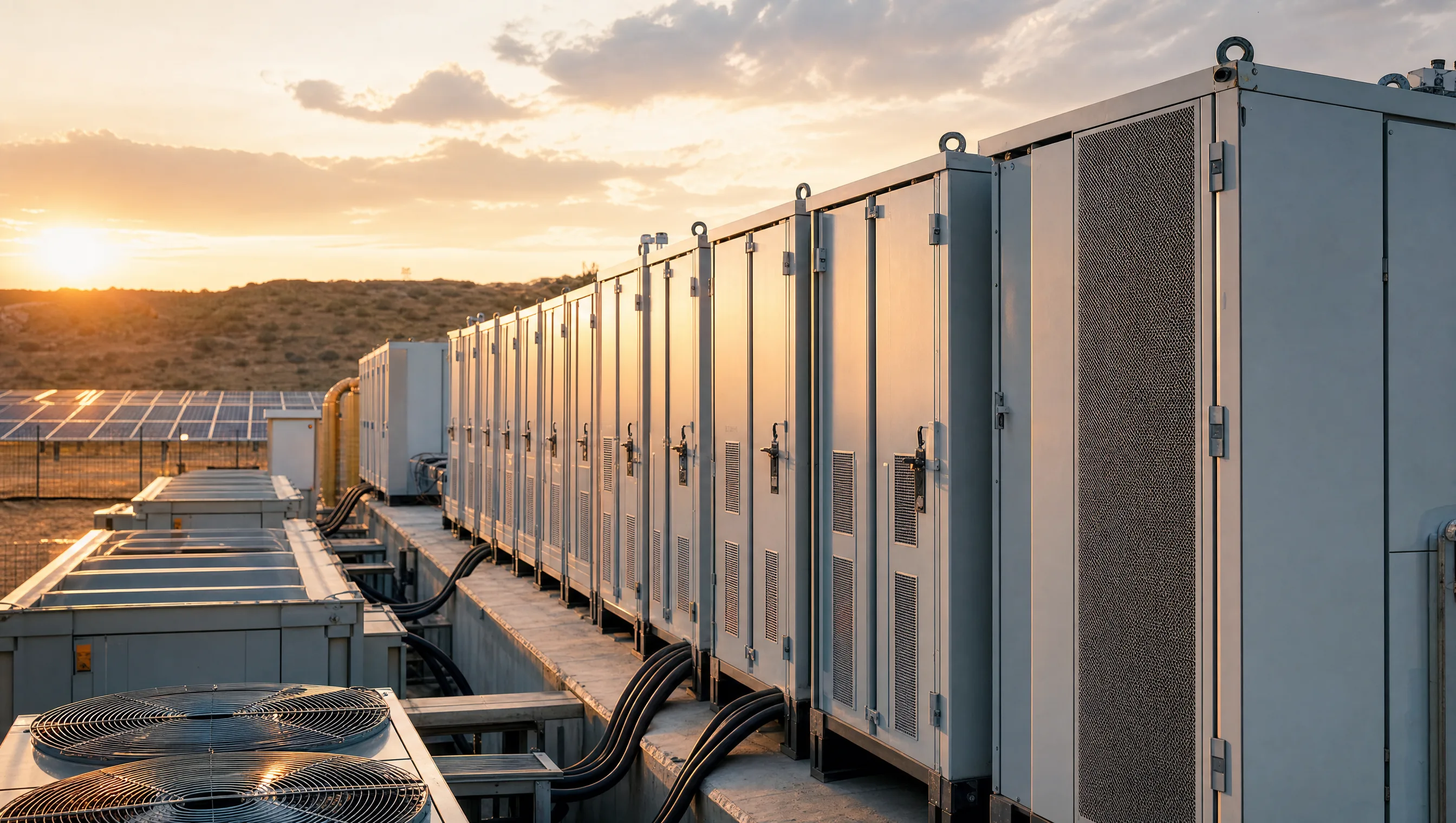
Given how common grid outages are in rural rice-milling regions, a standard grid-tied system covers daytime operations well but doesn't help during outage hours. For mills experiencing frequent power cuts, a hybrid system with battery backup reduces dependency on diesel generators specifically during those outage windows, though the higher upfront cost of battery storage means this option suits mills where outage frequency and diesel cost are high enough to justify it.
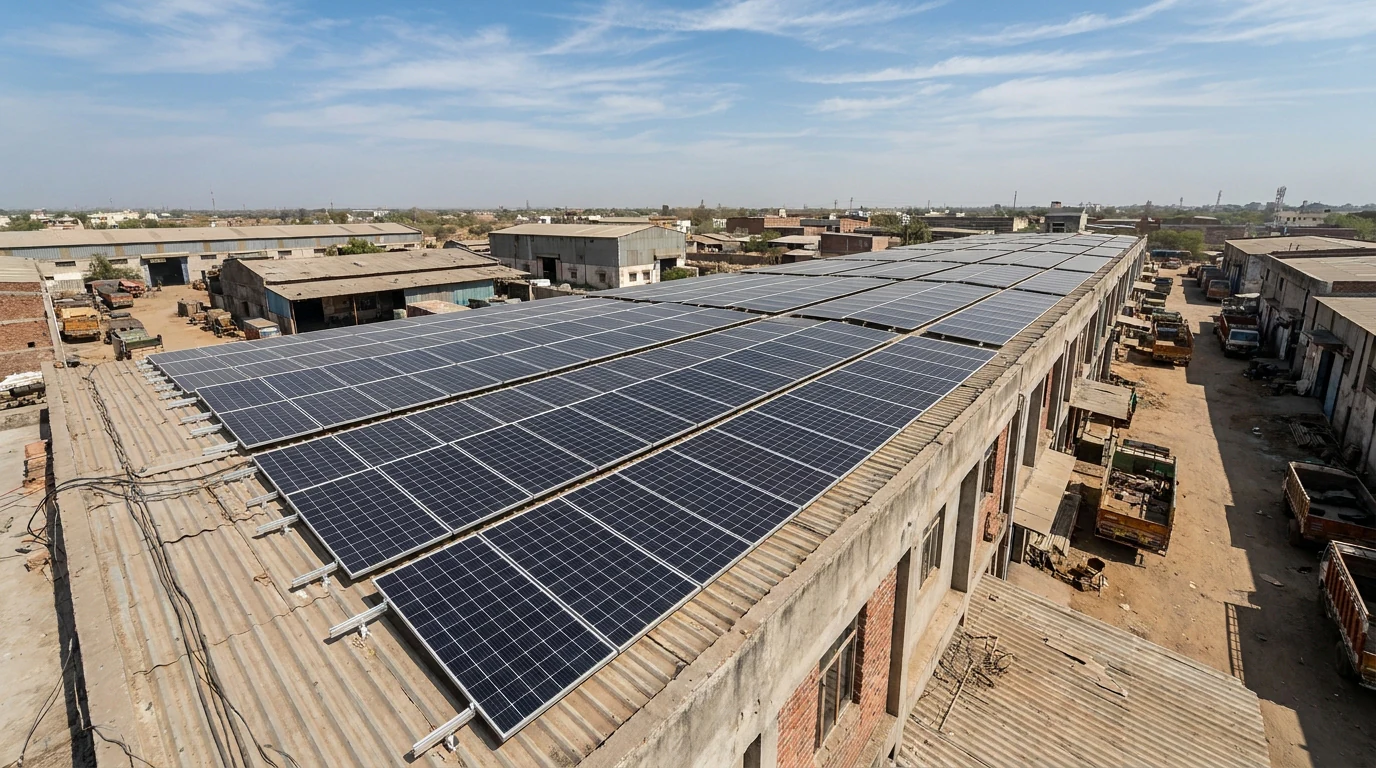
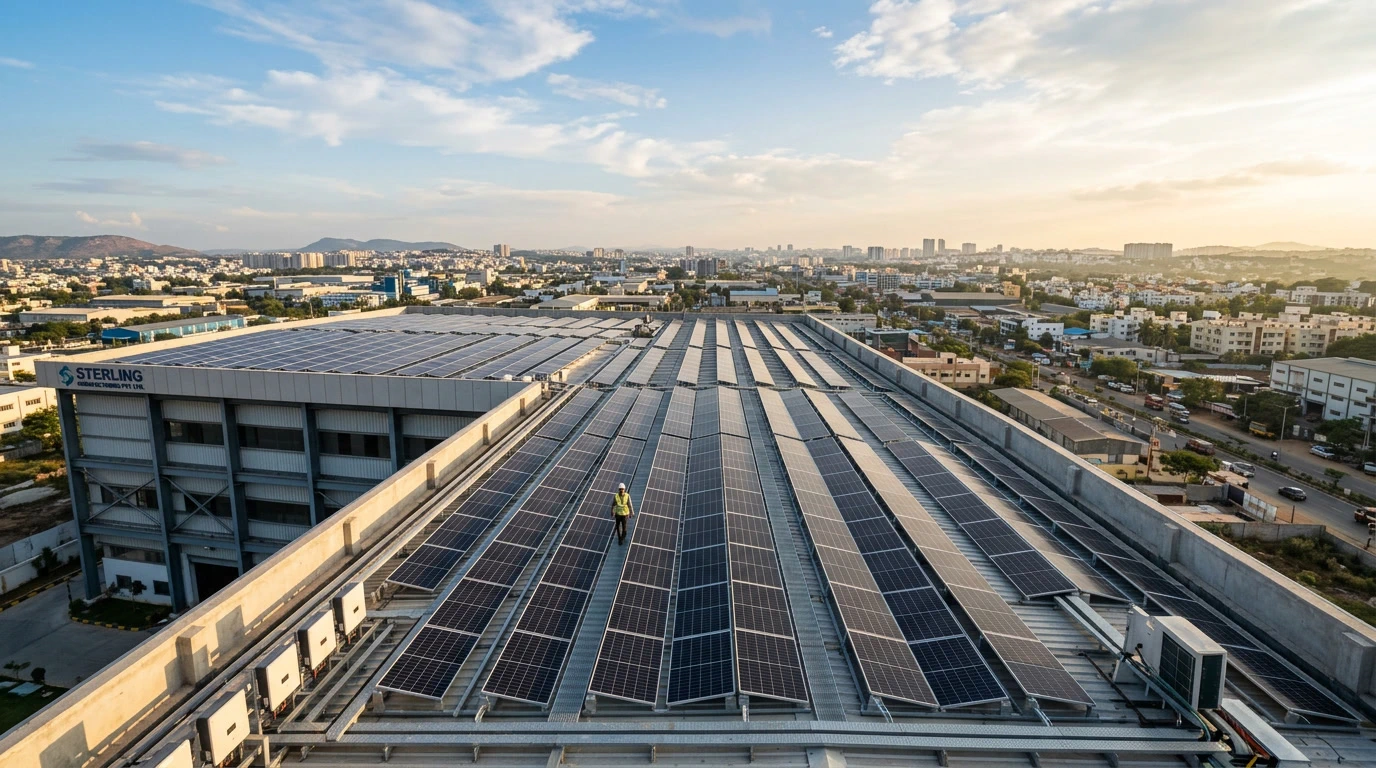
Rows of solar modules on an MSME rooftop, glinting in the afternoon sun.
Questions buyers ask us.
A mid-sized 60 kWp system typically saves ₹7-10 lakh annually, while larger installations in the 800 kW-1.8 MW range have delivered ₹88 lakh to nearly ₹2 crore in annual savings.
Typically 3-4.5 years before tax benefits, shortening to 2.5-3.5 years once accelerated depreciation is factored in.
No. PM-KUSUM is structured around farm-level irrigation and agricultural pumps; rice mills typically use industrial net metering and MSME loan schemes instead.
Significantly so. Diesel typically costs ₹16-22 per unit against solar's effectively much lower cost over its 25-year life, making solar a strong replacement for outage-hour power specifically.
It depends on outage frequency. Mills facing regular power cuts benefit from hybrid systems with battery backup; mills with reliable grid access are often well served by a standard grid-tied system alone.
At PowerMore, solar sizing for a rice mill starts with actual annual consumption and operating hours, not peak-month estimates, so the system reflects real, year-round savings rather than an optimistic best-case number.
Speak to our team to evaluate solar savings for your rice mill.