
How To Choose A Solar EPC Partner: 7 Questions That Matter
Not all solar EPC pitches are equal. Here are the 7 questions that actually separate a reliable partner from a risky one, before you sign anything.
Every solar EPC pitch sounds roughly the same. Reliable execution. Quality components. Strong after-sales support. The words don't tell you anything, the answers to specific questions do.
A solar plant runs for 25 years. The vendor sitting across the table today is the one accountable for every one of them. Here's how to actually find out if they deserve that.
1. Walk Me Through Your Site Assessment Process
Don't ask if they do shadow analysis, ask them to describe it. A vendor who's actually done the work will talk you through sun path modeling, obstruction mapping, and seasonal variation without hesitating. A vendor who hasn't will reach for buzzwords instead of specifics.
What to listen for: Names of tools, references to past projects, a clear sequence of steps. Vagueness here predicts vagueness in the actual engineering.
Which Solar Model Fits Your Business?
Capex, Opex PPA, or Open Access — get a site-specific recommendation with system size, savings, and payback in 24 hours.
2. Who's Physically Installing This, Your Team Or Someone Else's?
Many EPC companies handle sales and design in-house but subcontract the actual installation, sometimes to a different crew for every project. That creates a real accountability gap: if a wiring fault or loose mounting bolt surfaces months later, the question becomes whether your EPC partner owns the fix, or points to a subcontractor who's already moved on.
Follow-up worth asking: "If there's an issue post-installation, who do I call, you or the subcontractor?" A specific, confident answer is a good sign; a vague "we'll coordinate with them" isn't.
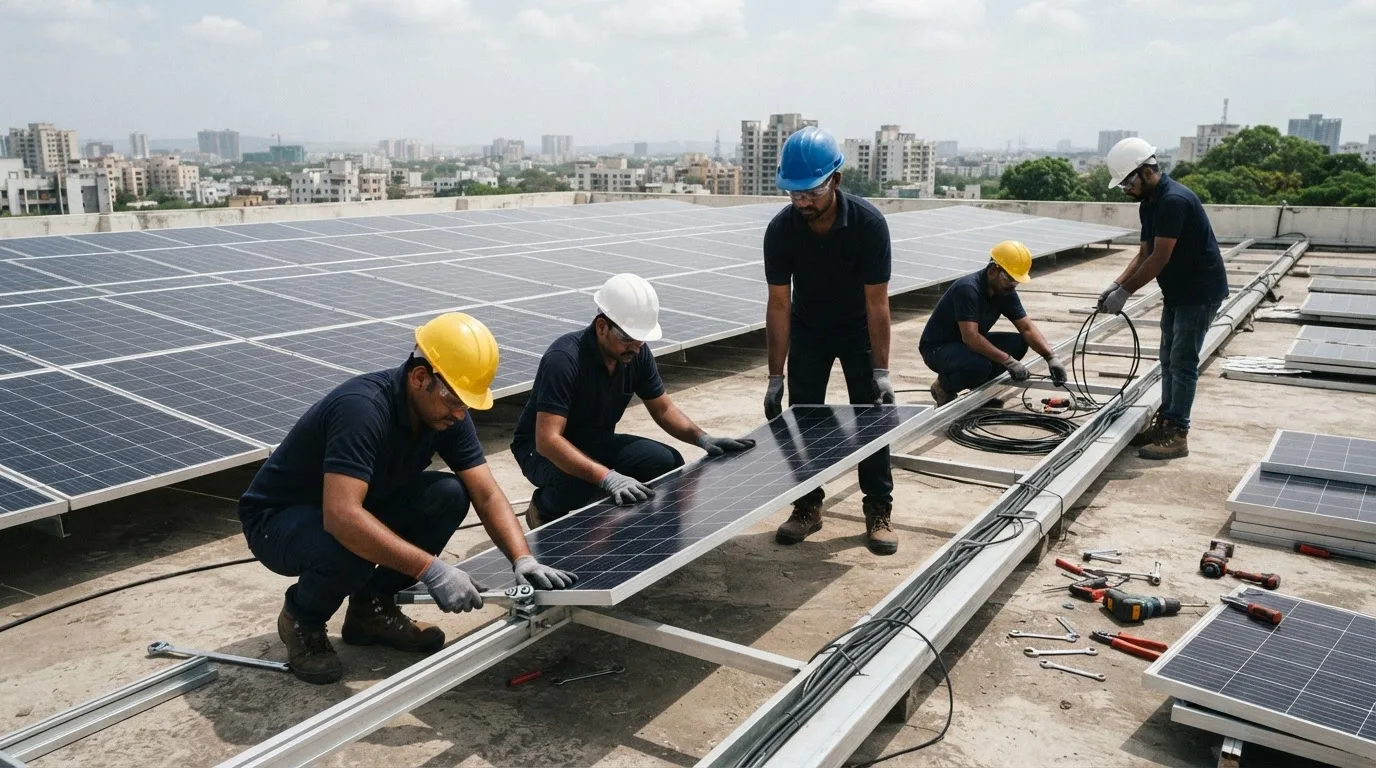
Installers and project engineers from an in-house EPC crew on a commercial rooftop project.
3. What Happens If My Plant Generates Less Than Promised?
Every vendor hands over a generation estimate, expected kWh, savings, payback period. Far fewer will attach a real guarantee to those numbers. A confident vendor typically offers a Performance Ratio guarantee with clearly defined compensation if the plant underperforms against it, not just a verbal.
What separates real vendors from optimistic ones: a defined performance guarantee with actual compensation terms, not just "we'll look into it."
4. Show Me An Itemized Quote, Not Just A Final Number
A lump-sum figure hides everything that actually determines a system's quality: panel tier (Tier 1 vs Tier 2), inverter grade and warranty length, mounting structure material, and labor cost.
Two quotes at the exact same price can represent genuinely different systems, one with premium panels and a 25-year warranty, another with lower-tier components that degrade faster.
Ask for a component-by-component breakdown. A vendor who resists itemizing may be less transparent about where costs, and cuts, are actually being made.

Business owner reviewing an itemised solar proposal side-by-side with an EPC advisor.
5. What's Actually Included In Your O&M Contract?
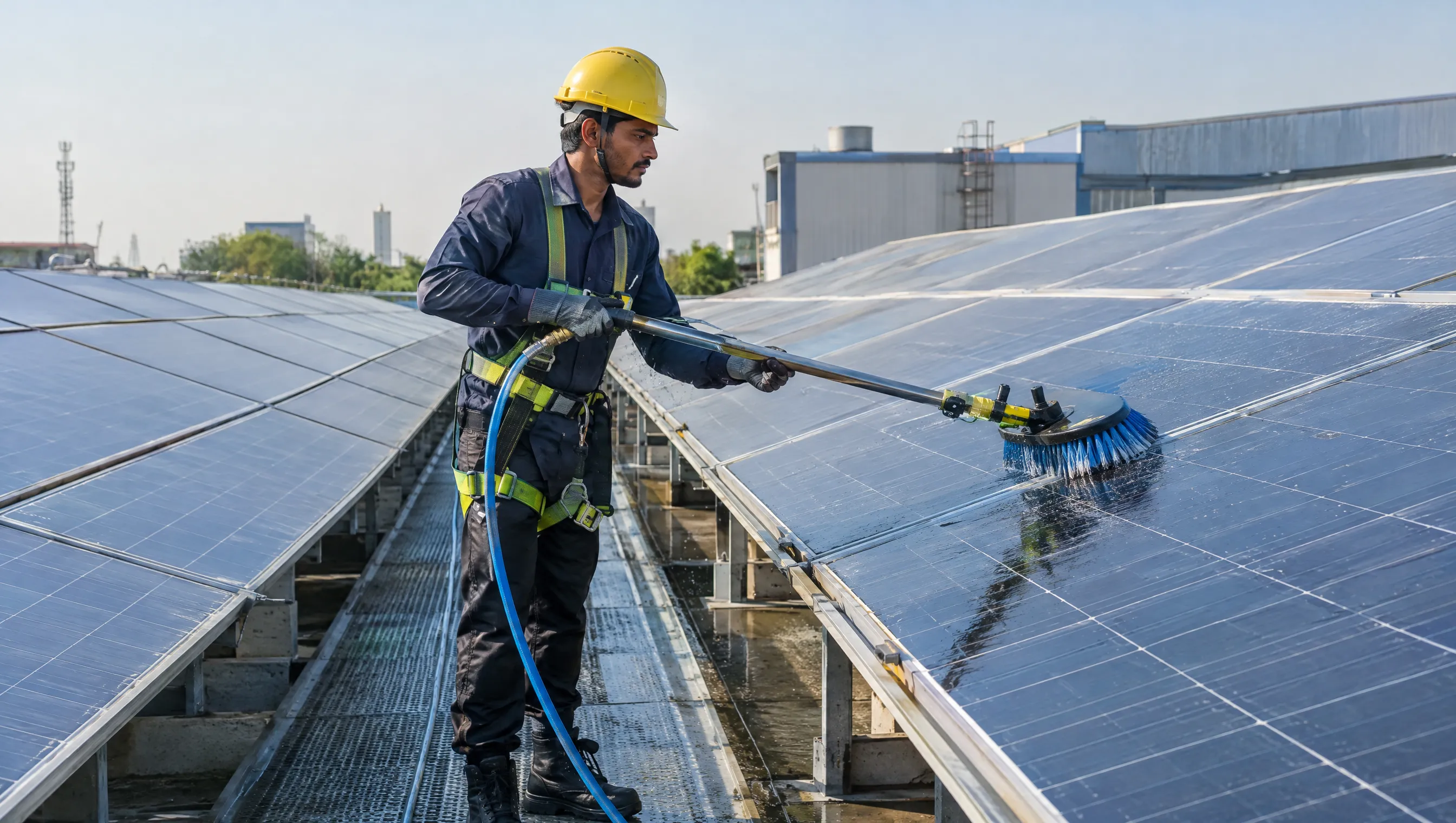
Cleaning frequency, inspection cycles, fault response time, and whether corrective repairs are covered or billed separately, get all of this in writing, not as a verbal assurance.
A common gap: contracts that sound comprehensive verbally often cover only preventive maintenance once the fine print is read, leaving repairs as a surprise extra cost.
A useful gut check: ask what happens if a fault isn't fixed within 48 hours. A vendor with a real service commitment will have a specific answer ready.
6. Can I Talk To A Client With A Similar Project Size?
Not a testimonial from their website, an actual introduction to a business your size, a year or two into their system, who can speak honestly about how it's held up. This is one of the hardest things to fake, a real conversation surfaces details a pitch won't: how fast issues actually got resolved, whether promised numbers held up.
Reluctance here is itself an answer.
7. What Financing Model Do You Recommend For My Situation, And Why Not The Others?
CAPEX, OPEX, and group captive suit different businesses depending on capital and risk appetite. A genuinely advisory partner explains why one model fits your specific numbers better than the alternatives, rather than pushing whichever model they sell most aggressively regardless of your situation.
A vendor recommending OPEX to everyone, or CAPEX to everyone, is optimizing for their preferred deal, not your fit.
What These Questions Actually Reveal
None of these questions are about catching a vendor in a lie. They're about watching how they respond, specificity versus vagueness, confidence versus deflection. A partner worth signing with will welcome every one of these questions. A partner worth avoiding will make you feel like asking them was somehow rude.
Questions buyers ask us.
Whether installation is handled in-house or subcontracted, since it determines who's actually accountable if something goes wrong later.
Yes. Comparing itemized quotes and vendor responses to these questions makes real differences visible, differences that a single price comparison alone would miss.
Completely reasonable, and a vendor's willingness to connect you with a genuine client is itself a meaningful signal of confidence in their own work.
PowerMore doesn't flinch at any of these seven questions, because the answers are already how we operate: in-house site assessment and installation, performance-backed generation estimates, fully itemized quotes, documented O&M commitments, and financing advice based on what actually fits a business, not what's easiest to sell. That's genuinely what it means to know how to choose a solar EPC partner, one that welcomes the scrutiny instead of avoiding it.
Speak to our team and ask us these questions directly.