TOPCon Vs Mono PERC Vs Bifacial: Which Panel Fits A Factory Roof?
TOPCon, Mono PERC, and Bifacial panels each fit different factory roof types and budgets. Compare efficiency, cost, and durability before choosing.
Panel technology is one of the few decisions in a solar project that gets locked in permanently: once installed, a factory is generating from that technology for the next 25 years. Getting this choice wrong isn't fatal, but getting it right can noticeably change lifetime generation for the same rooftop.
The three technologies compared here aren't entirely separate categories. Mono PERC and TOPCon describe the cell architecture, while "Bifacial" describes a panel design (usually built on TOPCon cells today) that generates from both sides. The real decision is less "pick one of three" and more "understand what each does, then match it to the roof."
Quick Comparison
| Factor | Mono PERC | N-Type TOPCon | Bifacial (TOPCon) |
|---|---|---|---|
| Efficiency | 20-22% | 21-23.5% | 21-23.5% (plus rear-side gain) |
| Performance In Heat | Weaker | Better | Better |
| Annual Degradation | Higher | Lower | Lower |
| Typical Warranty | 25 years (80-84% output at year 25) | 30 years (87-89% output at year 30) | 30 years, similar to TOPCon |
| Upfront Cost | Lowest | Moderate premium over Mono PERC | Highest, further premium over monofacial TOPCon |
| Best Suited Surface | Any standard rooftop | Any standard rooftop, especially space-constrained | Flat, reflective, or light-colored surfaces |
Which Solar Model Fits Your Business?
Capex, Opex PPA, or Open Access — get a site-specific recommendation with system size, savings, and payback in 24 hours.
Mono PERC: The Established, Lower-Cost Option
Mono PERC has been the default commercial panel technology for several years and remains a reasonable choice, particularly where budget is the primary constraint.
Where It Still Makes Sense
Facilities prioritizing lowest upfront cost, with adequate roof area, and without a strong need to maximize generation from a limited footprint.
The Trade-Off
Mono PERC panels degrade faster and perform comparatively worse in high-temperature conditions than TOPCon. That is a relevant factor for factory rooftops, which often run hotter than ground-level ambient temperature due to heat radiating off industrial roofing.
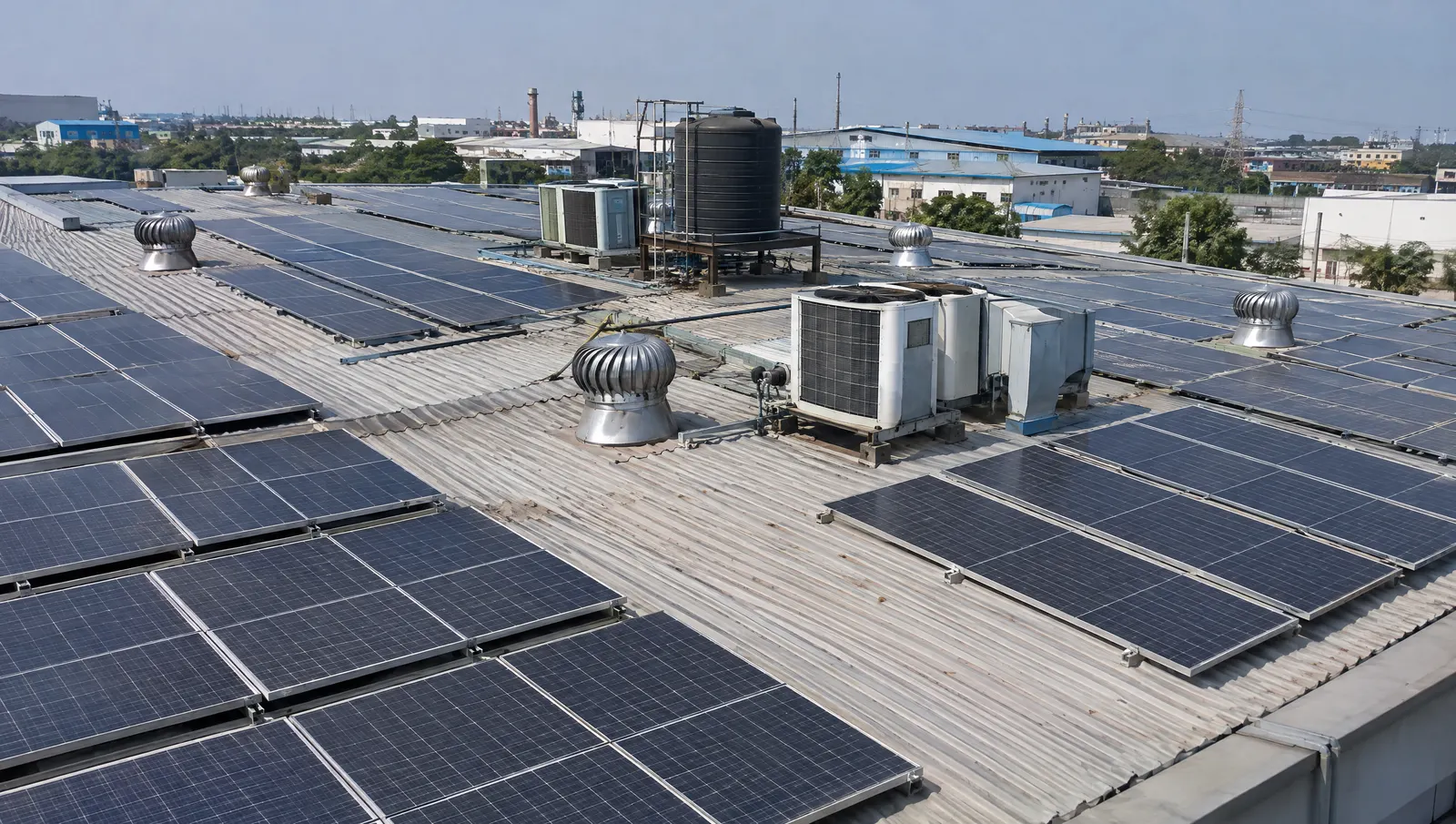
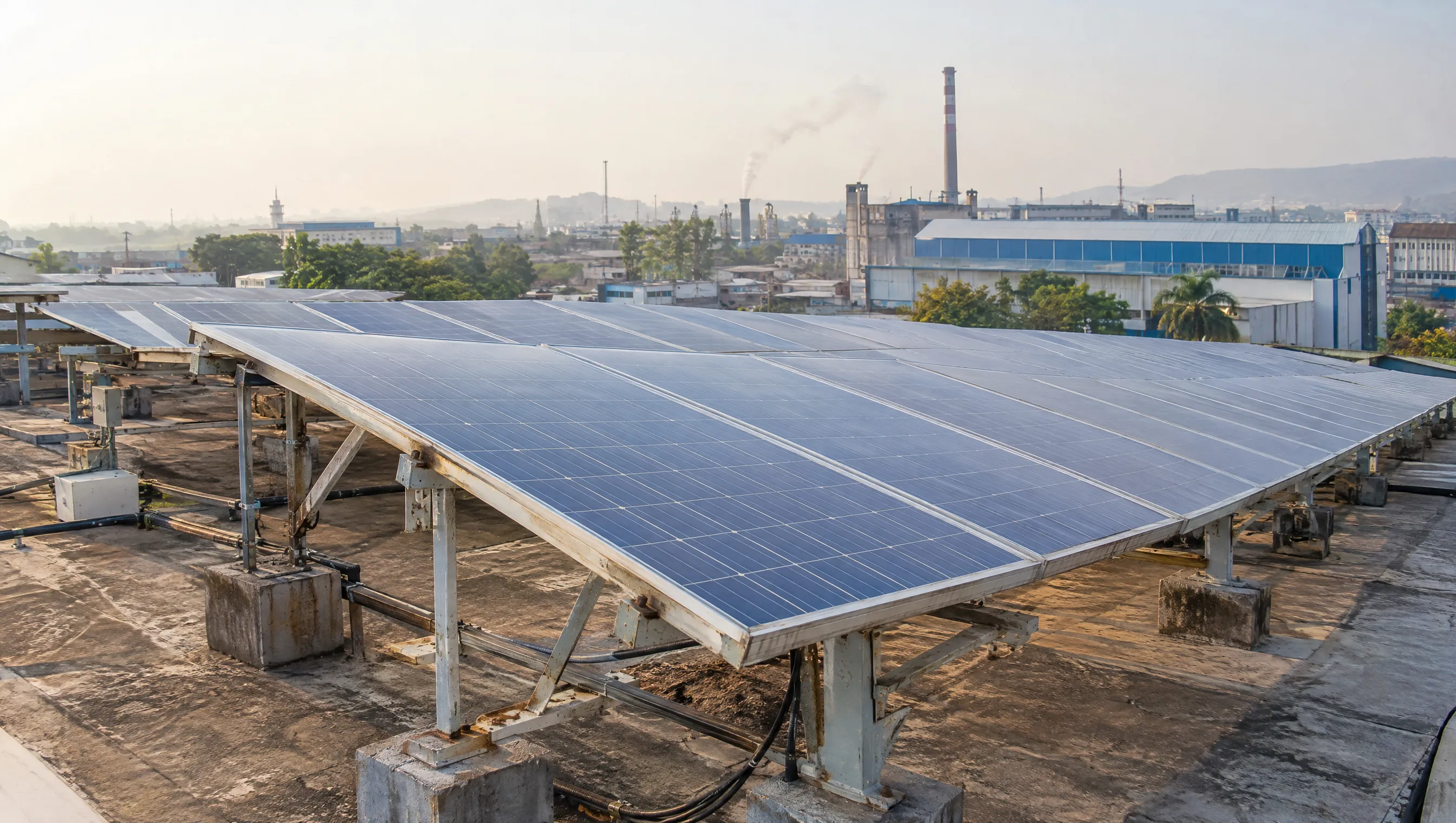
Monofacial solar modules on an Indian factory's metal shed roof, with usable area limited by ventilators, a water tank and HVAC units.
TOPCon: The Current Standard For Commercial Projects
TOPCon has become the default technology specified in most new utility-scale and commercial tenders in India, and for good reason: it improves on Mono PERC across nearly every performance metric.
Why It's Gained Ground
Better performance in heat, stronger low-light generation, slower degradation, and a longer effective warranty period. The gap in generation between TOPCon and Mono PERC compounds over a 25-year system life, often making TOPCon the better lifetime-value choice even at a higher upfront cost.
Where It Fits Best
Space-constrained rooftops, where higher efficiency per panel means fewer panels are needed to hit a target capacity. This is directly relevant when a factory's usable roof area is already limited by tanks, HVAC units, or structural constraints.
Bifacial: Highly Roof-Dependent, Not Universally Better
Bifacial panels generate from both the front and rear side of the module, capturing reflected light off the surface beneath them. This is the technology most misunderstood in practice, because its benefit depends entirely on what it's installed on.
Where Bifacial Performs Well
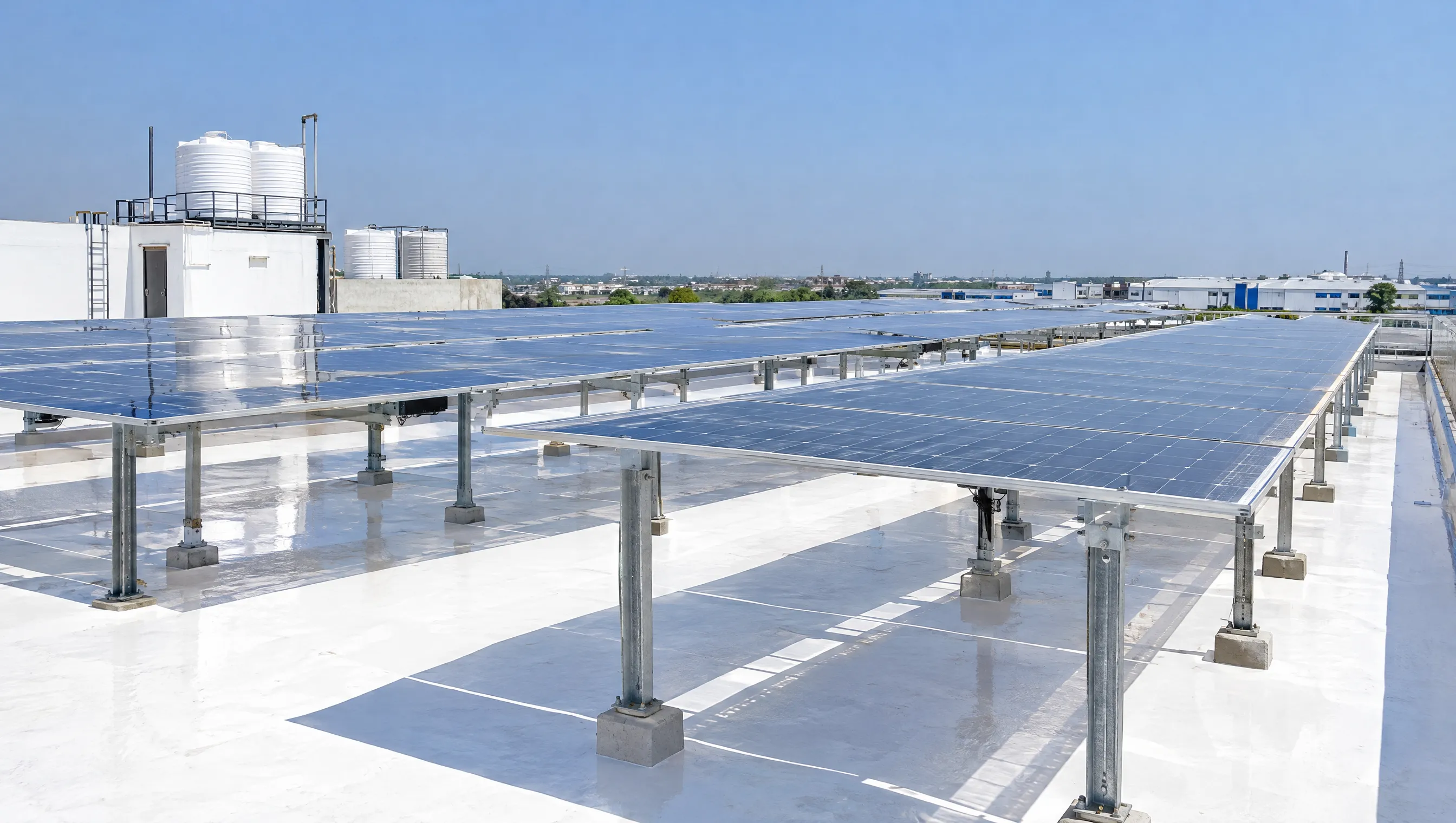
On flat concrete or RCC rooftops, especially light-colored or white-coated surfaces, bifacial gain has been observed in the range of 8-12% additional annual generation compared to an equivalent monofacial panel. This makes bifacial genuinely worth the premium for a large share of Indian factory rooftops, which are predominantly flat RCC construction.
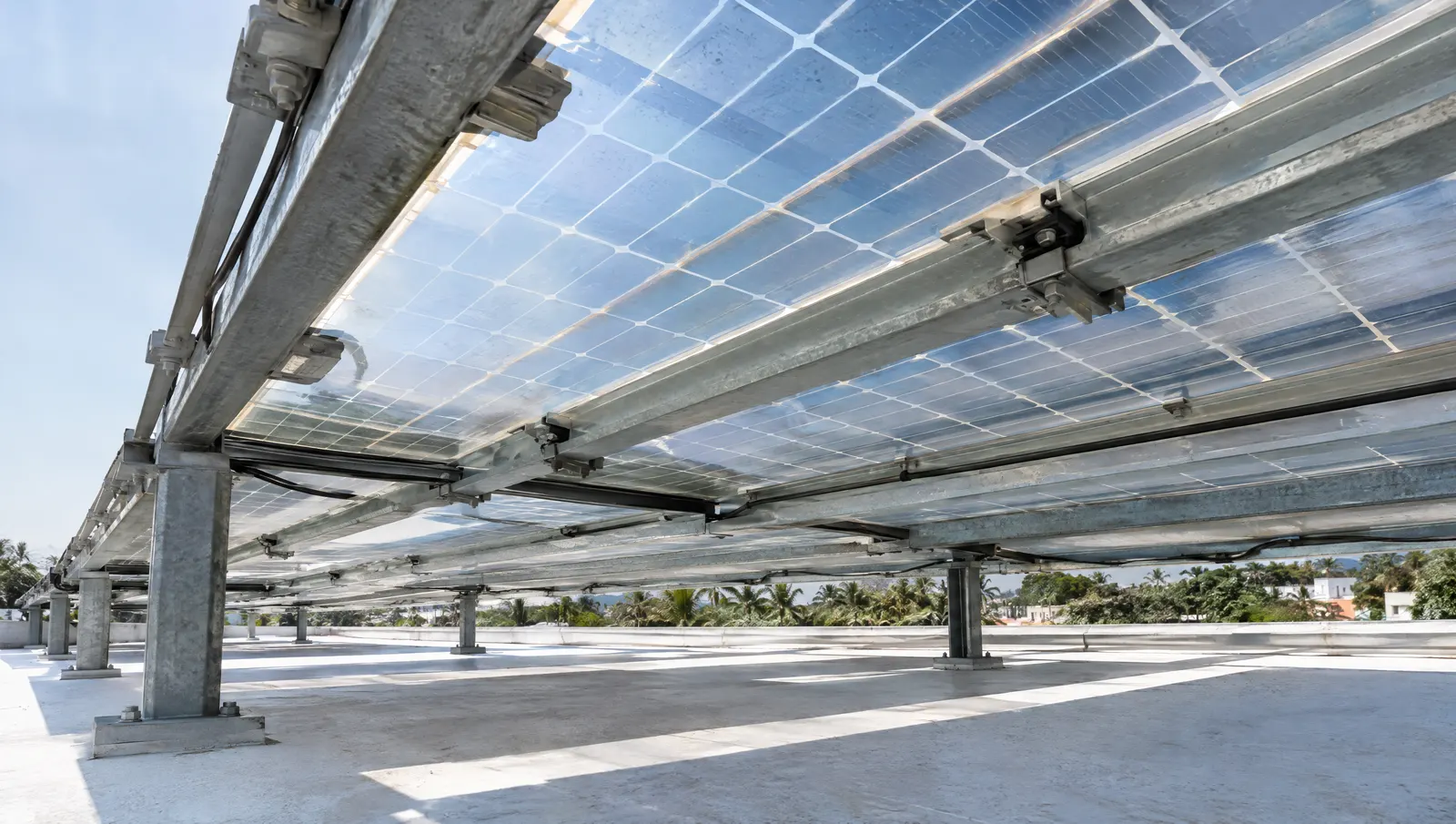
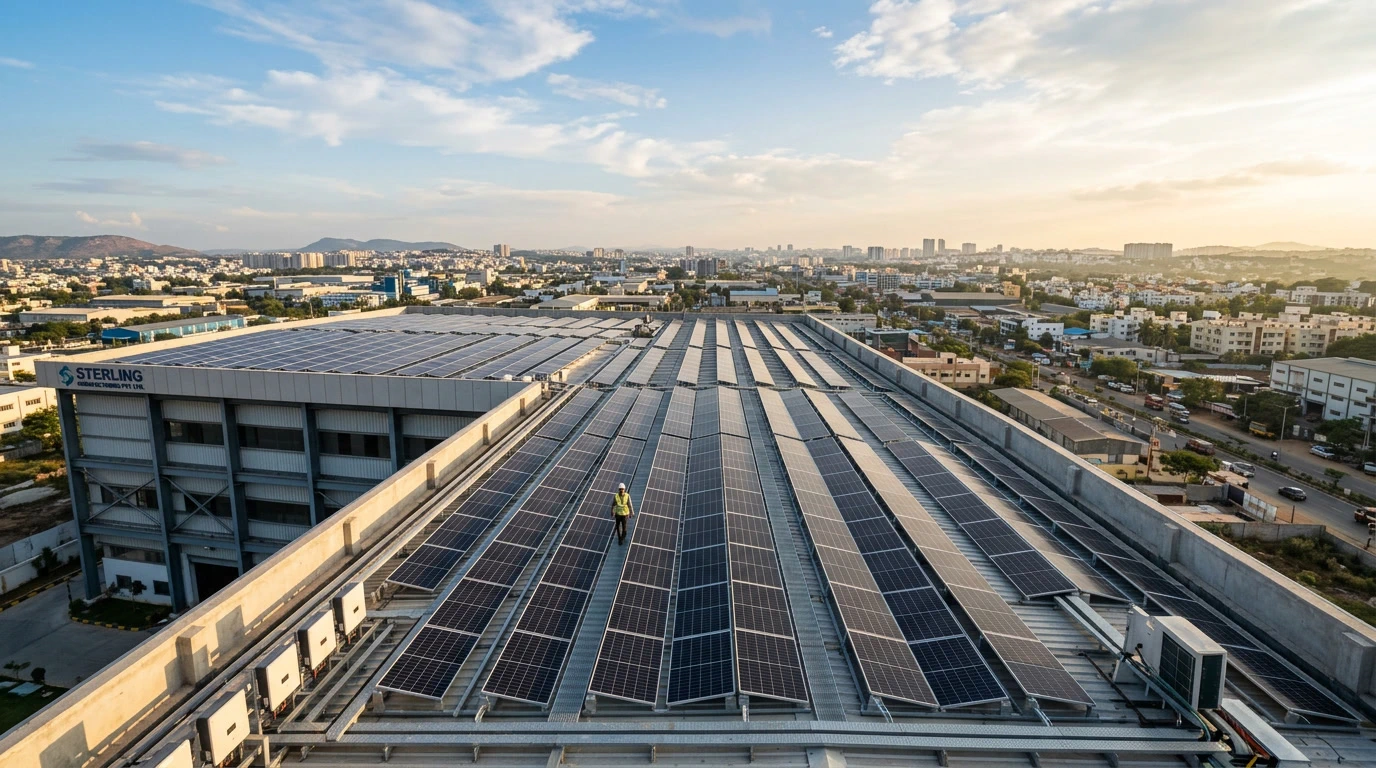
Rear side of elevated bifacial glass-glass modules above a white reflective roof, where light reaching the back of the panel adds generation.
Where Bifacial Adds Little Value
On sloped or tile roofing, or dark-surfaced rooftops with minimal reflectivity, the rear-side gain drops to as little as 1-5%, which often does not justify the additional cost over a standard monofacial panel.
A Practical Note
For a factory with a dark flat roof, painting the roof surface white or light-colored before installation can materially improve bifacial gain. It is worth evaluating as part of the site assessment rather than assuming the roof's current surface is fixed.
Decision Framework For A Factory
| If The Factory Has | Consider |
|---|---|
| Ample roof area, tight budget | Mono PERC |
| Limited usable roof area | TOPCon (monofacial) |
| Flat, light-colored RCC roof with room to invest slightly more | Bifacial TOPCon |
| Dark or sloped roofing | TOPCon (monofacial), since bifacial gain won't justify the premium |
| Long-term ownership plans (25+ years) | TOPCon or Bifacial, for the slower degradation and longer warranty |
Questions buyers ask us.
In most cases, yes. TOPCon offers higher efficiency, better heat performance, and slower degradation. The higher upfront cost is often offset by greater lifetime generation, particularly on space-constrained roofs.
No. Bifacial gain depends heavily on the surface beneath the panel. Flat, reflective rooftops see meaningful gains, while sloped or dark roofs see minimal benefit, often not justifying the added cost.
Yes. Higher-efficiency panels like TOPCon require less roof area for the same capacity compared to Mono PERC, which matters for factories with constrained usable rooftop space.
Not entirely, but TOPCon has become the default in most new commercial and utility-scale projects. Mono PERC remains a valid, lower-cost option where budget is the primary constraint.
Yes. Applying a white or light-colored coating to a dark roof surface can meaningfully improve the rear-side generation gain from bifacial panels.
At PowerMore, we assess a factory's roof type, available area, and budget priorities before recommending a panel technology, rather than defaulting to a single specification across every project.
Talk to our team to find the right panel technology for your factory's roof.