
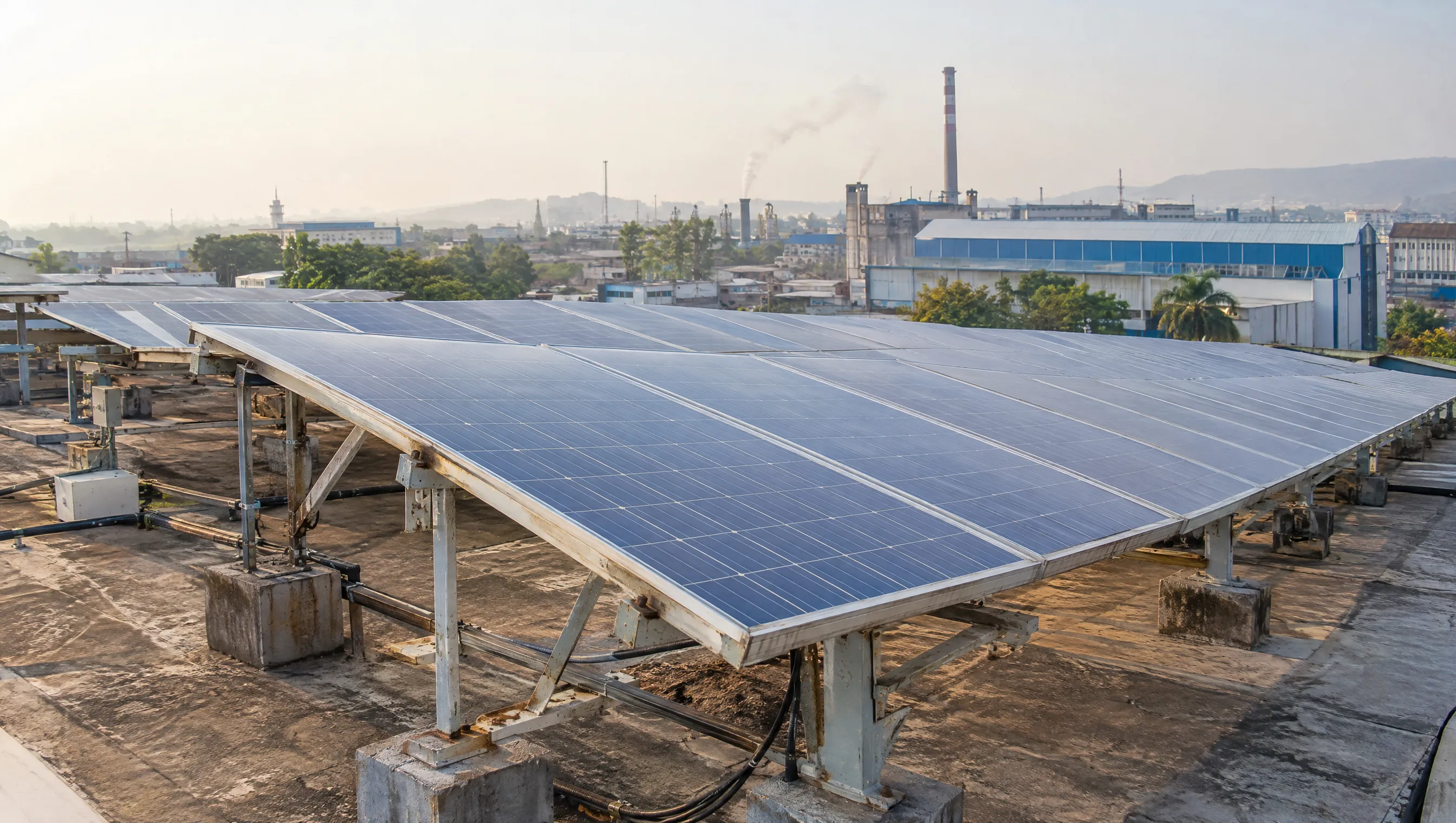
Solar Panel Degradation: What Output To Expect After 10 Years
Solar panels typically lose roughly 5% to 8% of their output within 10 years. See degradation by panel type, what warranties promise and what speeds the loss.
Solar panels do not stop working suddenly. They lose a small share of their output every year, and after 10 years a typical system still delivers roughly 92-97% of what it produced in year one.
Knowing that number matters for a business, because savings projections over 25 years depend on it.
Typical Output Loss After 10 Years
Most panels lose about 0.3-0.8% of their output per year. After 10 years, that adds up to roughly 3-8%. Quality panels sit at the lower end, and poorly performing ones at the higher end.
Which Solar Model Fits Your Business?
Capex, Opex PPA, or Open Access — get a site-specific recommendation with system size, savings, and payback in 24 hours.
What Degradation Means
Degradation is the gradual fall in a panel's power output over time. It is caused by the materials aging, and it is separate from dirt on the panels, shading, or inverter faults.
Output After 10 Years
NREL's review of about 2,000 measured degradation rates found a median of 0.5% per year, and an average of 0.8% per year because of a long tail of lower-quality products.
| Annual Degradation | Output After 10 Years |
|---|---|
| 0.3% | About 97% |
| 0.5% (median) | About 95% |
| 0.8% (average) | About 92% |
| 1.0% | About 90% |
Where The Loss Happens
First Year
Many panels lose around 1-3% in the first year because of light-induced degradation, a one-time effect. Newer cell types reduce it.
Later Years
After the first year, the loss settles into a slow, steady annual rate.
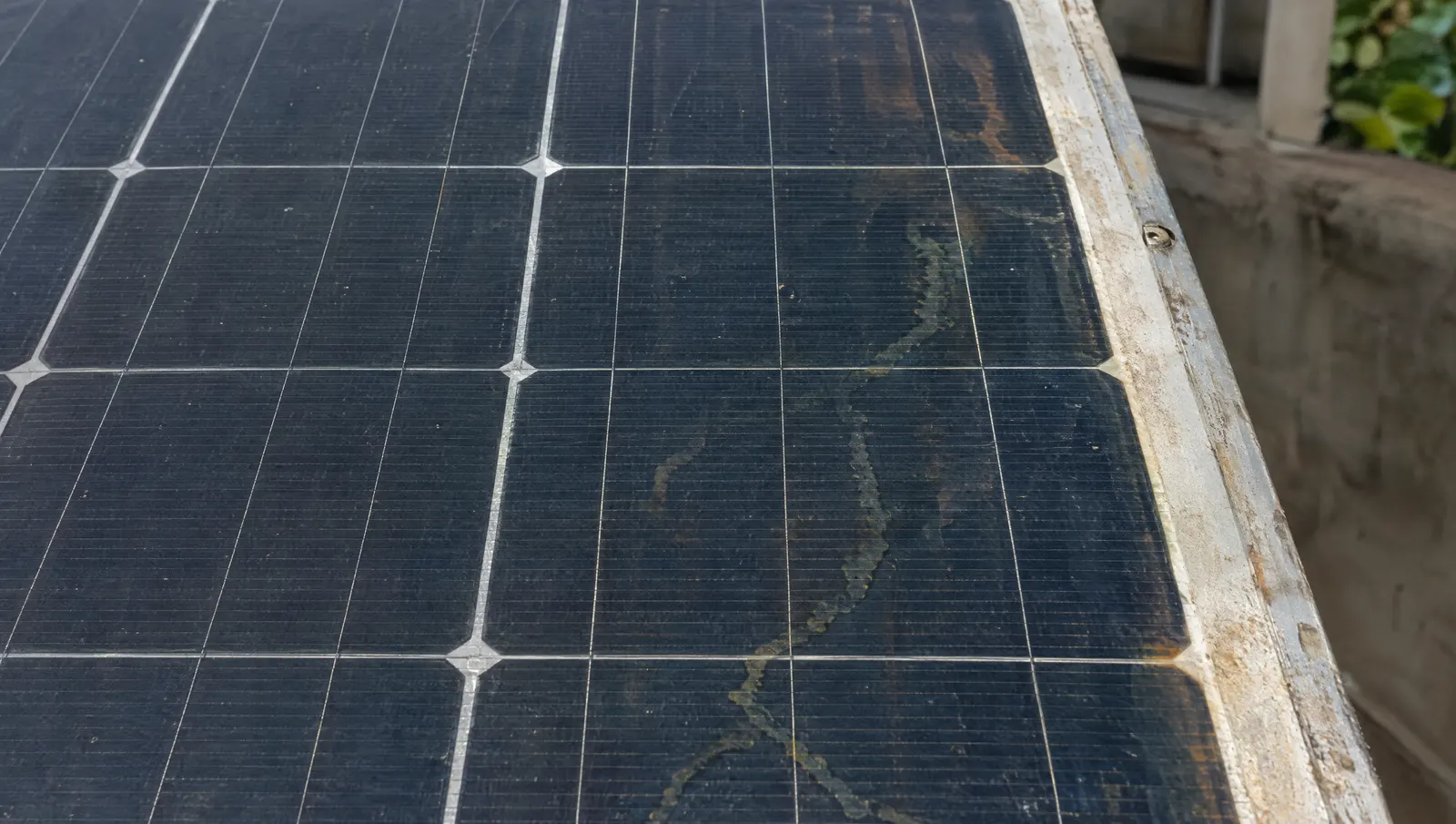
Close-up of an aged solar module surface with faint discolouration and snail-trail lines across the cells.
Degradation By Panel Type
| Technology | Typical Annual Degradation | Typical Warranty Output |
|---|---|---|
| Mono PERC | About 0.4-0.55% | About 80-84% at 25 years |
| TOPCon | About 0.3-0.4% | About 87-89% at 30 years |
These are indicative. Each manufacturer's datasheet states the actual guarantee, including whether the decline is linear or stepped.
What Speeds Up Degradation
- Heat: Hot climates and hot rooftops tend to speed material aging.
- Humidity And UV Exposure: Affect encapsulant and cell materials.
- Thermal Cycling: Daily heating and cooling stresses connections.
- Micro-Cracks And Hotspots: Can cause sudden, non-linear losses.
- Installation Quality: Rough handling and poor mounting contribute to cracks.
Degradation Versus Other Losses
When a plant produces less than expected after 10 years, degradation is only one cause. Soiling, new shading, inverter faults, and loose connections can all reduce output. As a rule of thumb, a drop approaching or exceeding 10% over 10 years is worth investigating rather than attributing to normal aging.
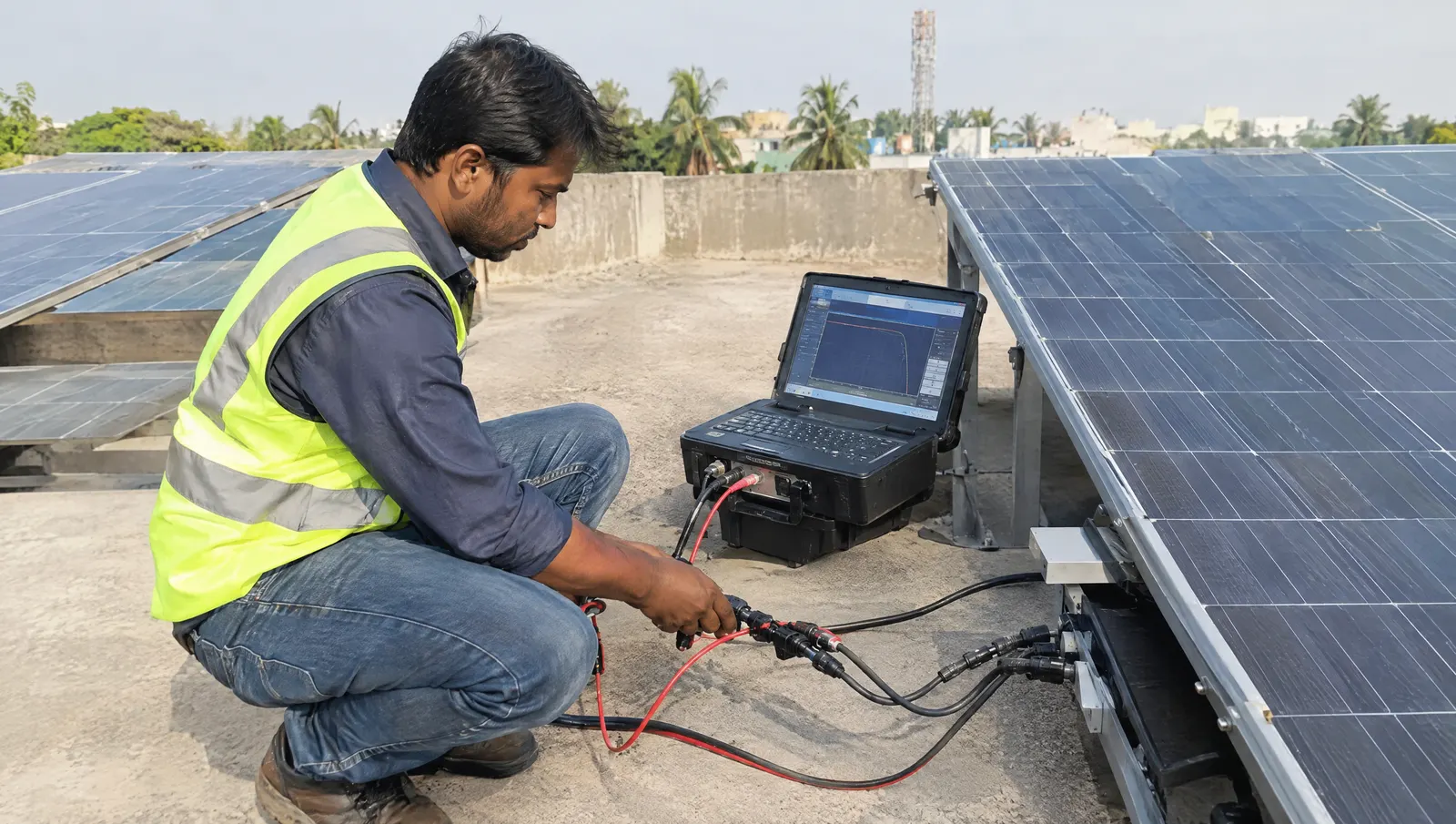
Technician testing a rooftop string with an I-V curve tracer to compare measured output against the commissioning baseline.
What It Means For A Factory
An illustrative example: a 100 kW plant generating 1,50,000 units in year one would generate about 1,42,650 units in year ten at 0.5% annual degradation. That is roughly 7,350 fewer units, worth about ₹58,800 a year at ₹8 per unit.
Practical steps:
- Check the warranty for the guaranteed output at year 10 and the end of term
- Record the plant's baseline performance at commissioning
- Include degradation, not zero, in savings projections
- Use scheduled inspections and thermal imaging to catch faults early
Questions buyers ask us.
Typically about 3-8%, depending on panel quality. At the median rate of 0.5% per year, output after 10 years is about 95% of the original.
NREL's review found a median of 0.5% per year. Newer technologies such as TOPCon tend to be lower, and lower-quality panels can exceed 0.8%.
No. Panels continue producing past 25 years at reduced output. Warranties guarantee a minimum output at the end of the term, commonly around 80-89%.
Hotter conditions tend to speed degradation, which is why panel quality and mounting matter for rooftops in hot regions.
TOPCon panels generally have a lower annual degradation rate and a longer, higher warranty, though actual figures depend on the manufacturer.
By comparing measured performance against the commissioning baseline, with periodic testing and thermal imaging. A larger-than-expected drop should be investigated for other causes.
PowerMore designs plants with degradation in the generation model, so projected savings reflect output across the plant's life and not just year one.
Ask for a generation estimate that includes degradation over the plant's life.