Solar For Ceramic Manufacturing: Which Parts Of The Plant Can Run On It
A ceramic unit can run its electrical load on solar, from ball mills to compressors, while kilns stay on gas. See what solar covers and how to size a plant.
Energy accounts for roughly 30-35% of production cost in Morbi's ceramic cluster, according to the Bureau of Energy Efficiency. Most of that conversation is about gas. A smaller and more controllable part of it is electricity, and that is where solar fits.
For a ceramic unit, the useful question is not whether the whole plant can run on solar. It is which parts of the plant can, and how much of the electricity bill that covers.
The Short Answer
A ceramic manufacturing unit can run its electrical load on solar: milling, pressing, glazing, polishing, compressors, pumps, fans, and lighting. Kilns and spray dryers run on fuel and continue to do so.
Which Solar Model Fits Your Business?
Capex, Opex PPA, or Open Access — get a site-specific recommendation with system size, savings, and payback in 24 hours.
Where A Ceramic Unit Uses Energy
| Process | Main Energy Form | Can Solar PV Offset It? |
|---|---|---|
| Ball mills and raw material preparation | Electricity | Yes |
| Spray drying | Fuel (natural gas, charcoal, or lignite) | No |
| Pressing and forming | Electricity | Yes |
| Glazing and decoration lines | Electricity | Yes |
| Kiln firing | Fuel (natural gas in most clusters) | No |
| Cutting, polishing, and finishing | Electricity | Yes |
| Compressors, pumps, fans, lighting | Electricity | Yes |
Solar PV generates electricity. It does not generate the heat for spray dryers or kilns, which operate at temperatures far above what rooftop solar can supply.
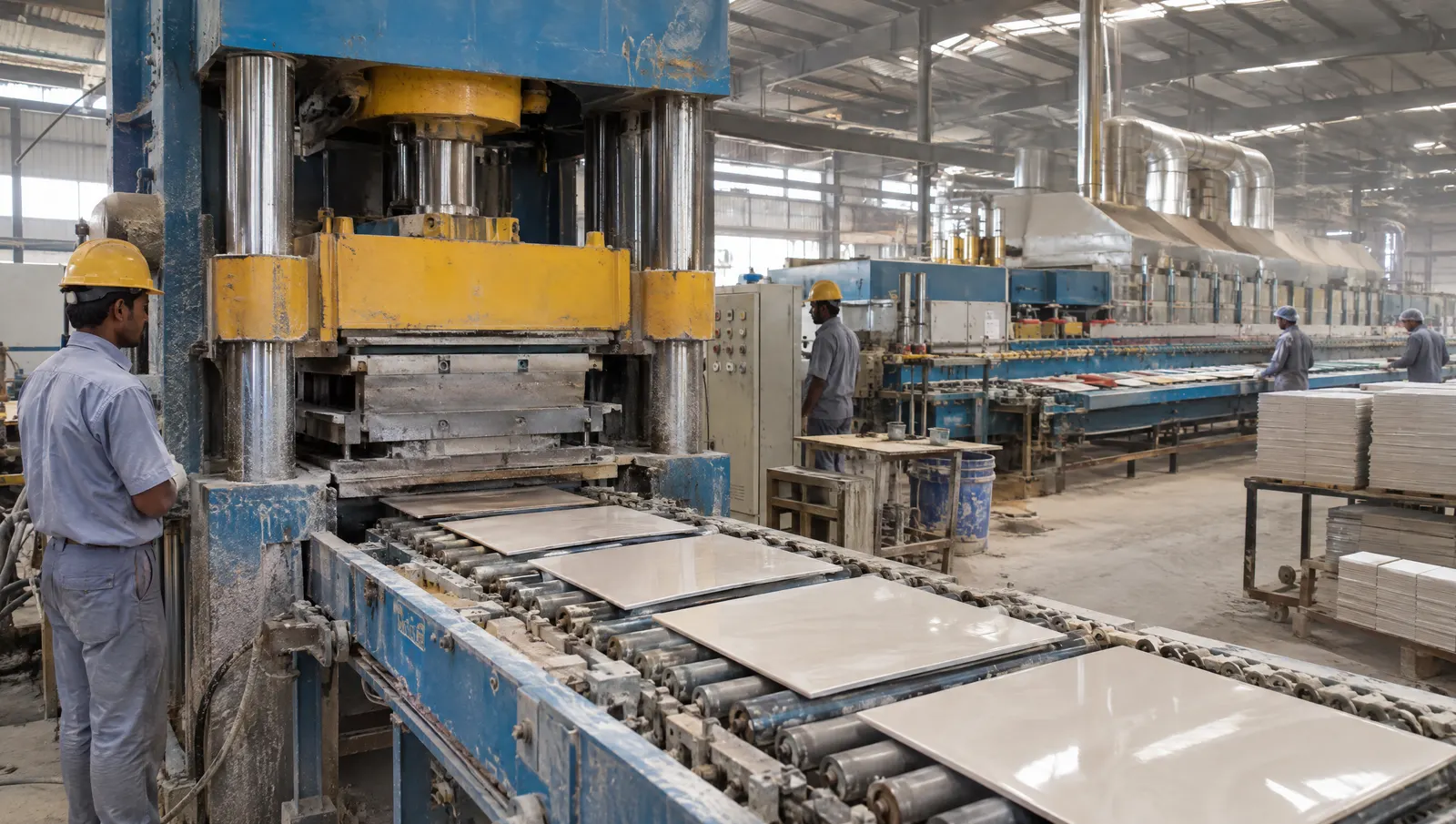
Hydraulic tile press feeding a roller conveyor inside an Indian ceramic plant, one of the electrical loads solar can offset.
Why Ceramic Units Suit Solar
Large Electrical Load
Mills, presses, and finishing lines run motors continuously, so the electricity bill is a major cost line.
Big Roofs
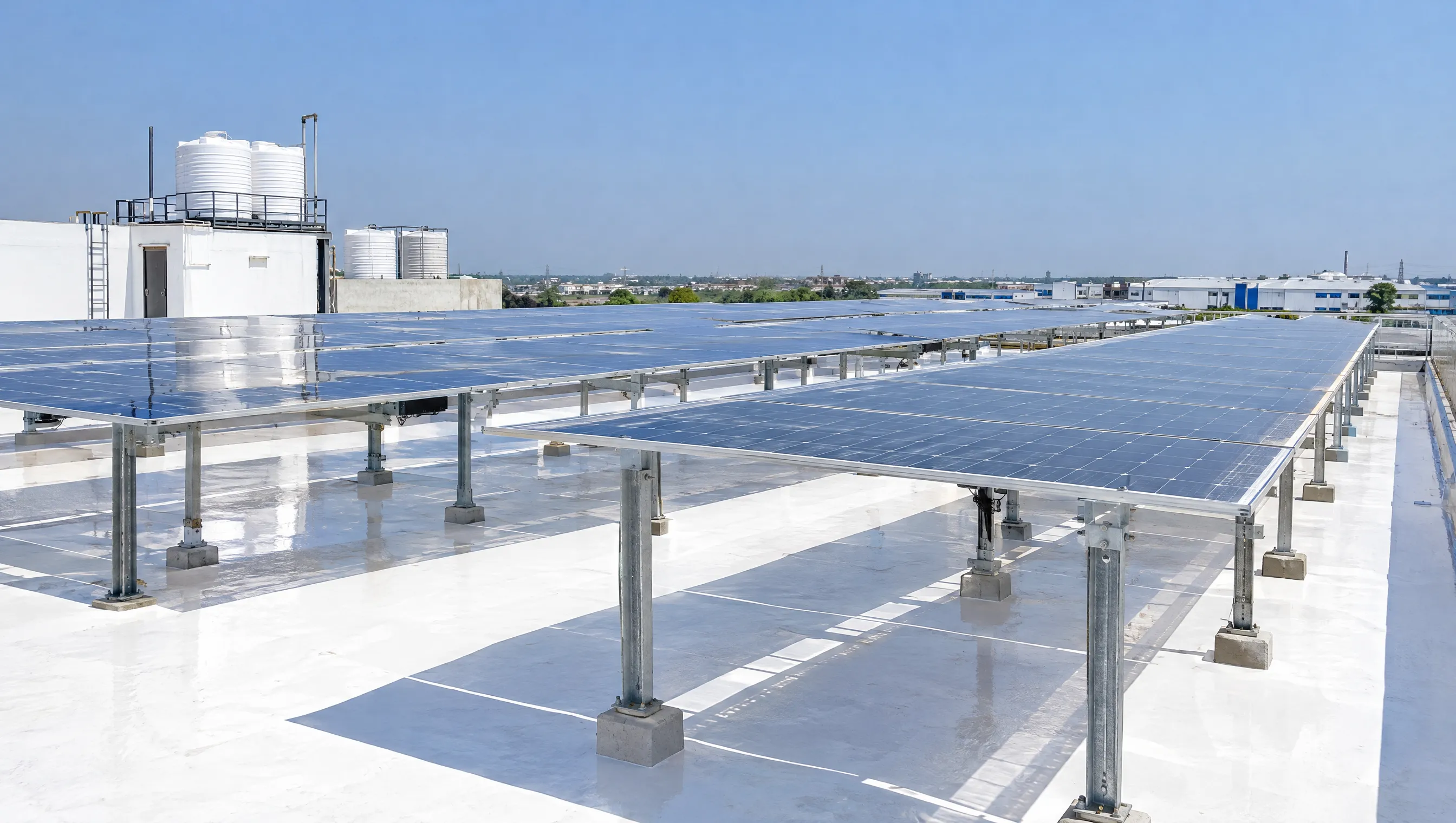
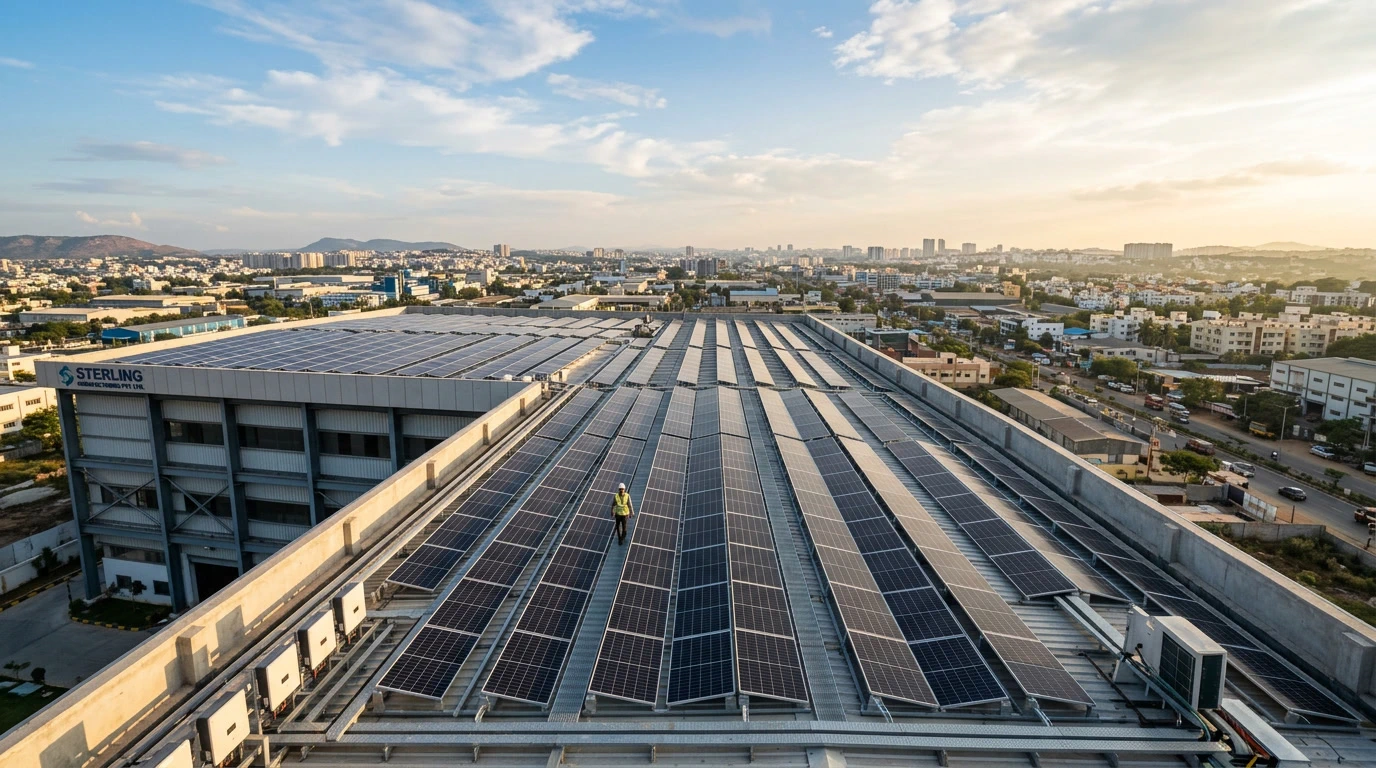
Ceramic plants have extensive shed roofs and often adjoining land, which suits rooftop or ground-mounted systems.
Daytime Operation
Much of the motor load runs through the day, which aligns with solar generation.
Strong Solar Resource
Gujarat's ceramic clusters sit in a high-irradiance region.
How Much Of The Load Solar Can Cover
Most ceramic units keep kilns running continuously, so their electricity demand continues through the night. A rooftop plant offsets the daytime part of that load, not all of it.
| Route | What It Covers |
|---|---|
| Rooftop Solar | Daytime load, limited by usable roof area |
| Ground-Mounted Solar | Larger capacity where land is available |
| Group Captive Or Open Access Solar | A larger share through an off-site plant, with captive structures generally exempt from cross-subsidy surcharge |
| Solar Plus Storage | Shifts part of the daytime output into evening hours, at an added capital cost |
The share of the load that solar covers depends on the plant's shift pattern, available area, and the route chosen.
Site Conditions Specific To Ceramic Units
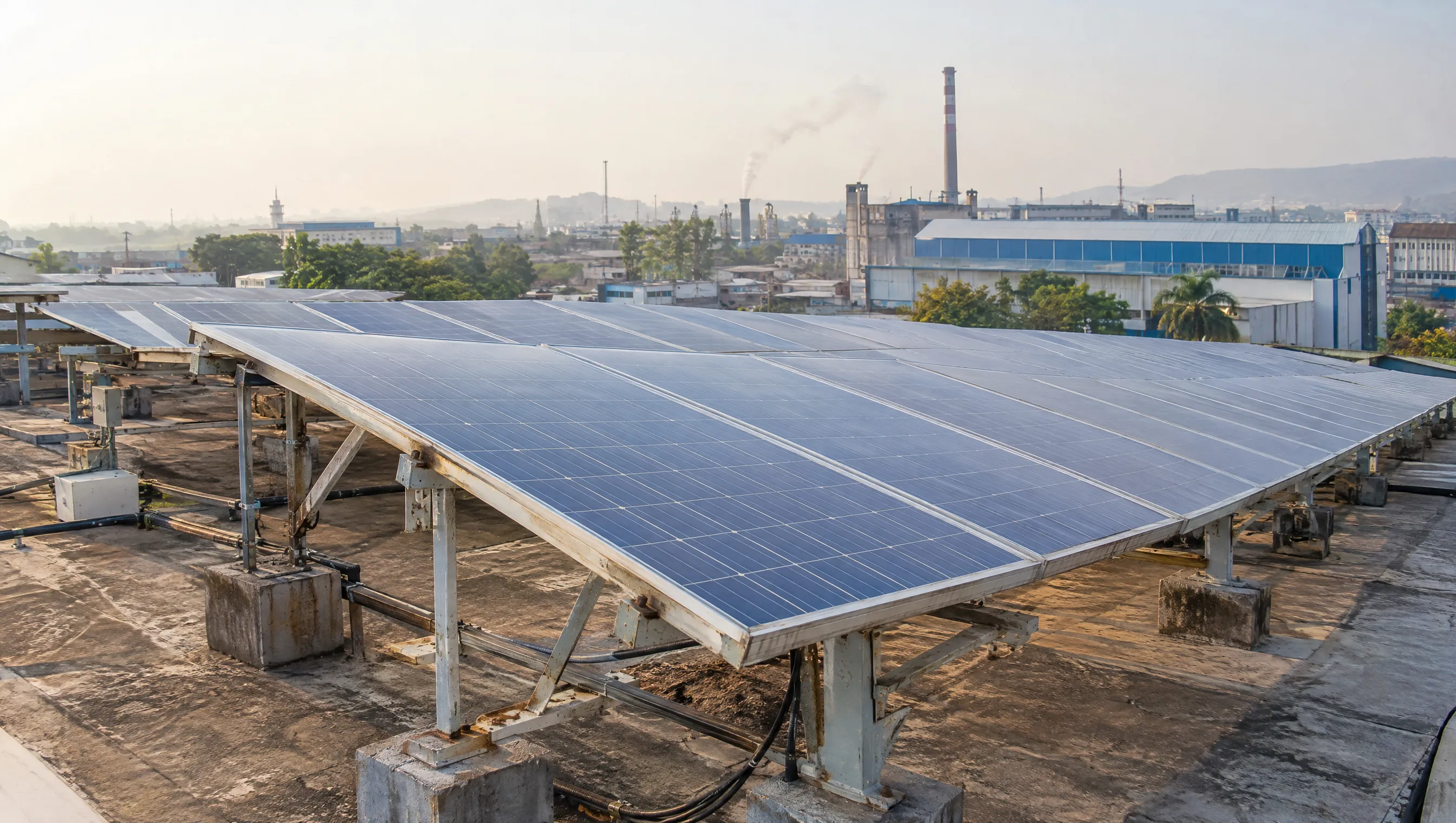
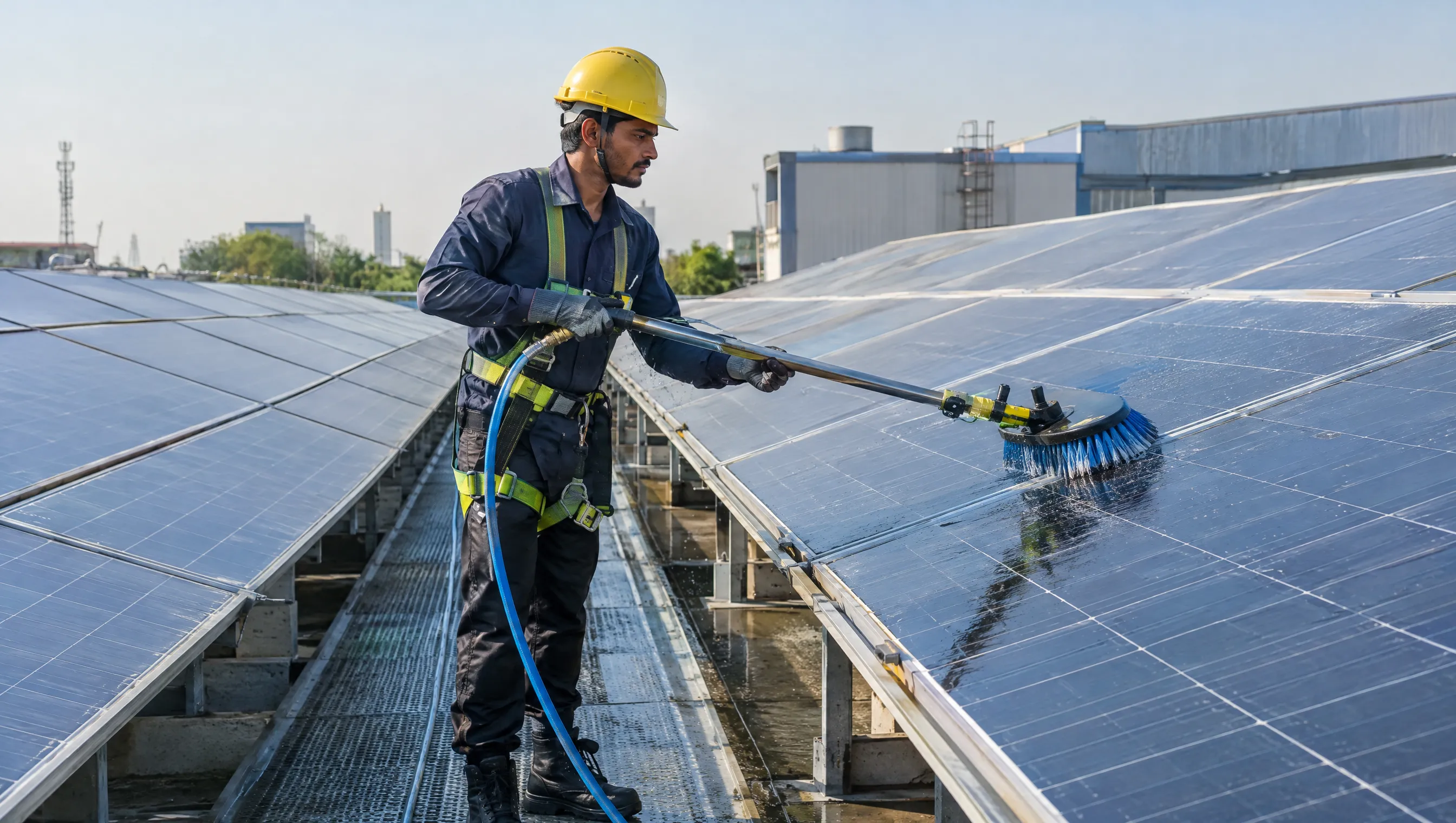
- Dust: Clay, glaze, and exhaust dust settle on panels, so cleaning frequency affects generation.
- Heat: Roofs near kilns run hot, which lowers module output.
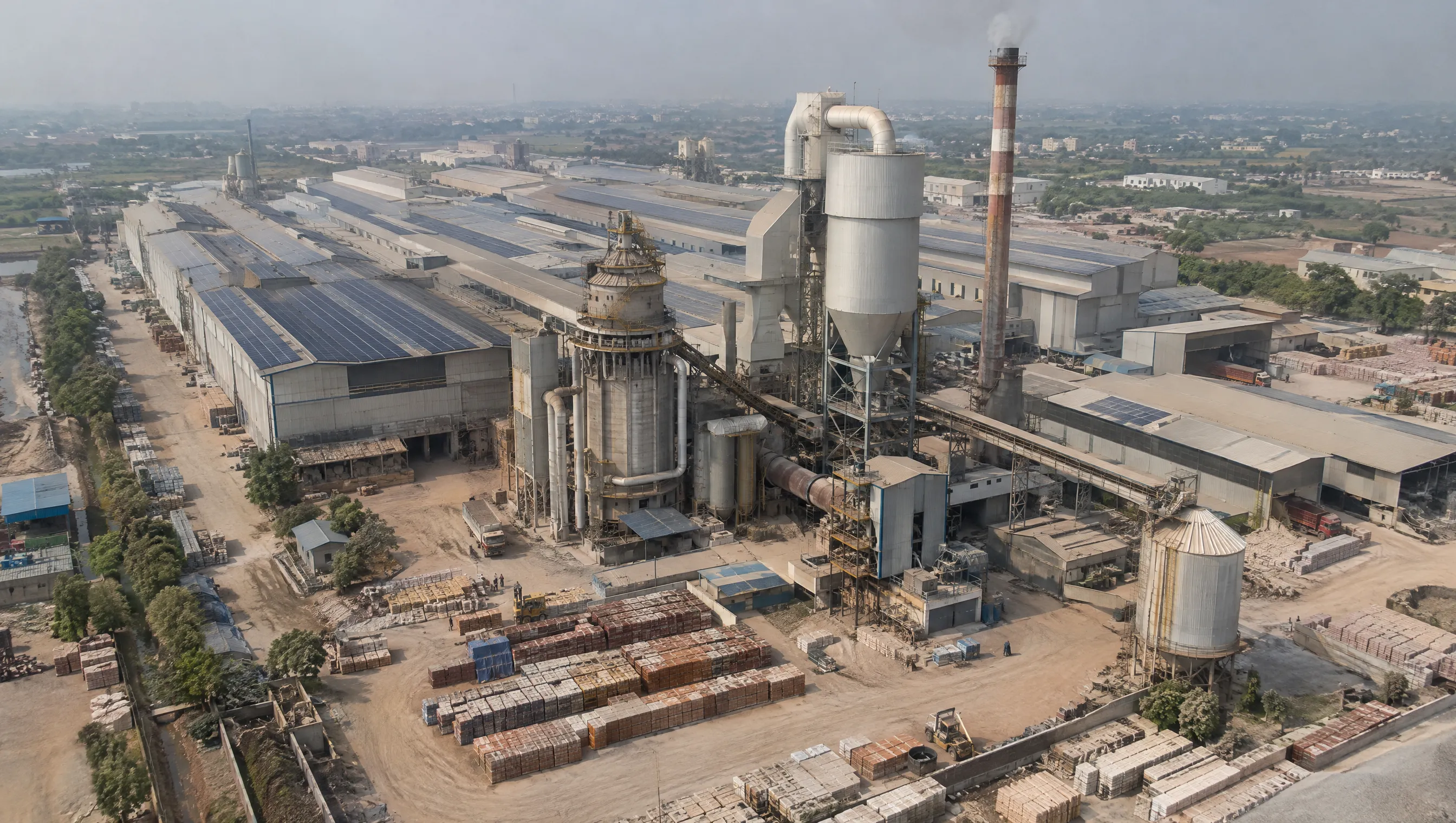
- Obstructions: Kiln stacks, spray dryer exhausts, and cooling units cast shadows and take up roof area.
- Roof Structure: Older sheds may need structural assessment before mounting.
- Fire Safety: Clearances around gas lines and kiln areas must be respected in the layout.
A shadow analysis and site assessment reveal how much roof is usable before capacity is fixed.
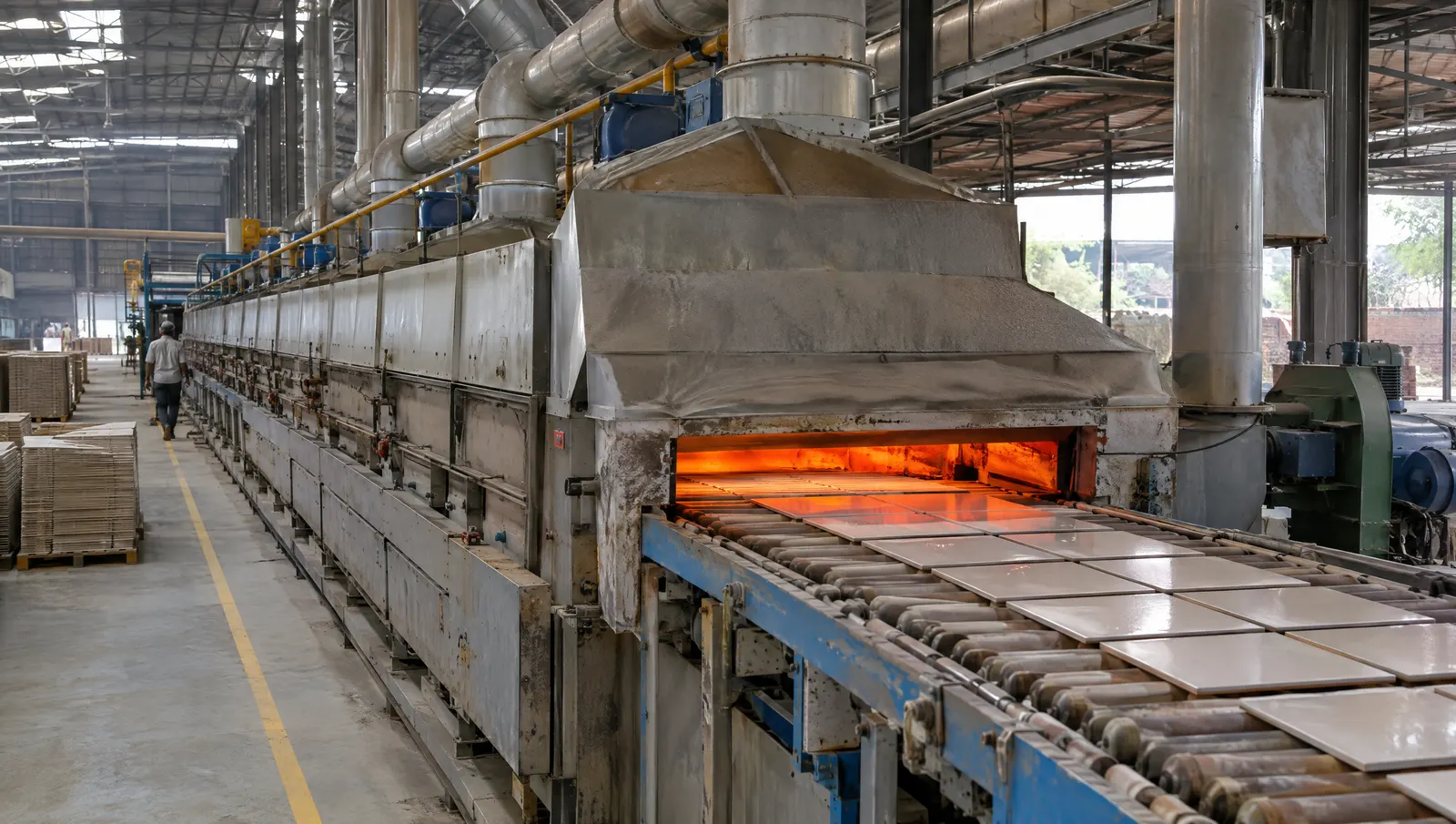
Roller kiln line in an Indian tile factory. Kilns run on gas, so solar is sized against the plant's electrical load only.
Sizing Solar For A Ceramic Unit
The sizing basis should be the electrical load only, not total energy use. Gas and electricity bills need to be separated first.
- Electrical consumption by shift, from billing and interval data
- Usable roof or land area after excluding stacks, exhausts, and equipment
- Contract demand and the state's applicable route: net metering, open access, or group captive
- Plans to add production lines that would raise the load
Sizing against combined gas and electricity figures leads to oversized capacity and unrealistic savings.
Financing Options
CAPEX Ownership
Full ownership, with accelerated depreciation benefits for a profitable business, but upfront investment.
OPEX / PPA Model
No upfront investment, with power bought at a fixed tariff from a third-party-owned plant.
Solar On Lease
Zero-CAPEX, lease-to-own structure, with ownership passing to the business at the end of the term.
Questions buyers ask us.
It can run its electrical load on solar, including mills, presses, polishing lines, compressors, and lighting. Kilns and spray dryers use fuel for heat and are not replaced by solar PV.
Yes, on the electricity portion of the bill. The saving depends on how much of the load runs in daylight, the tariff, and the available roof or land area. Gas costs are not affected.
No. Solar PV produces electricity, not the high-temperature heat needed for kilns and spray dryers. Solar addresses the electrical load, while gas stays as the process fuel.
It depends on the system size. As a planning benchmark, rooftop solar needs roughly 75-100 square feet per kW, before excluding stacks, exhausts, and other obstructions. A site assessment gives the usable figure.
Rooftop solar generates in daylight only. Storage can shift some output into the evening, and group captive or open access arrangements can supply a larger share of the load through an off-site plant.
It can be where roof area is limited or the load is large. Captive consumption is generally exempt from cross-subsidy surcharge, subject to the equity and consumption conditions and the state's rules.
PowerMore separates a ceramic unit's electrical and fuel consumption before proposing a system size, and plans around stacks, exhausts, dust, and roof condition so the design matches the actual site.
Share the latest electricity bills to assess how much of the load solar can cover.