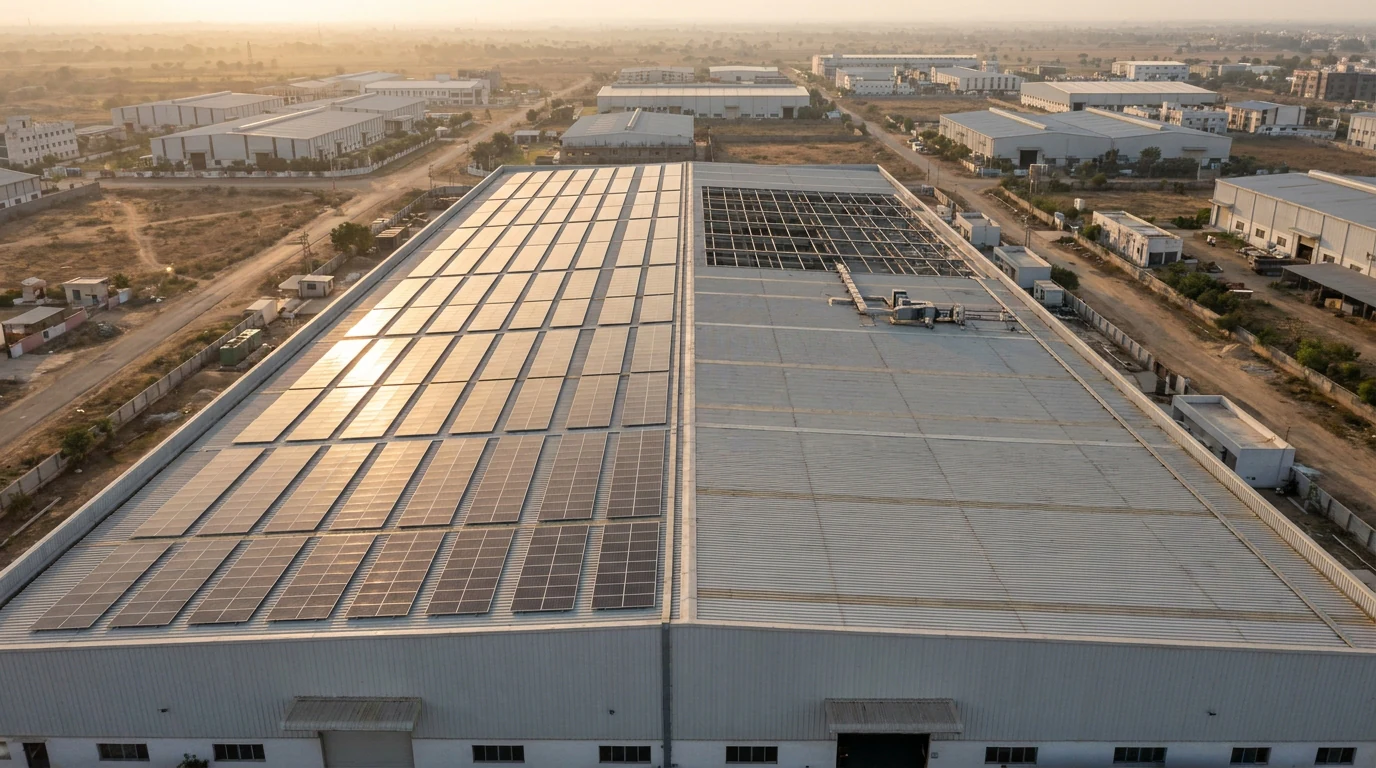
Solar CAPEX Vs OPEX: Which Model Should You Choose?
CAPEX or OPEX? The choice shapes 25 years of a solar plant — who owns the asset, who carries risk, how fast the savings show up, and how much capital gets locked into energy infrastructure. Here's how the two models actually differ, and how to pick.
Every business that decides to go solar eventually runs into the same question: should we own the plant, or should someone else own it while we simply pay for the power?
That single decision shapes almost everything about a solar project — how much capital gets tied up upfront, who carries maintenance risk for the next 25 years, and how quickly savings show up on the bill. This is the CAPEX versus OPEX decision, worth understanding before signing anything with a solar EPC company.
What Is The CAPEX Solar Model?
Under CAPEX, the business itself owns the solar power plant, either paying upfront or financing it through a loan. From day one, the asset, the generation, and the savings all belong to it.
This is the model most industrial solar EPC company partnerships are built around when a business wants ownership rather than a service arrangement. The business engages a solar installer to design, procure, and commission the plant, typically followed by an operations and maintenance contract. The upfront cost is real, but so is the payback: most commercial rooftop solar installations under CAPEX recover their investment within 3 to 5 years, after which generation is, for all practical purposes, free.
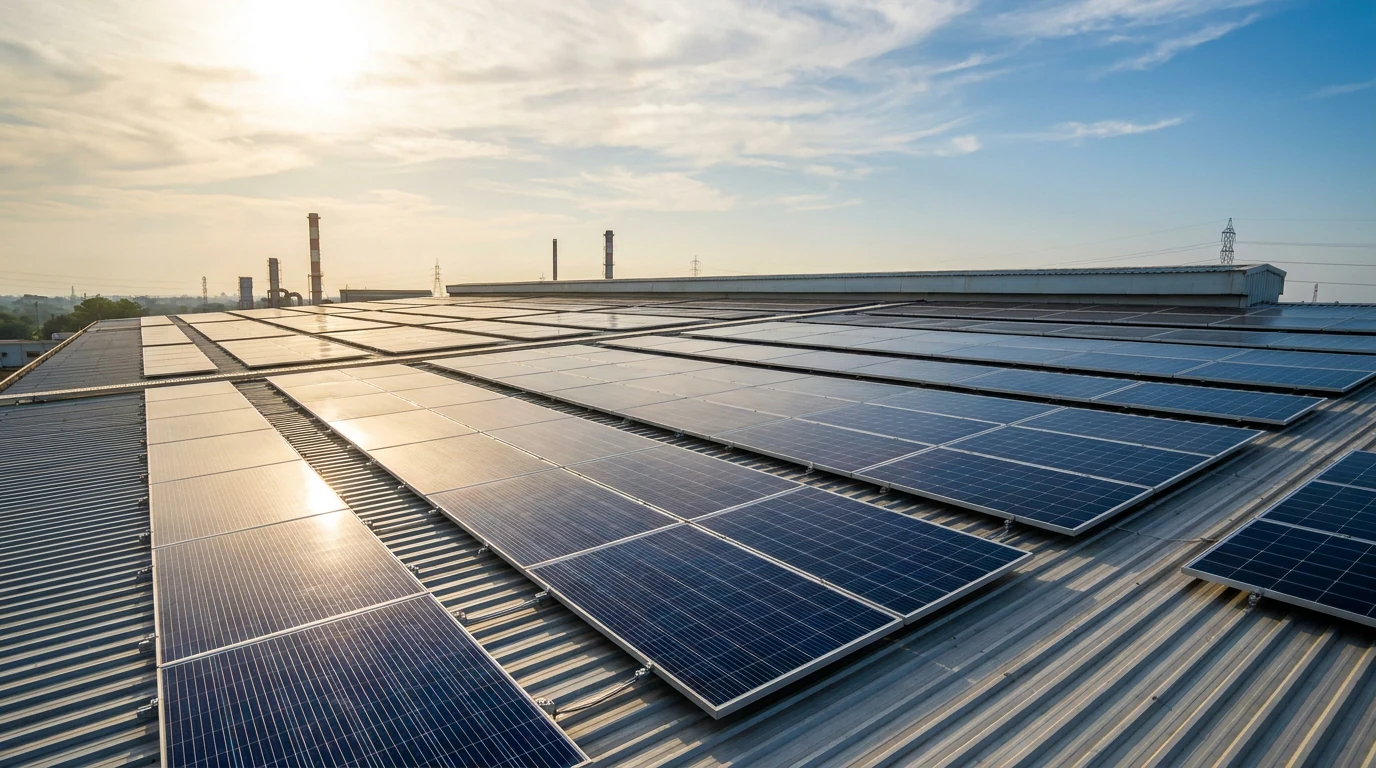
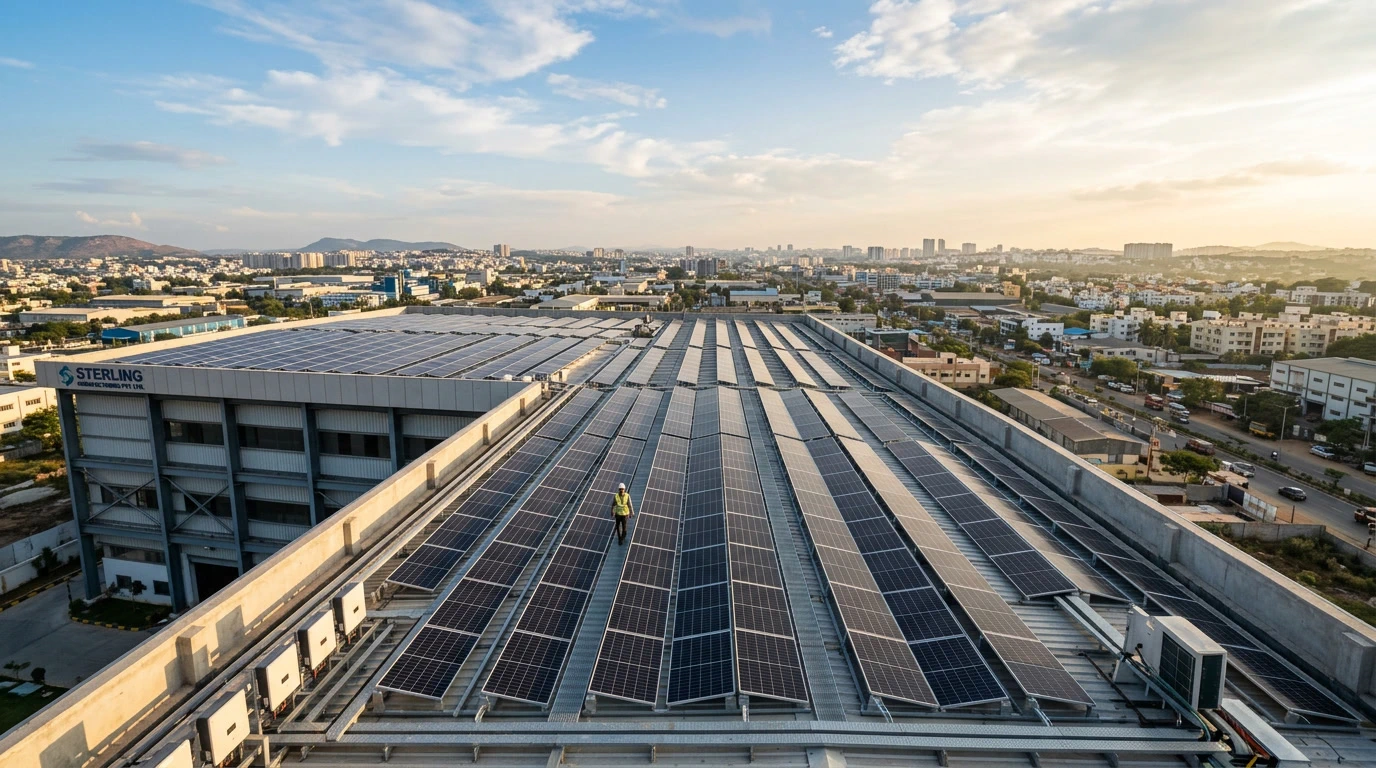
Aerial view of an Indian factory rooftop fully covered with monocrystalline solar panels — the business owning its solar asset outright.
Which Solar Model Fits Your Business?
Capex, Opex PPA, or Open Access — get a site-specific recommendation with system size, savings, and payback in 24 hours.
What Is The OPEX Solar Model?
Under OPEX, a third-party developer owns, installs, and maintains the solar power plant, and the business simply consumes the electricity through a Power Purchase Agreement, usually below the prevailing grid rate.
There's no upfront outlay, no asset on the balance sheet, and no operational burden. Savings are smaller than what CAPEX eventually delivers, but they start immediately, without the business allocating capital toward energy infrastructure.

Two Indian business professionals shaking hands over a printed Power Purchase Agreement in a modern boardroom with a solar rooftop visible through the window.
CAPEX Vs OPEX: Where The Two Models Differ
Ownership
CAPEX means the business owns the plant outright. Under OPEX, ownership stays with the developer.
Upfront Investment
CAPEX requires capital or financing arranged in advance. OPEX requires none, since costs are recovered through the per-unit tariff.
Savings Over Time
CAPEX savings start smaller but grow substantially once the payback period is crossed. OPEX savings are steady and immediate, but capped by the PPA tariff for the contract's length.
Maintenance & Risk
Under CAPEX, the business handles upkeep, usually through an AMC with its solar installation provider, and carries performance risk. Under OPEX, the developer handles maintenance and bears the risk.
Balance Sheet & Flexibility
A CAPEX plant is a depreciable capital asset and gives full freedom to expand or upgrade it. OPEX payments are a pure operating expense, with changes governed by the PPA.
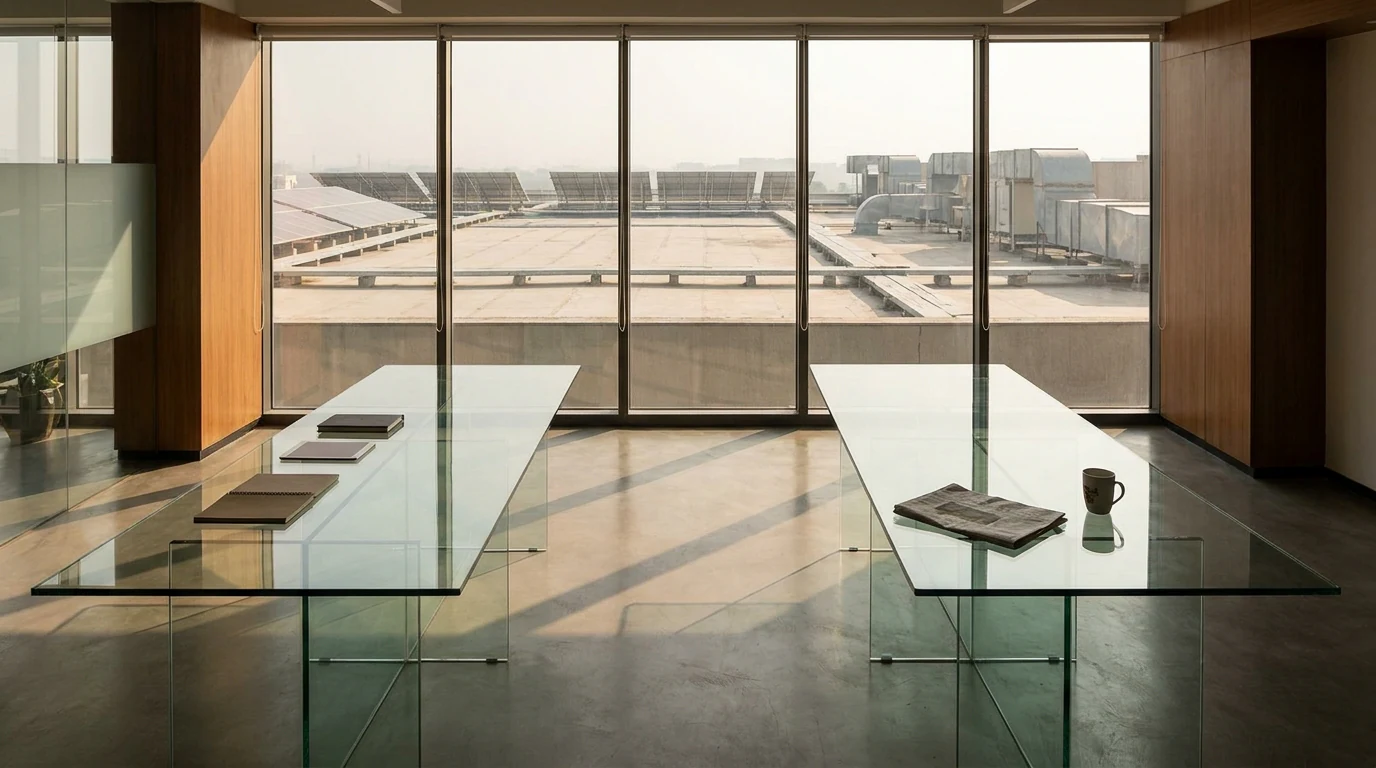
Modern Indian corporate office with two glass conference tables and a view of an industrial rooftop solar plant — the CAPEX vs OPEX decision framed against the site itself.
Which Model Fits Which Business?
CAPEX tends to suit businesses that own their facility, have capital or financing available, plan to stay put for 15 to 20 years, and want the depreciation benefits and control that come with ownership. This is why it's common among manufacturing units and industrial parks, where an industrial solar panel installation can be sized against years of predictable, high daytime consumption.
OPEX suits businesses on leased premises, those preserving capital for core operations, or those wanting predictable costs without managing an asset. Retail chains, IT parks, and multi-location leased businesses often lean this way.
Many multi-location businesses use both: CAPEX at an owned plant where the payback justifies it, OPEX at a leased site where ownership doesn't make sense. There's no rule requiring a single model company-wide.
How Do You Choose?
A few questions usually settle it:
- Is the capital better deployed toward energy infrastructure, or elsewhere right now?
- Is the facility owned or leased, and for how long?
- Is the priority maximum savings, or predictable costs with zero involvement?
Clear answers, ideally with input from an experienced solar EPC company, determine the right model more than any generic comparison.
Why The Partner Matters As Much As The Model
Not all commercial solar installation companies design systems the same way, and not every solar energy installation company brings the same rigor to site assessment and generation modeling. A poorly engineered CAPEX plant will underperform for 25 years regardless of ownership structure. An OPEX contract with a developer that cuts corners on maintenance can quietly erode the savings a business signed up for.
This holds across markets. A business evaluating commercial rooftop solar in an established base like Ahmedabad will face different site considerations than one looking at solar panel installation in Hyderabad, where rooftop density and shading vary significantly. What stays constant is the need for a solar installer who treats engineering as seriously as financing. When shortlisting top solar panel installation companies, the ones worth choosing ask hard questions before recommending a model, rather than pushing whichever structure suits their own margins.
Whether CAPEX or OPEX, the fundamentals don't change: the site needs proper assessment, the system needs sizing against real consumption data, and the plant needs a partner capable of maintaining performance over its full life. The financing model decides who owns the asset. It doesn't change the engineering discipline required to make a solar power plant perform the way it's supposed to.
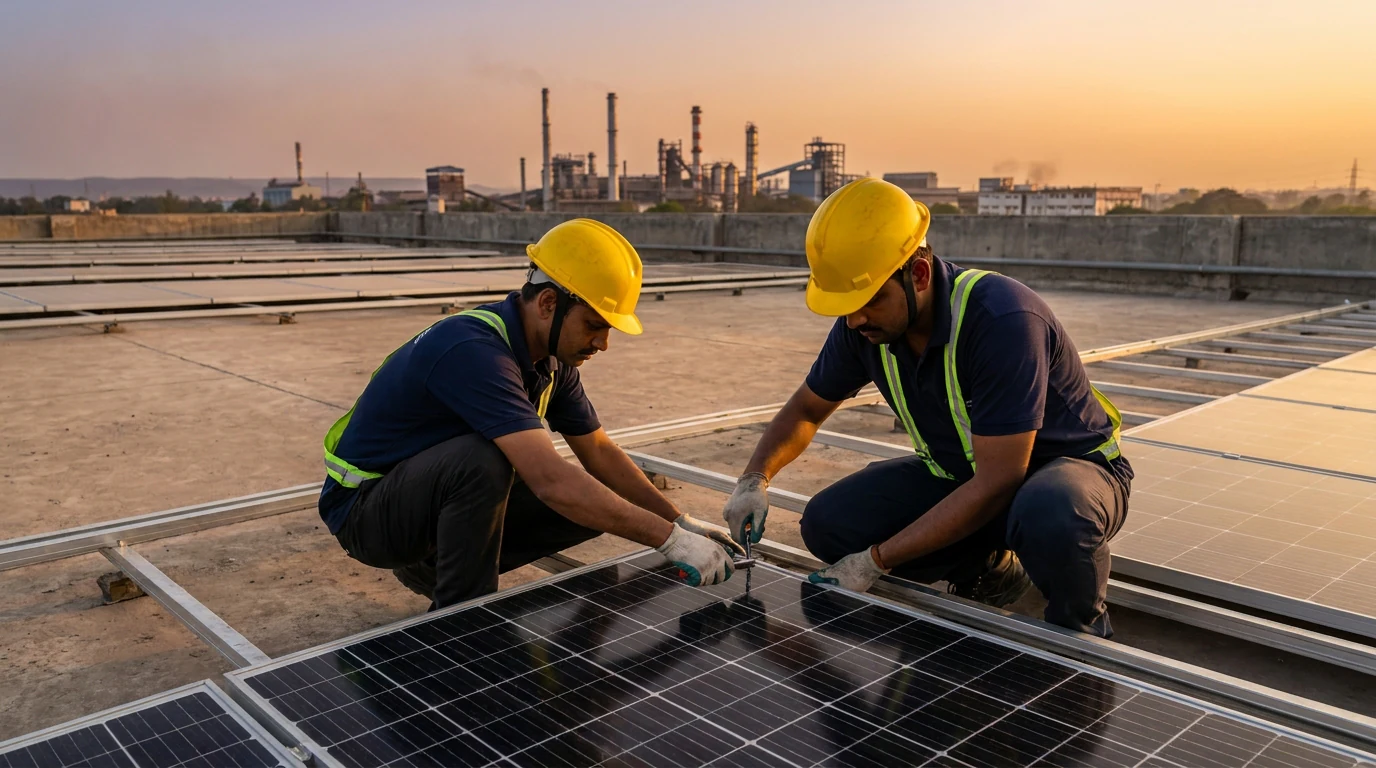
Indian solar installation team in navy Powermore polos and hard hats commissioning panels on a large commercial factory rooftop at golden hour.
Questions buyers ask us.
Neither is universally better. CAPEX suits businesses that want ownership and maximum long-term savings. OPEX suits businesses that want zero upfront investment and no operational involvement.
Most commercial CAPEX installations recover their upfront investment within 3 to 5 years, depending on system size, consumption, and location.
No. Under OPEX, the developer funds, owns, and maintains the plant. The business only pays for the electricity consumed.
Yes. Many multi-location businesses choose CAPEX for owned facilities and OPEX for leased ones, based on what makes sense at each site.
Under CAPEX, the business is responsible for maintenance, typically through an AMC with its solar installer. Under OPEX, the developer handles all maintenance.
Yes. CAPEX plants qualify as capital assets and can avail depreciation benefits. Under OPEX, since the developer owns the asset, tax benefits typically accrue to them, not the consuming business.
At PowerMore, we help businesses evaluate CAPEX and OPEX not as a generic checklist, but against their actual consumption pattern, ownership status, and financial priorities.
As an experienced solar EPC company, our team handles everything from site assessment and system design to installation and long-term operations and maintenance, regardless of which model a business chooses.
Speak to our team to find the right solar model for your business.