
Net Metering Vs Gross Metering: What's The Difference?
Confused between net metering and gross metering for your solar system? Here's a clear breakdown of how each works and which one suits your business better.
Once a business decides to install rooftop solar, one detail often gets overlooked until much later: how the electricity gets billed.
The two most common billing arrangements for grid-tied solar systems in India are net metering and gross metering. They sound similar, but the financial outcome can be very different depending on which one applies.
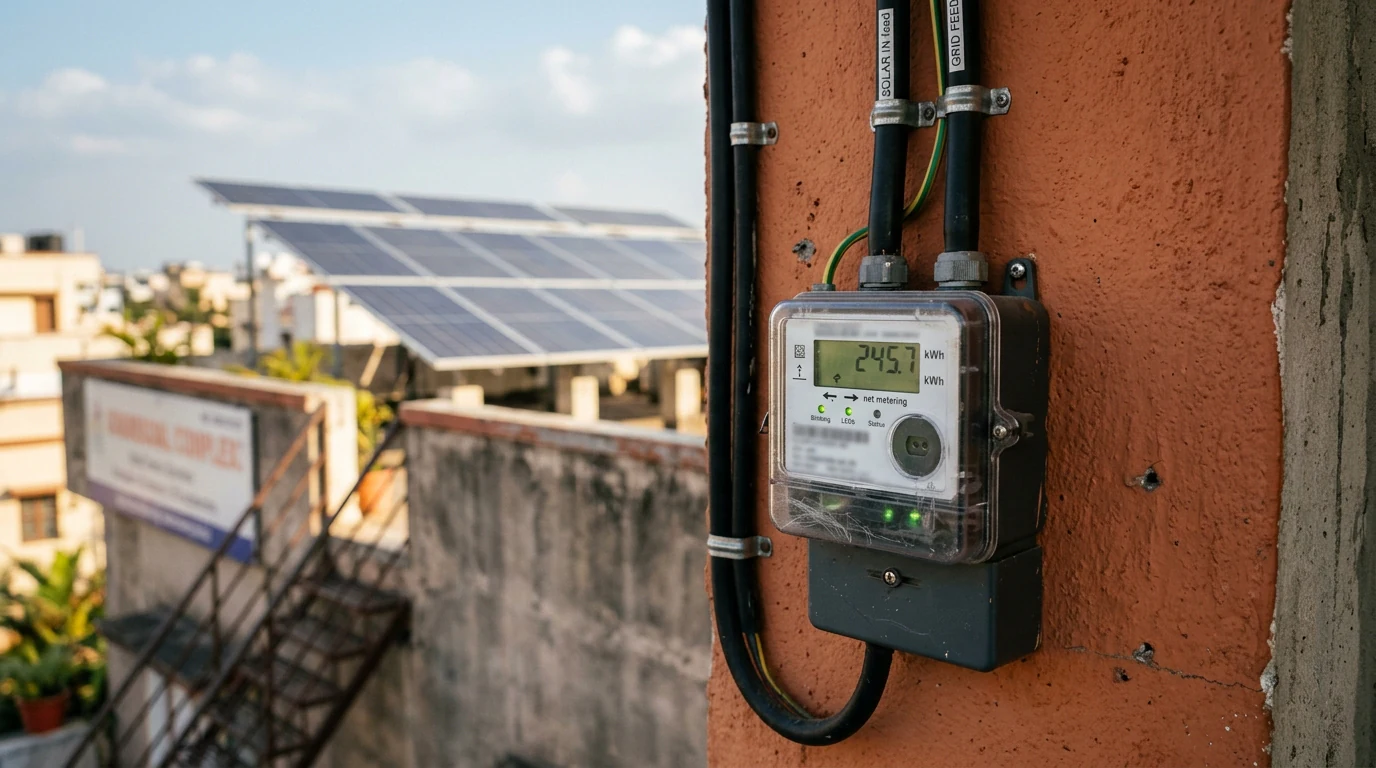
Close-up of a modern bidirectional smart electricity meter on the wall of an Indian commercial building, with rooftop solar panels in the soft-focus background.
What Is Net Metering?
Under net metering, the electricity a solar system generates is first used to power the facility's own load. Only the surplus, what's left over after meeting on-site consumption, is exported to the grid.
How the billing works:
- The meter tracks the net difference between electricity consumed and electricity exported
- If a facility generates more than it uses, the excess is credited, typically adjusted against future bills
- If a facility uses more than it generates, the shortfall is drawn from the grid and billed normally
Best suited for: Businesses whose electricity consumption pattern closely matches solar generation hours, since it makes the most of self-consumption before anything is exported.
Which Solar Model Fits Your Business?
Capex, Opex PPA, or Open Access — get a site-specific recommendation with system size, savings, and payback in 24 hours.
What Is Gross Metering?
Under gross metering, all the electricity generated by the solar system is exported directly to the grid, regardless of what the facility is consuming at that moment. The business then buys back all the electricity it needs from the grid separately, at the regular tariff.
How the billing works:
- Two separate meters (or a bidirectional meter tracking both flows separately) record generation and consumption independently
- The business is paid or credited for 100% of solar generation at a predetermined feed-in tariff
- The business pays the standard grid tariff for 100% of its actual consumption, separately
Best suited for: Cases where the feed-in tariff for exported solar power is higher than the cost of buying grid electricity, or where regulatory/state policy mandates gross metering for certain system sizes.
Net Metering Vs Gross Metering: Key Differences
How Electricity Is Counted
Net metering measures the difference between what's generated and what's consumed. Gross metering measures both independently, with no offsetting.
Financial Benefit
Net metering benefits businesses that consume most of their solar generation directly, since self-consumed units effectively save the full retail tariff. Gross metering benefits businesses only if the feed-in tariff for exported power is attractive enough to outweigh buying all consumption back at retail rates.
Regulatory Availability
Policies differ by state and system size in India. Some state electricity regulators mandate gross metering beyond a certain capacity threshold, while net metering is more commonly available for smaller commercial rooftop systems.
Metering Infrastructure
Net metering typically requires a single bidirectional meter. Gross metering usually requires two meters or a meter capable of separately recording import and export.
Which One Should Your Business Choose?
In most cases, the choice isn't fully up to the business. State-specific solar policies and DISCOM regulations often determine which metering arrangement applies, particularly based on system size.
That said, where a choice does exist, net metering tends to be more financially beneficial for businesses that consume a large share of their own solar generation during the day, since self-consumption is generally worth more than the export tariff paid under gross metering.
Businesses evaluating a new rooftop solar system should check their state's current net metering policy and capacity thresholds before finalizing system size, since this can directly affect the payback period.
Questions buyers ask us.
Net metering only bills the difference between electricity generated and consumed, while gross metering bills all electricity generated and consumed separately, using two different rates.
Net metering usually works out better for businesses that use most of their solar power directly during the day, since it effectively saves the retail electricity rate on self-consumed units.
Not always. Many states in India have specific rules on which metering type applies based on system size, so it's important to check local DISCOM regulations first.
Yes, net metering requires a bidirectional meter that can measure both the electricity drawn from and exported to the grid.
Typically, surplus units are credited against future electricity bills rather than paid out directly, though this can vary by state policy.
At PowerMore, every rooftop solar project accounts for the applicable metering policy in the business's specific state right from the design stage, ensuring system sizing and expected savings are accurate from day one, not adjusted after installation.
Speak to our team to understand the right metering setup for your business.