Rooftop Solar Vs Grid Power: Which Costs Less For Your Business?
Comparing rooftop solar and grid electricity for your business? Here's how costs, reliability, and long-term savings stack up between the two.
Every business with a rooftop or an electricity bill eventually asks the same question: does it make sense to generate power on-site, or is staying on grid electricity simpler and safer?
The answer isn't the same for every business. It depends on how much power a facility uses, how stable its grid supply is, and how long it plans to operate at that location. Here's how the two options actually compare.
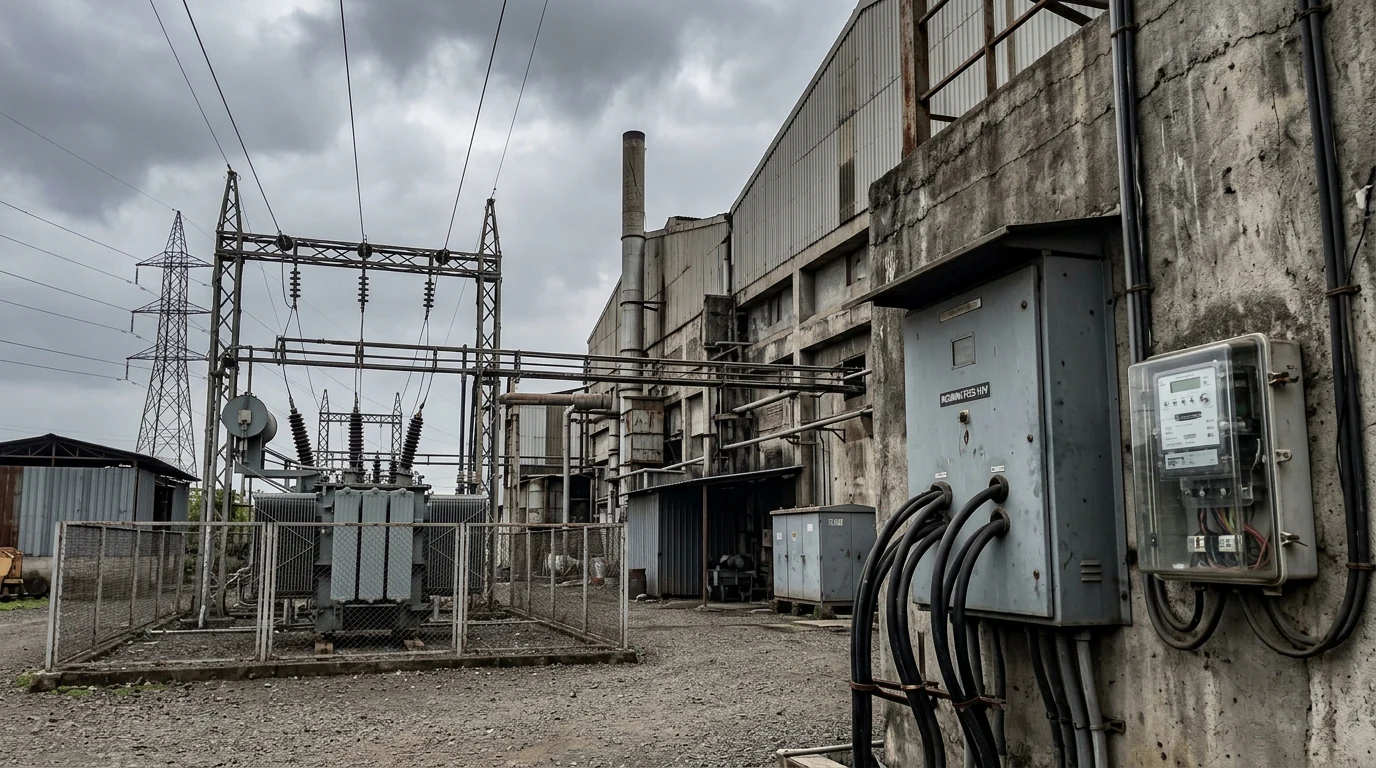
Indian industrial facility drawing power from the utility grid via overhead transmission lines and a substation transformer.
What Is Grid Power?
Grid power is electricity supplied entirely by the utility or DISCOM, generated elsewhere and delivered through transmission lines to the facility.
What this means for a business:
- No upfront investment in generation infrastructure
- Electricity costs are fully exposed to tariff hikes set by the utility
- No control over how or where the power is generated
- Full dependency on grid uptime and utility service quality
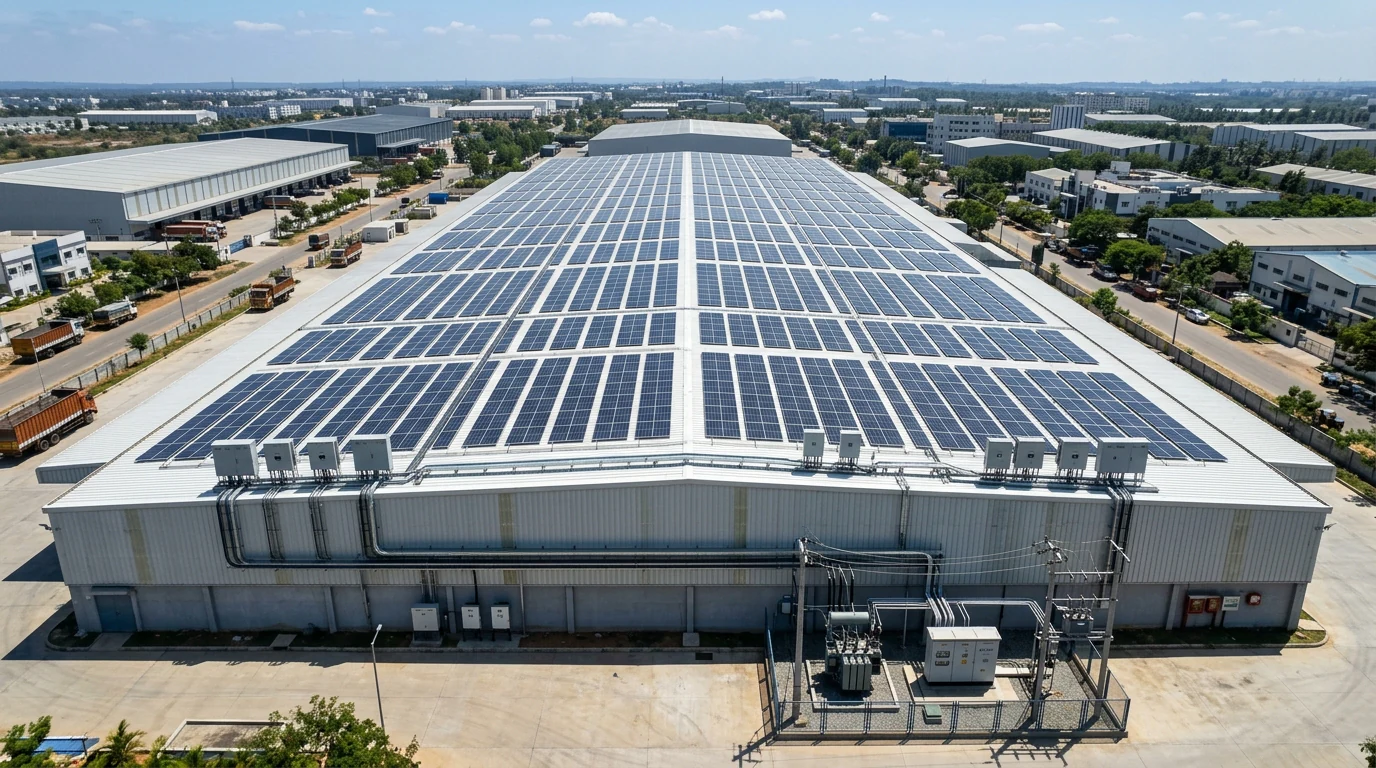
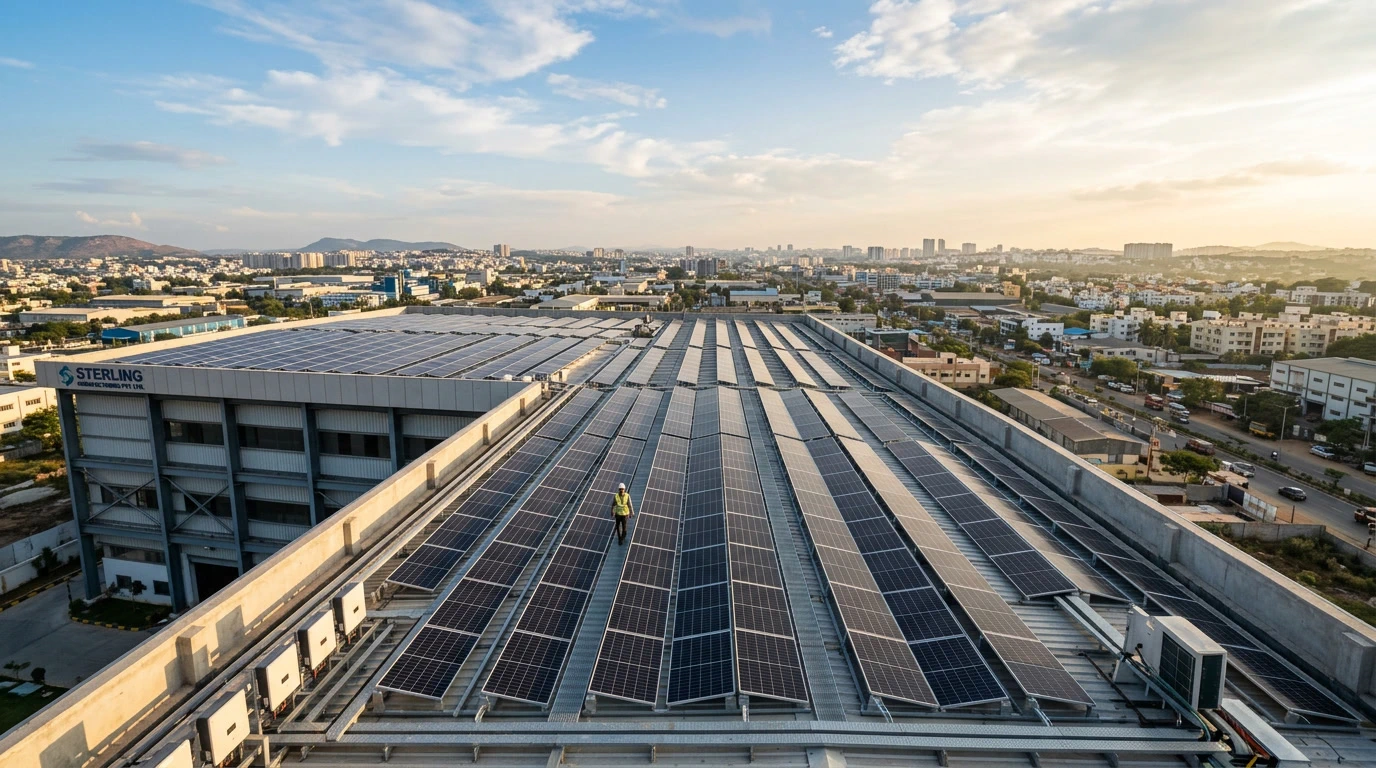
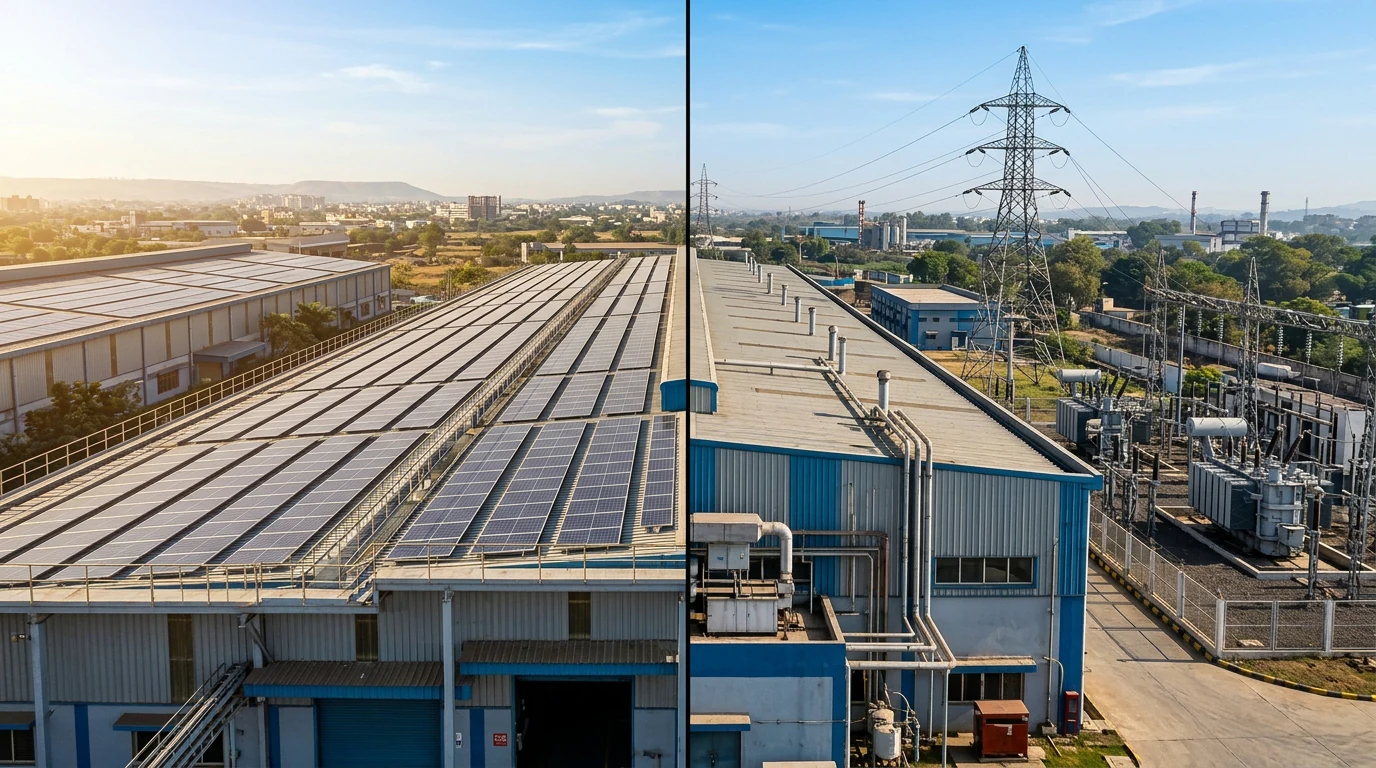
Aerial view of a large Indian commercial warehouse rooftop fully covered with monocrystalline solar panels connected to the grid via net metering.
Which Solar Model Fits Your Business?
Capex, Opex PPA, or Open Access — get a site-specific recommendation with system size, savings, and payback in 24 hours.
What Is Rooftop Solar?
Rooftop solar involves installing a solar power plant directly on a business's own roof or premises, generating electricity on-site during daylight hours.
What this means for a business:
- Upfront investment (or a financing structure like OPEX/PPA with no upfront cost)
- Reduced dependency on grid tariffs for the portion of load covered by solar
- Surplus generation can often be exported to the grid through net metering
- Electricity cost becomes more predictable over the long term
Comparing The Two: Cost, Control, And Reliability
Cost Over Time
Grid power costs rise steadily as utility tariffs increase year on year. Rooftop solar has a higher upfront cost (unless financed through OPEX), but electricity generated on-site is typically far cheaper per unit over the system's 25-year life, since the primary "fuel" — sunlight — is free.
Control Over Energy Costs
With grid power, a business has zero control over pricing; tariff hikes are absorbed directly into operating costs. With rooftop solar, once the system is installed, a significant portion of the electricity cost is fixed and predictable, regardless of what the utility does with tariffs.
Reliability
Grid power is available at all times, provided the grid itself is stable, but businesses have no backup if there's an outage. Rooftop solar, in its standard on-grid form, doesn't provide backup during outages either, though hybrid rooftop systems with battery storage can.
Sustainability Impact
Grid electricity in India is still substantially generated from coal and thermal sources. Rooftop solar directly reduces a facility's carbon footprint and supports ESG and sustainability reporting goals increasingly expected by investors and clients.
Does Rooftop Solar Mean Leaving The Grid Entirely?
No — and this is one of the most common misconceptions.
Most commercial and industrial rooftop solar systems are grid-tied, meaning the facility stays connected to the grid and draws power from it whenever solar generation isn't sufficient (at night, for instance, or during low-sunlight periods). The grid essentially works alongside the solar plant, not against it.
This is different from going fully off-grid, which involves battery storage sized to cover 100% of a facility's needs independently — a more specialized and costly setup, typically reserved for locations with poor or no grid access.
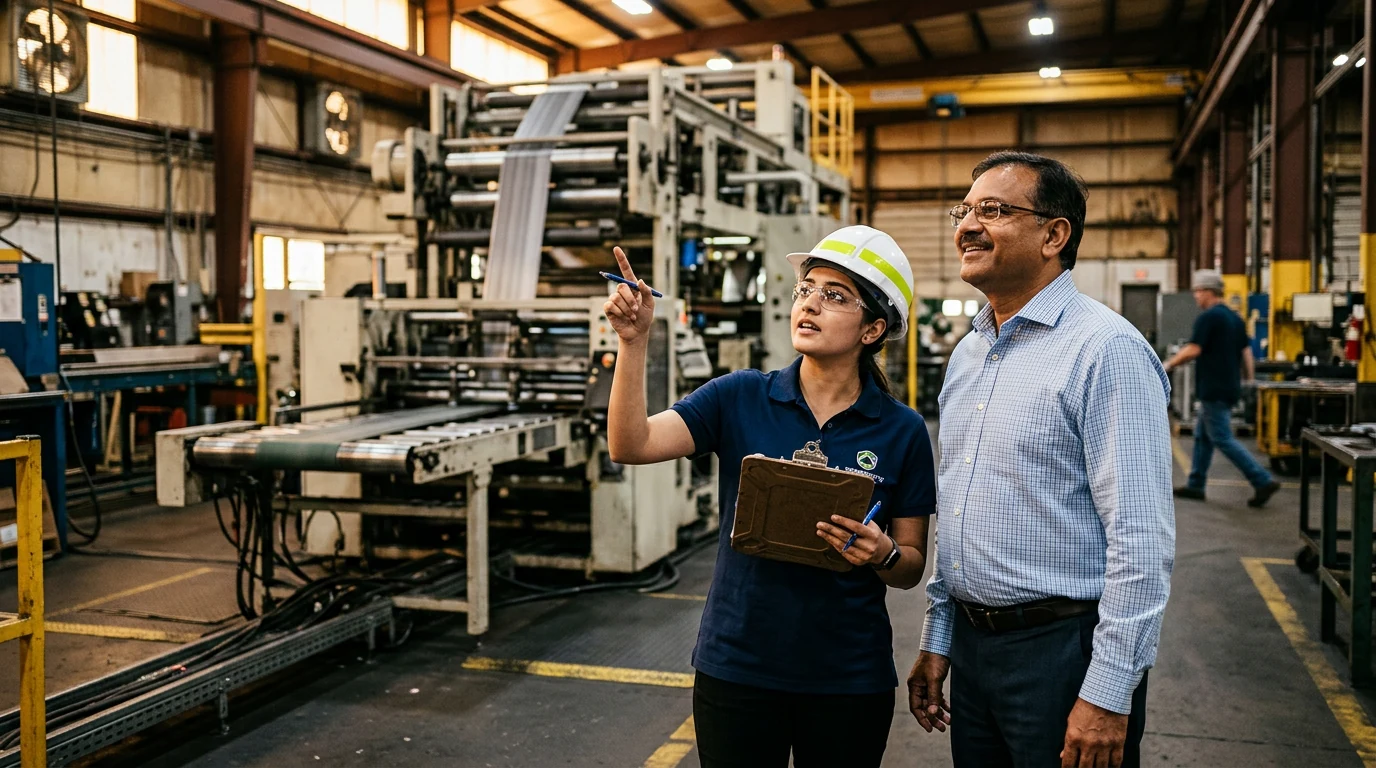
Indian factory owner and a solar engineer on the shop floor discussing energy cost savings.
Which Option Makes More Financial Sense?
For most commercial and industrial facilities with reasonably stable grid access and significant daytime power consumption, rooftop solar tends to deliver stronger long-term economics than staying on grid power alone.
The businesses that benefit most tend to have:
- High daytime electricity consumption, aligning well with solar generation hours
- Available rooftop or ground space for installation
- A facility they plan to operate from for the next several years, allowing the investment to pay back and then generate savings
Businesses with very low consumption, minimal available space, or short-term facility plans may find grid power alone remains the simpler option for now.
Questions buyers ask us.
Over the long term, yes. Rooftop solar typically costs less per unit of electricity once the system pays back its initial investment, since sunlight is free and grid tariffs tend to rise over time.
Yes, in most cases. Standard rooftop solar systems stay connected to the grid to draw power when solar generation isn't enough, such as at night.
This varies by system size and electricity usage, but many commercial and industrial rooftop solar systems see payback within a few years, followed by long-term savings for the rest of the system's life.
Yes. Through OPEX or Power Purchase Agreement (PPA) models, a solar developer covers the installation cost, and the business simply pays for the electricity it uses.
Grid power is generally available at all hours, while standard rooftop solar only generates during daylight. However, rooftop solar reduces dependency on the grid and its rising costs over time.
At PowerMore, every rooftop solar recommendation starts with a real assessment of a business's consumption pattern, rooftop space, and financial goals, so businesses know exactly how solar will perform against their current grid costs before making the switch.
Speak to our team to evaluate rooftop solar for your business.