
How The Solar Industry Is Preparing For India's 2026 ALMM Transition
India's solar industry is preparing for the 2026 ALMM List-II transition with expanded domestic manufacturing, strategic procurement planning, and stronger supply chain alignment. Here's what commercial solar buyers should know.
India's solar industry is entering one of its most important transition phases in recent years.
With the Ministry of New and Renewable Energy (MNRE) confirming that ALMM List-II implementation will move forward from June 1, 2026, developers, manufacturers, EPC companies, and commercial solar buyers are actively preparing for a more domestic-focused solar ecosystem.
The transition is not slowing down India's solar growth.
Instead, it is reshaping how the industry approaches:
- Procurement planning
- Domestic manufacturing
- Supplier partnerships
- Project scheduling
- Long-term energy infrastructure
For commercial and industrial businesses planning rooftop solar projects, understanding this shift early can help improve project readiness and execution timelines.
What Is ALMM List-II?
ALMM stands for Approved List of Models and Manufacturers.
While ALMM List-I applies to solar modules, ALMM List-II specifically governs solar photovoltaic (PV) cells. From June 1, 2026, projects covered under the ALMM framework will need to use solar cells sourced from approved domestic manufacturers.
The policy is part of India's larger renewable energy strategy focused on:
- Reducing import dependency
- Strengthening domestic manufacturing
- Improving supply chain reliability
- Supporting long-term energy security
The government has also clarified that there will be no blanket extension beyond the implementation deadline, although certain projects may receive case-based relief where investments are already committed.
Which Solar Model Fits Your Business?
Capex, Opex PPA, or Open Access — get a site-specific recommendation with system size, savings, and payback in 24 hours.
Why The Industry Is Preparing Early
India's commercial solar market is expanding rapidly across:
- Factories
- Warehouses
- Office campuses
- Logistics parks
- Industrial facilities
- Open-access projects
As demand continues to rise, the industry is preparing for a procurement ecosystem that will rely more heavily on domestic solar cell production.
This is encouraging developers and EPC companies to:
- Align procurement earlier
- Strengthen supplier coordination
- Improve inventory visibility
- Finalize project timelines faster
- Build long-term manufacturing partnerships
Across India, developers are already accelerating installations ahead of the ALMM transition window.
Domestic Manufacturing Capacity Is Expanding Rapidly
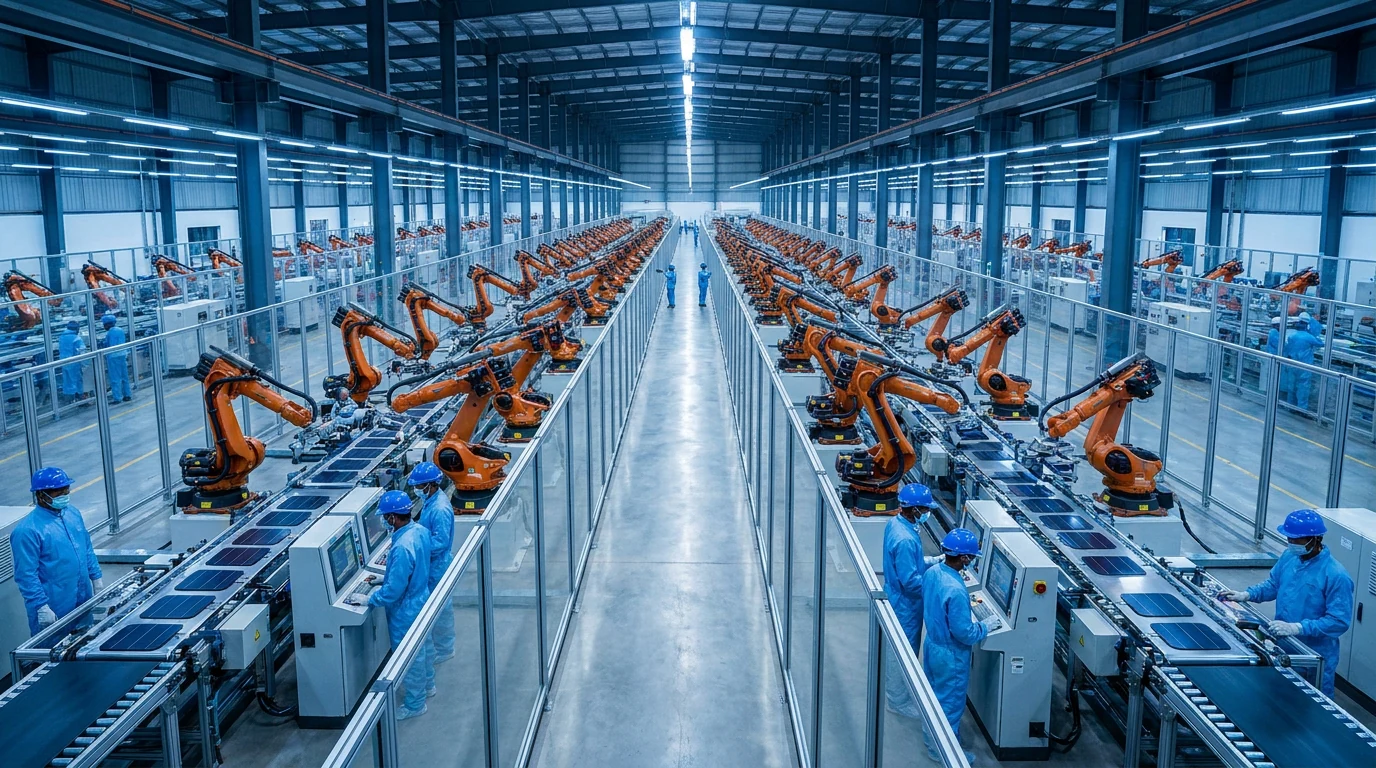
One of the biggest developments ahead of the ALMM transition is the rapid growth of India's domestic solar manufacturing ecosystem.
Over the last year:
- New manufacturers have entered ALMM List-II
- Existing manufacturers have expanded capacity
- Advanced technologies like TOPCon and HJT are scaling rapidly
Recent updates show India's enlisted ALMM List-II solar cell manufacturing capacity crossing 30 GW.
Companies across India are expanding:
- Mono PERC production
- TOPCon capacity
- HJT manufacturing
- Integrated solar facilities
This expansion is expected to strengthen local availability and improve long-term supply chain resilience.
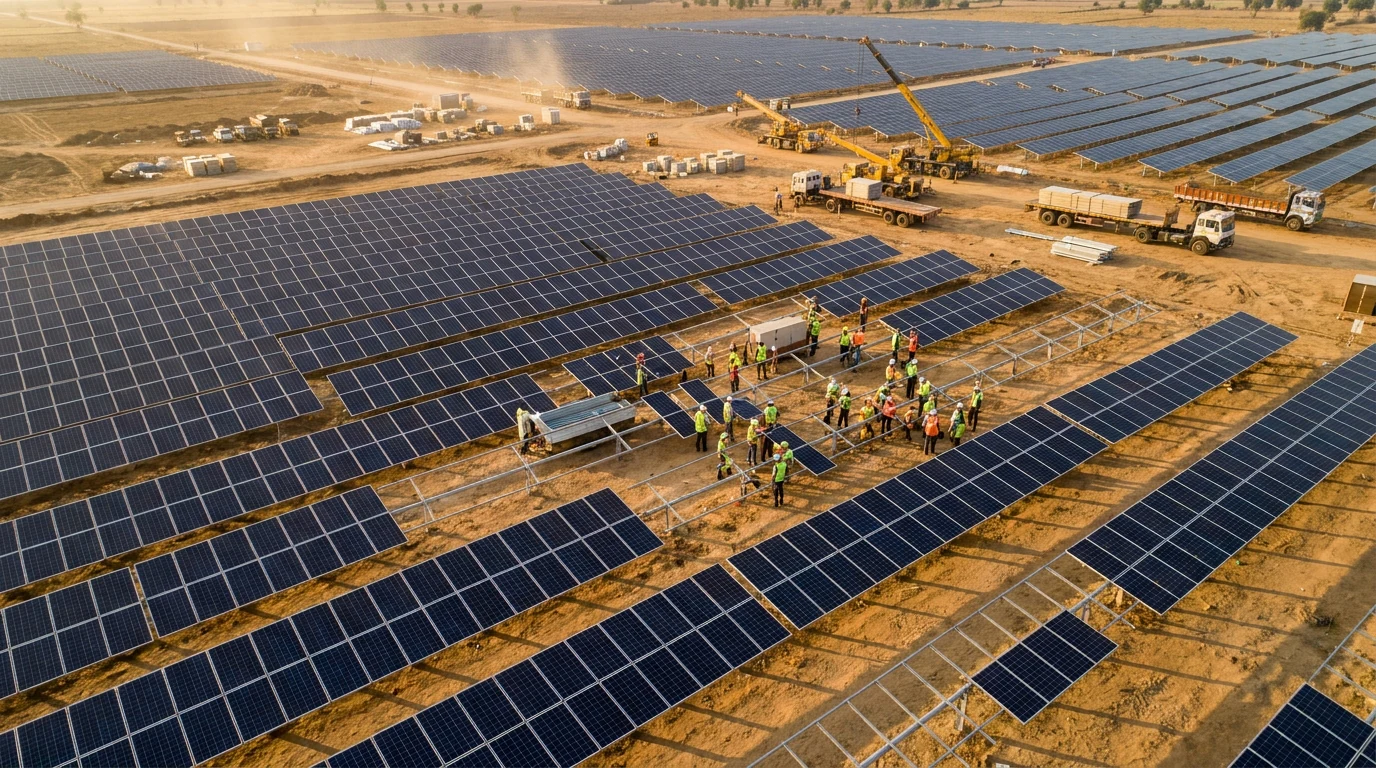
A large ground-mounted solar project under construction in India as domestic manufacturing capacity scales ahead of ALMM List-II.
EPC Companies Are Becoming More Procurement-Focused
For solar EPC companies, the transition increases the importance of strategic planning.
Commercial solar projects today involve:
- Engineering
- Procurement
- Compliance
- Installation
- Vendor coordination
- Execution scheduling
As ALMM implementation approaches, EPC players are placing stronger focus on:
- Approved vendor networks
- Procurement visibility
- Technology availability
- Long-term sourcing alignment
The industry is moving toward more structured project execution cycles rather than reactive procurement.
For commercial buyers, this makes early project discussions increasingly valuable.

An Indian solar EPC team reviewing procurement timelines and project schedules ahead of the 2026 ALMM transition.
Advanced Solar Technologies Are Also Scaling
India's solar manufacturing ecosystem is not only growing in size — it is also evolving technologically.
Recent ALMM List-II revisions show increasing inclusion of:
- N-Type TOPCon cells
- HJT technologies
- High-efficiency bifacial cells
This reflects the industry's larger shift toward:
- Higher efficiency modules
- Better long-term performance
- Advanced manufacturing standards
As more domestic facilities scale these technologies, India's renewable energy ecosystem is expected to become more competitive globally.
Why Commercial Solar Buyers Should Start Planning Early
For businesses considering rooftop solar adoption in 2026 and beyond, early planning can help improve:
- Project visibility
- Procurement alignment
- Installation scheduling
- Execution readiness
Businesses do not need to panic about solar adoption becoming unavailable.
Instead, the industry is moving toward:
- More structured planning
- Better supplier coordination
- Smarter procurement timelines
This is especially important for:
- Large rooftop projects
- Industrial facilities
- Warehousing infrastructure
- Multi-site commercial installations
Working with experienced EPC partners can help businesses align project execution with evolving compliance frameworks.
India's Solar Industry Is Becoming More Self-Reliant
The ALMM transition reflects a broader shift within India's renewable energy sector.
The focus is no longer only on installing solar capacity quickly.
India is now also prioritizing:
- Domestic manufacturing strength
- Local value creation
- Supply chain stability
- Technology localization
- Energy independence
Over the last few years, India's solar manufacturing ecosystem has expanded significantly, with domestic module manufacturing capacity reportedly crossing 100 GW and continuing to scale rapidly.
The ALMM framework is expected to support this long-term transformation further.
What Businesses Should Do Next
Businesses planning commercial solar projects should focus on:
- Early energy assessments
- Rooftop feasibility evaluation
- Procurement discussions
- Long-term EPC partnerships
- Execution planning
The current transition phase is less about uncertainty and more about preparing for a more mature and resilient solar ecosystem.
Commercial solar adoption in India continues to grow strongly, and the industry is actively adapting to support long-term renewable energy expansion.
Questions buyers ask us.
ALMM List-II is the Approved List of Models and Manufacturers for solar photovoltaic cells in India.
The policy becomes effective from June 1, 2026.
The policy aims to strengthen domestic solar manufacturing, improve supply chain resilience, and reduce dependence on imported components.
Yes. India's ALMM List-II manufacturing capacity has expanded significantly with new manufacturers and advanced solar technologies being added regularly.
No. Businesses should instead focus on early planning and working with experienced EPC providers to align procurement and execution timelines effectively.
PowerMore helps commercial and industrial businesses navigate evolving solar regulations with efficient and future-ready solar EPC solutions.
From rooftop solar systems to large-scale energy optimization projects, our team supports businesses with customized solar infrastructure planning designed for long-term operational performance.
Connect with PowerMore to explore smarter solar solutions for your business.