What Is Shadow Analysis In Solar And Why Is It Important?
Even small shadows can quietly cost a commercial solar plant thousands of units of generation over its 25-year lifetime. Shadow analysis is the engineering step that catches them before the first panel is installed.
When businesses evaluate solar projects, most conversations revolve around panel efficiency, plant capacity, and projected savings.
But there is another factor that can quietly impact a solar plant's performance every single day for the next 25 years.
Shadows.
A poorly placed water tank. A neighboring building. A growing tree. An HVAC unit on the roof.
Even small sources of shade can significantly impact how much energy a solar plant generates over its lifetime.
This is why shadow analysis is one of the most important, and often overlooked, stages of solar project design.
What Is Shadow Analysis In Solar?
Shadow analysis is the process of studying how shadows move across a site throughout the day and across different seasons of the year.
Unlike a simple visual inspection, professional shadow analysis uses specialized software and site data to evaluate:
- Sun path throughout the year
- Seasonal variations
- Nearby buildings
- Trees and vegetation
- Water tanks
- Parapet walls
- HVAC equipment
- Future obstructions
The goal is simple: to understand exactly how much sunlight reaches each section of the proposed solar installation area.
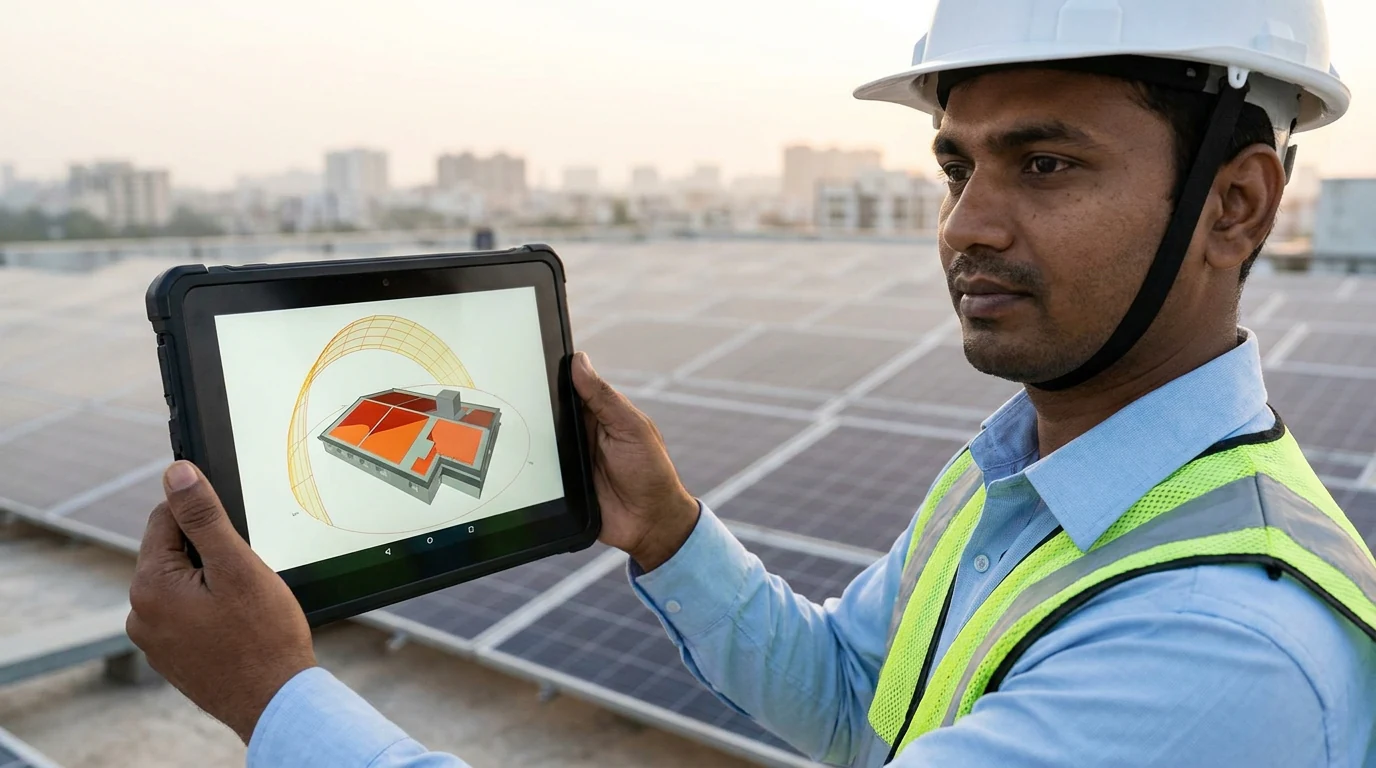
Indian solar engineer reviewing a 3D shadow-analysis simulation on a rugged tablet on a commercial rooftop.
Which Solar Model Fits Your Business?
Capex, Opex PPA, or Open Access — get a site-specific recommendation with system size, savings, and payback in 24 hours.
Why Shadows Matter More Than Most People Think
Solar panels generate electricity when sunlight reaches the photovoltaic cells.
When a portion of a solar panel is shaded, the impact is often greater than many people expect.
A single shaded panel can affect the output of an entire string of connected modules.
This means a relatively small shadow can create a disproportionately large impact on overall energy generation.
Over time, these losses can accumulate into thousands of units of lost electricity production.
The Long-Term Impact Of Poor Shadow Analysis
Solar projects are typically designed for operational lifespans of 25 years or more.
If shadow-related losses are not identified during the design stage, businesses may experience:
Lower Energy Generation
The system produces less electricity than originally projected.
Reduced Financial Savings
Lower generation directly impacts energy cost savings.
Longer Payback Periods
Reduced output can delay the expected return on investment.
Lower Plant Efficiency
The plant may never operate at its intended performance level.
Underperforming Assets
The rooftop area may not be utilized optimally.
In many cases, these losses could have been avoided through proper engineering before installation.
Common Sources Of Shadowing In Commercial Solar Projects
Many businesses assume shade only comes from nearby buildings.
In reality, shadowing can originate from multiple sources.
Trees
Trees that appear harmless today can grow significantly over the life of a solar project.
Water Tanks
One of the most common causes of rooftop shading.
HVAC Equipment
Cooling towers, chillers, ducts, and rooftop units often create shadow zones.
Adjacent Buildings
Especially relevant in industrial parks and dense urban areas.
Telecom Towers
Frequently overlooked during initial site inspections.
Future Construction
Upcoming developments around the facility can influence future solar generation.
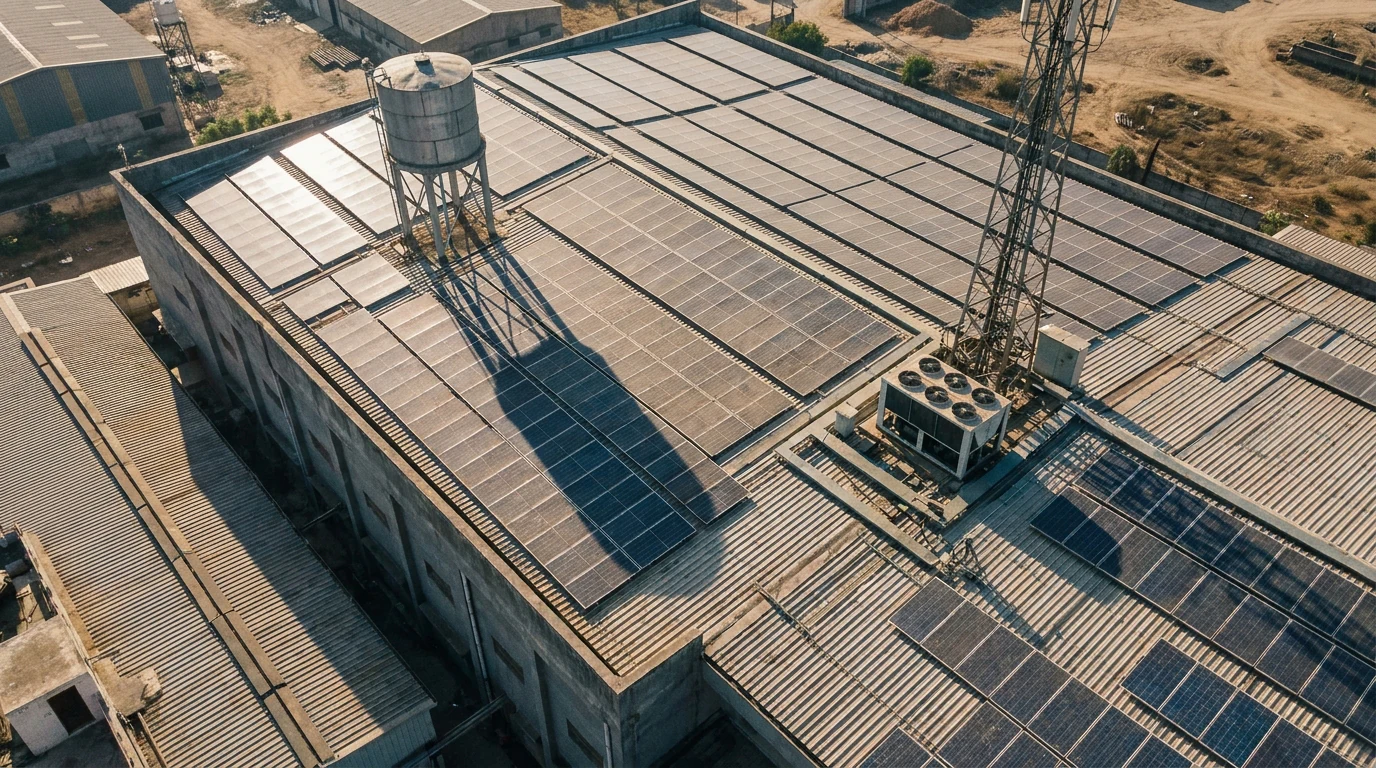
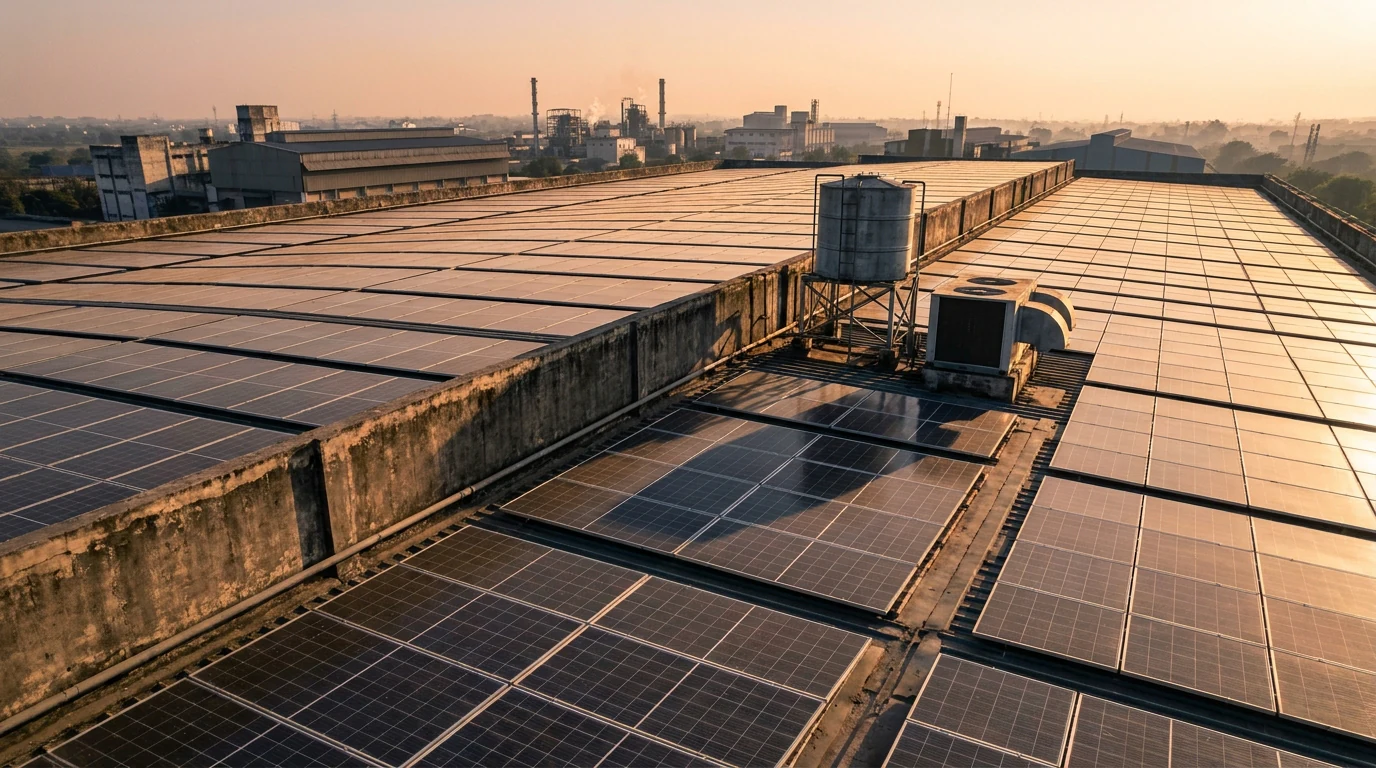
Aerial view of a complex Indian factory rooftop showing solar panels alongside water tanks, HVAC chillers, a telecom tower, and the long shadows they cast.
How EPC Companies Perform Shadow Analysis
Professional solar EPC companies use specialized simulation software to model the site digitally.
The analysis typically includes:
Site Survey
Collection of rooftop dimensions and obstruction details.
3D Modeling
Creation of a virtual representation of the site.
Solar Path Simulation
Tracking the sun's movement across different months and seasons.
Energy Yield Assessment
Estimating generation losses caused by shading.
Design Optimization
Adjusting panel layouts to maximize sunlight exposure.
This process helps ensure that the final design is based on actual site conditions rather than assumptions.
How Shadow Analysis Improves Solar Plant Performance
A detailed shadow study allows EPC teams to make smarter design decisions before installation begins.
Benefits include:
Optimized Panel Placement
Panels can be positioned in areas with maximum solar exposure.
Higher Energy Generation
Reduced shading means more sunlight reaches the system.
Better Financial Returns
Higher generation improves long-term savings and project economics.
More Accurate Generation Estimates
Businesses receive more realistic performance projections.
Improved Long-Term ROI
The system is designed to perform efficiently over its entire operational life.
Why Shadow Analysis Is Especially Important For Commercial Rooftops
Commercial and industrial rooftops are often more complex than residential installations.
They commonly include:
- HVAC infrastructure
- Ventilation systems
- Water storage tanks
- Utility equipment
- Safety walkways
- Structural constraints
Without proper analysis, these elements can significantly impact solar performance.
For large-scale commercial projects, even small percentage losses can translate into substantial energy losses over time.
Engineering First, Panels Second
Many solar buyers focus on the technology being installed.
But the reality is that even the most advanced solar panels cannot compensate for poor engineering.
The success of a solar project starts long before the first panel is installed.
It begins with understanding the site, analyzing potential constraints, and designing the system around real-world conditions.
Shadow analysis is one of the most important parts of that process.
Questions buyers ask us.
Shadow analysis is the process of studying how shadows affect a solar installation site throughout the day and year to optimize system performance.
It helps identify potential energy losses caused by shading and enables better solar system design.
Yes. Even partial shading can impact the performance of multiple connected solar panels.
Typically during the site assessment and system design stage before installation begins.
Yes. Commercial rooftops often contain multiple obstructions that can affect solar generation and should be evaluated before finalizing the design.
At PowerMore, we believe that solar performance begins with engineering.
Every project starts with a detailed site assessment, generation modeling, and shadow analysis to ensure the system is designed for long-term performance.
Because when a solar plant is expected to operate for 25 years, every shadow matters.