
Solar Power For Cold Storage: A Complete Guide
Cold storage runs on continuous, expensive power. Here's how solar changes the economics, and why cold storage needs a different approach to system design.
Cold storage doesn't run in shifts. It runs continuously, every hour of every day, all year, since refrigeration doesn't take a break.
That makes cold storage one of the most expensive commercial operations to power, and also one of the best-suited businesses for solar. But the fit isn't automatic; cold storage brings specific demands that a standard commercial solar design doesn't fully account for.
Why Cold Storage Electricity Costs Run So High
A medium-sized cold storage facility typically consumes ₹15-30 lakh annually in electricity, driven almost entirely by one component: compressor operation, which accounts for 60-70% of total energy use, with the remainder split across evaporators, lighting, and material handling.
Unlike a factory or office that can scale down power use outside working hours, cold storage refrigeration runs 24/7 regardless of business hours, meaning there's no natural dip in consumption to offset costs. In regions prone to power cuts, many facilities also run backup diesel generators, adding further expense on top of an already high electricity bill.
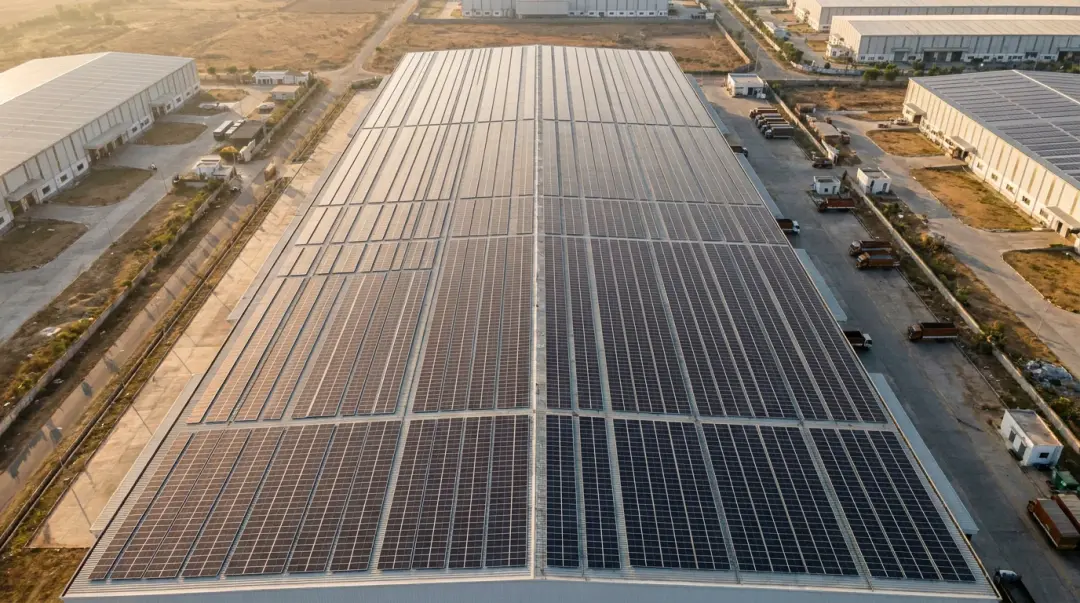
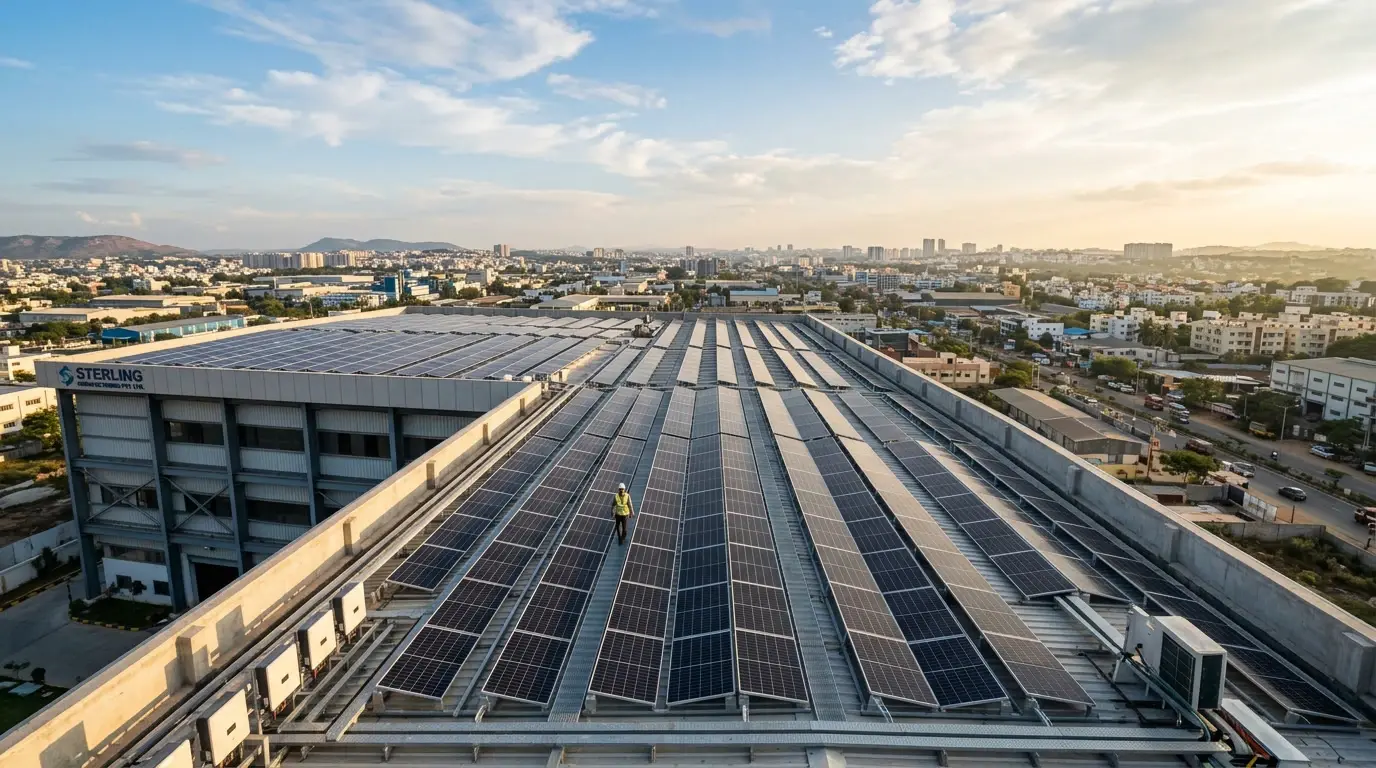
Large warehouse-style cold storage facility with an extensive rooftop solar installation feeding continuous refrigeration load.
Which Solar Model Fits Your Business?
Capex, Opex PPA, or Open Access — get a site-specific recommendation with system size, savings, and payback in 24 hours.
Why Cold Storage Is Actually A Strong Fit For Solar
Despite its round-the-clock demand, cold storage aligns unusually well with solar generation for a few specific reasons:
Consistent, Predictable Load
Unlike businesses with unpredictable seasonal spikes, cold storage draws power at a fairly steady rate year-round, making system sizing and savings projections more reliable.
Available Space
Cold storage facilities, particularly those serving agricultural supply chains, are frequently located in rural or semi-rural areas with ample rooftop or adjoining land, exactly where solar economics work best.
High Baseline Consumption
Because cold storage electricity bills are already substantial, even a partial offset from solar translates into meaningful absolute savings.
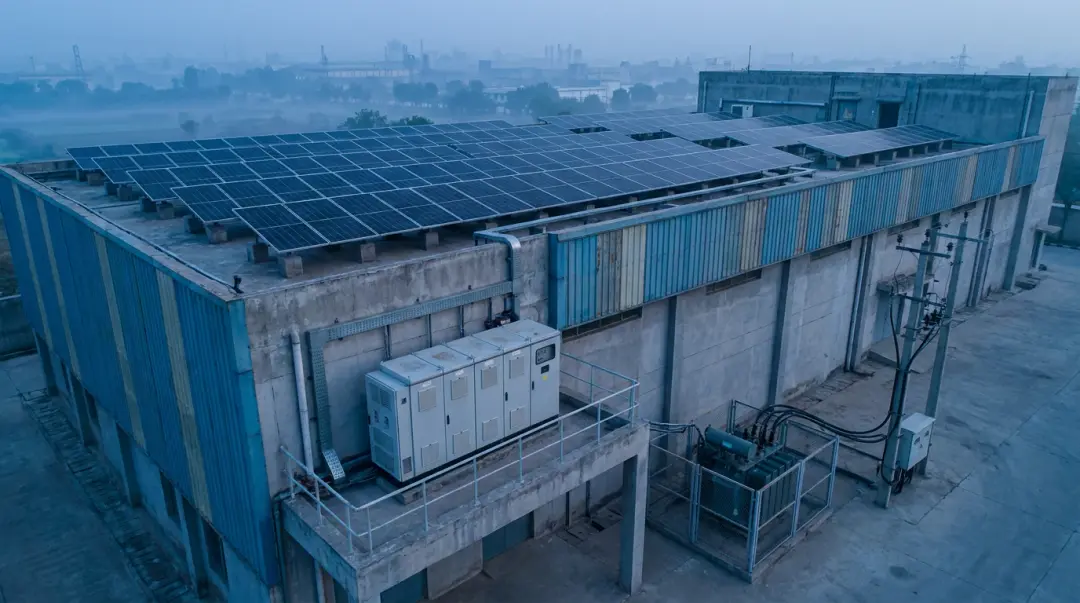
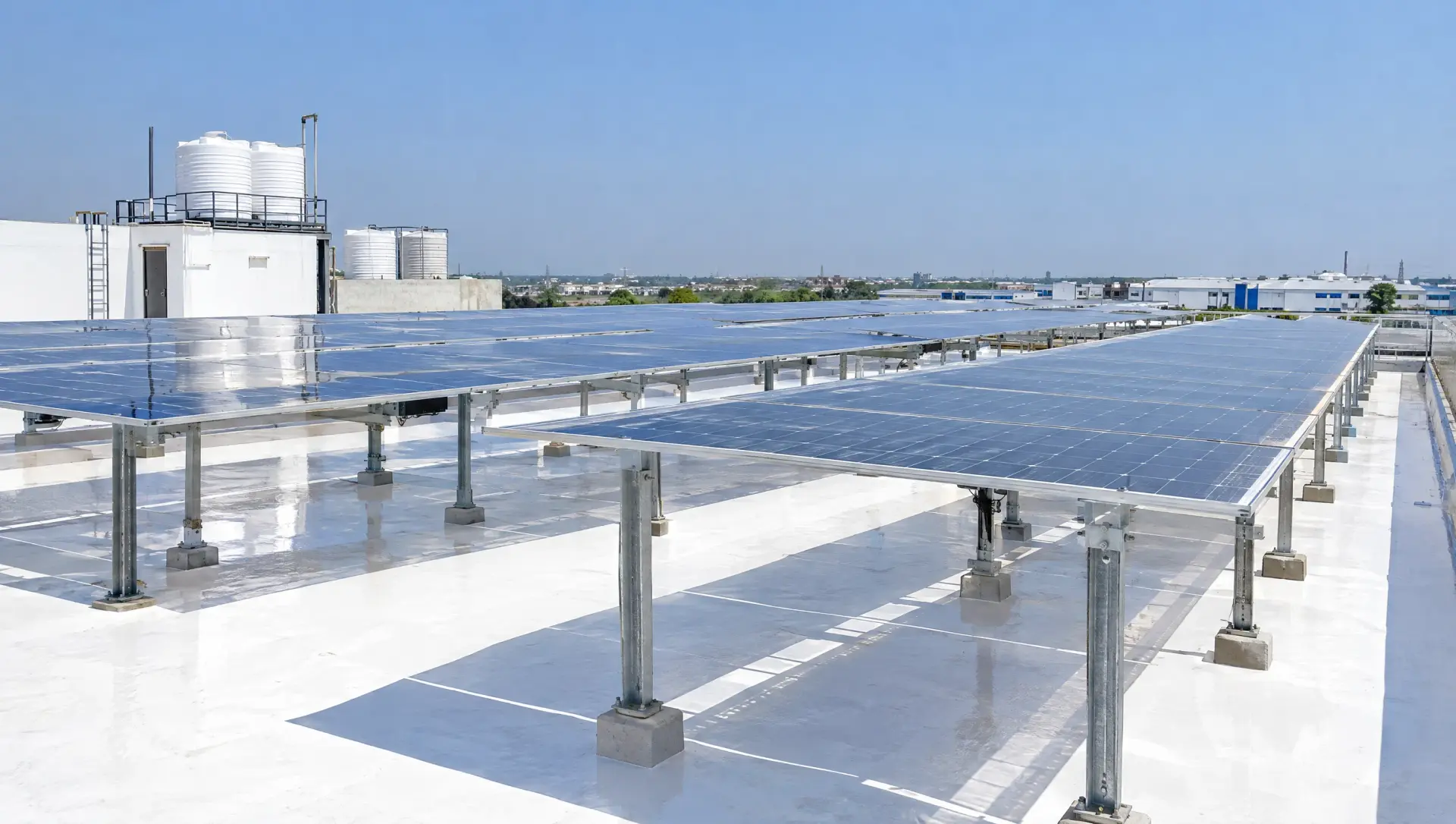
Hybrid solar system with battery storage on a cold storage facility for backup during outages.
Why Cold Storage Needs A Different Solar Approach
Round-The-Clock Power Needs Change The Math
Standard commercial solar covers daytime consumption well, but refrigeration doesn't stop when the sun sets. A cold storage facility's night-time and cloudy-day power draw doesn't disappear just because solar generation does, which is exactly why battery storage or a hybrid system deserves serious consideration here, more so than for a typical daytime-only commercial operation.
Sizing Has To Account For Partial, Not Full, Offset
A rooftop solar system sized purely against available roof area often covers only a portion, commonly in the 20-25% range for a mid-sized facility, of a cold storage unit's total electricity use. This isn't a design failure, it's the nature of round-the-clock refrigeration load against daylight-only generation, but it does mean expectations need to be set accurately from the start, rather than assuming solar will eliminate the electricity bill entirely.
Backup Power Becomes A Genuine Priority, Not A Nice-To-Have
A power outage at a factory delays production. A power outage at a cold storage facility risks spoiled inventory, an entirely different category of loss. This makes hybrid systems, with battery backup keeping refrigeration running through an outage, particularly relevant for cold storage in a way that's less critical for many other commercial applications.
Compressor Load Patterns Affect System Design
Since compressors cycle on and off based on temperature thresholds rather than running at a constant draw, system design benefits from understanding the facility's actual load curve, not just its average consumption, when sizing inverters and, where applicable, battery capacity.
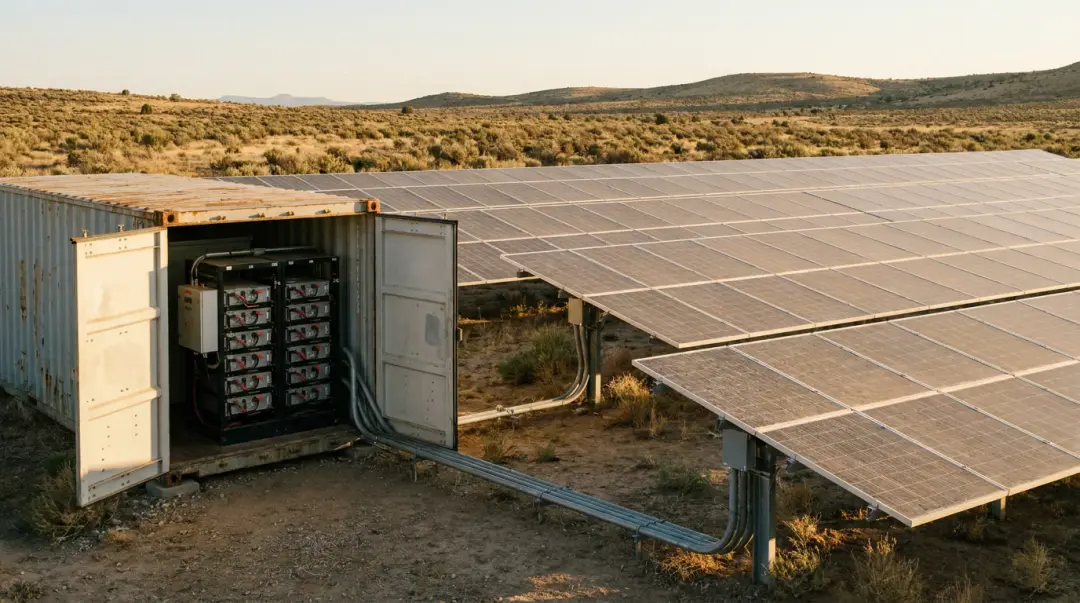
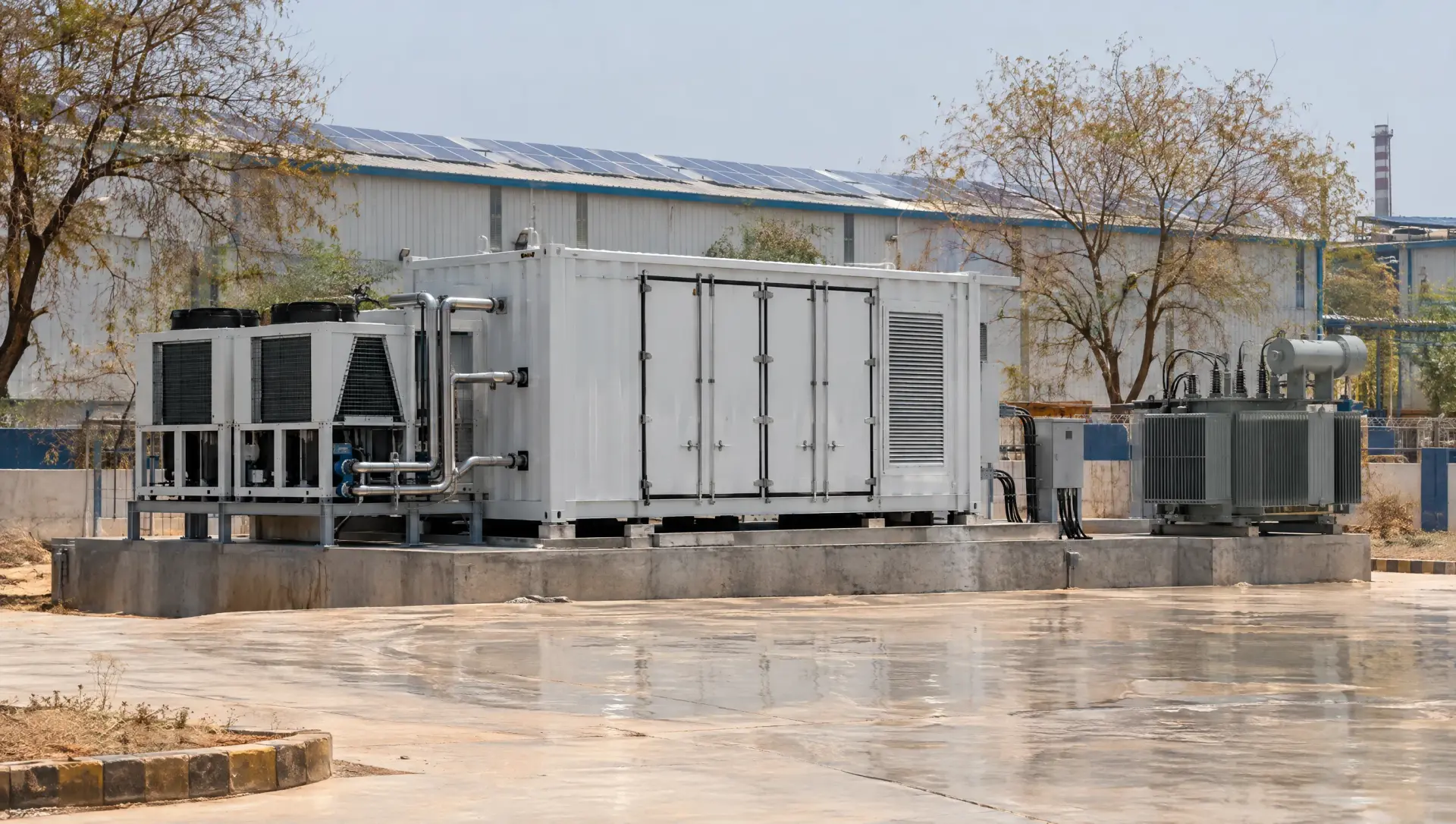
Industrial refrigeration compressor cycling on off-grid battery-backed solar power.
What Financial Incentives Apply To Cold Storage Solar?
Accelerated Depreciation
Commercial and industrial cold storage solar installations qualify for accelerated depreciation under the Income Tax Act, meaningfully reducing the effective cost of ownership and shortening payback periods for businesses that purchase their system outright.
PM-KUSUM Scheme
Component A of the PM-KUSUM scheme applies specifically to agricultural installations, including cold storage, offering a relevant subsidy pathway for facilities tied to agricultural supply chains.
State-Specific Subsidies
Several states offer additional incentives through their state renewable energy agencies, worth checking against the specific state a facility operates in.
Is Solar Worth It For A Cold Storage Business?
Given the combination of high baseline electricity costs, consistent load patterns, and available financial incentives, solar is often one of the strongest ROI applications in the agri-business and cold chain sector, even accounting for the fact that solar alone typically offsets only a portion of total consumption rather than all of it.
The right approach isn't to view solar as a full replacement for grid power, but as a meaningful, compounding reduction in one of the facility's largest recurring costs, sized and designed around the reality of round-the-clock refrigeration, not a generic daytime-consumption template.
Questions buyers ask us.
Not typically on its own. Since refrigeration runs 24/7 and solar only generates during daylight, most rooftop solar systems offset a meaningful portion, but not all, of a cold storage facility's total electricity use unless paired with substantial battery storage.
Not always required, but strongly recommended, since a power outage risks spoiled inventory, an outcome standard on-grid solar can't prevent during a grid failure.
This varies by facility size and available roof space, but a common range is around 20-25% for a mid-sized facility using standard rooftop solar without battery storage.
Yes. PM-KUSUM Component A applies to agricultural cold storage installations, and several states offer additional incentives through their renewable energy agencies.
Often, yes, given the high baseline electricity costs involved, combined with accelerated depreciation benefits, payback periods can be notably faster than average commercial solar installations.
At PowerMore, cold storage projects start with understanding the facility's actual load curve, compressor cycling, night-time draw, and backup requirements, before recommending a system size or configuration. That means the solar plan reflects what a 24/7 refrigeration operation genuinely needs, not a generic daytime-consumption assumption.
Speak to our team to evaluate solar for your cold storage facility.