Why MSMEs Are The Next Big Opportunity For Solar In India
MSMEs are the backbone of India's economy and the biggest untapped rooftop solar opportunity in the country. Here's how solar fits into the realities of running a small or mid-sized business — savings, ownership models, and what to evaluate before signing off.
India's solar growth story has largely been led by large industries, commercial buildings, and utility-scale projects.
But the next major shift could come from a segment that forms the backbone of India's economy:
Micro, Small, and Medium Enterprises (MSMEs).
With thousands of manufacturing units, workshops, warehouses, and small businesses operating across India, MSMEs represent a massive opportunity for rooftop solar adoption.
The question is not whether solar works for MSMEs.
The question is: how can solar become simpler, more accessible, and easier to adopt for small and medium businesses?
Why MSMEs Need To Think About Energy Differently
For many MSMEs, electricity is one of the largest recurring operational expenses.
Businesses operating in sectors such as:
- Manufacturing
- Textiles
- Food processing
- Engineering
- Metals
- Packaging
depend heavily on consistent electricity supply.
Unlike large enterprises with dedicated energy teams, MSMEs often make decisions based on:
- Cash flow
- Immediate business priorities
- Operational simplicity
- Risk management
This is why solar adoption requires more than just showing savings. It needs to fit into the realities of running a business.
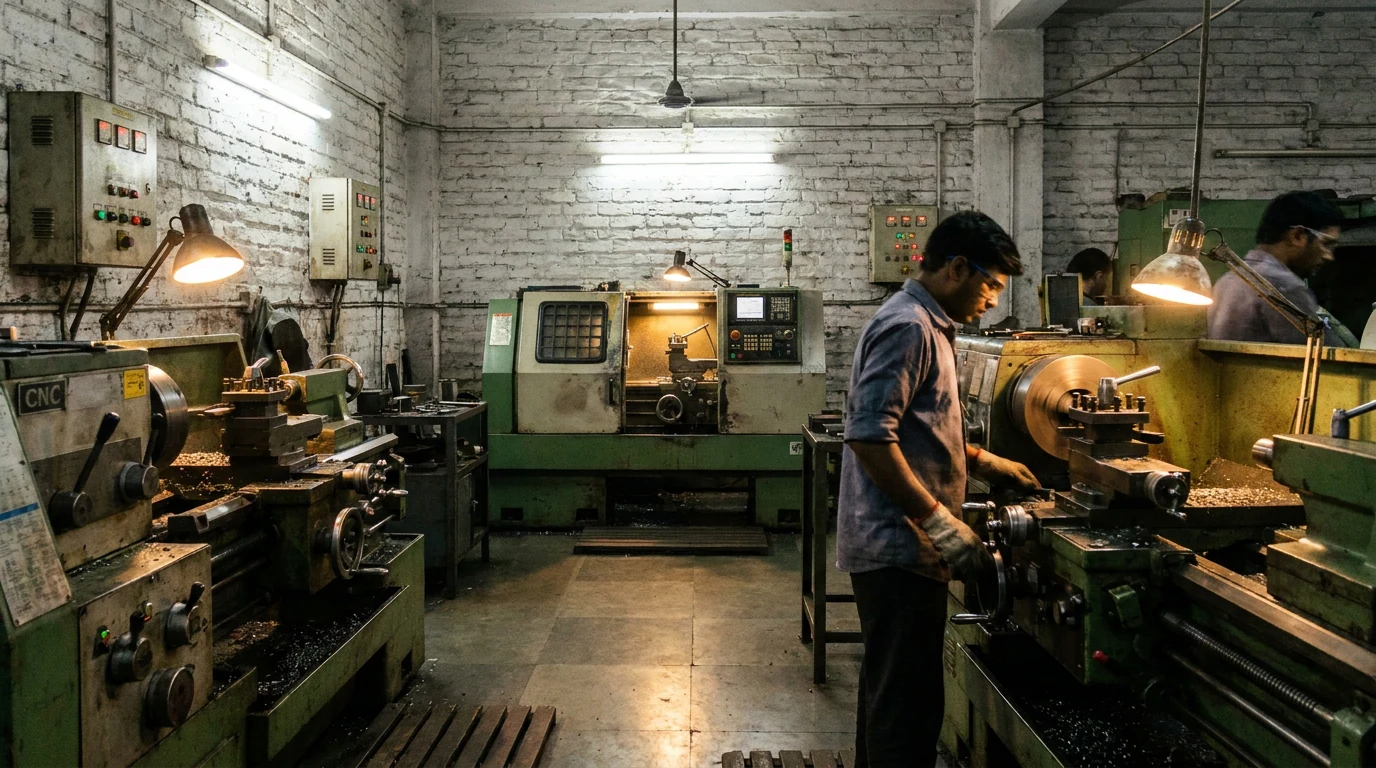
Inside a busy Indian MSME workshop with running CNC and lathe machines under mixed warm and cool lighting.
Which Solar Model Fits Your Business?
Capex, Opex PPA, or Open Access — get a site-specific recommendation with system size, savings, and payback in 24 hours.
Why Solar Makes Sense For MSMEs
Lower Electricity Costs
Electricity tariffs continue to impact business margins.
For MSMEs operating on tight margins, reducing energy expenses can directly improve profitability.
Rooftop solar allows businesses to generate their own electricity and reduce dependence on conventional grid power.
Daytime Consumption Matches Solar Generation
One of the biggest advantages MSMEs have is their operating schedule.
Most businesses operate during daytime hours, exactly when solar systems generate maximum energy.
This creates a natural match between solar generation and business consumption, reducing the need for additional storage solutions in many cases.
Solar Turns Energy Into A Business Advantage
Solar is no longer only a sustainability decision.
For MSMEs, it can become a strategic business decision.
By reducing electricity expenses, businesses can:
- Improve cost competitiveness
- Protect against future tariff increases
- Improve operational efficiency
- Strengthen sustainability credentials
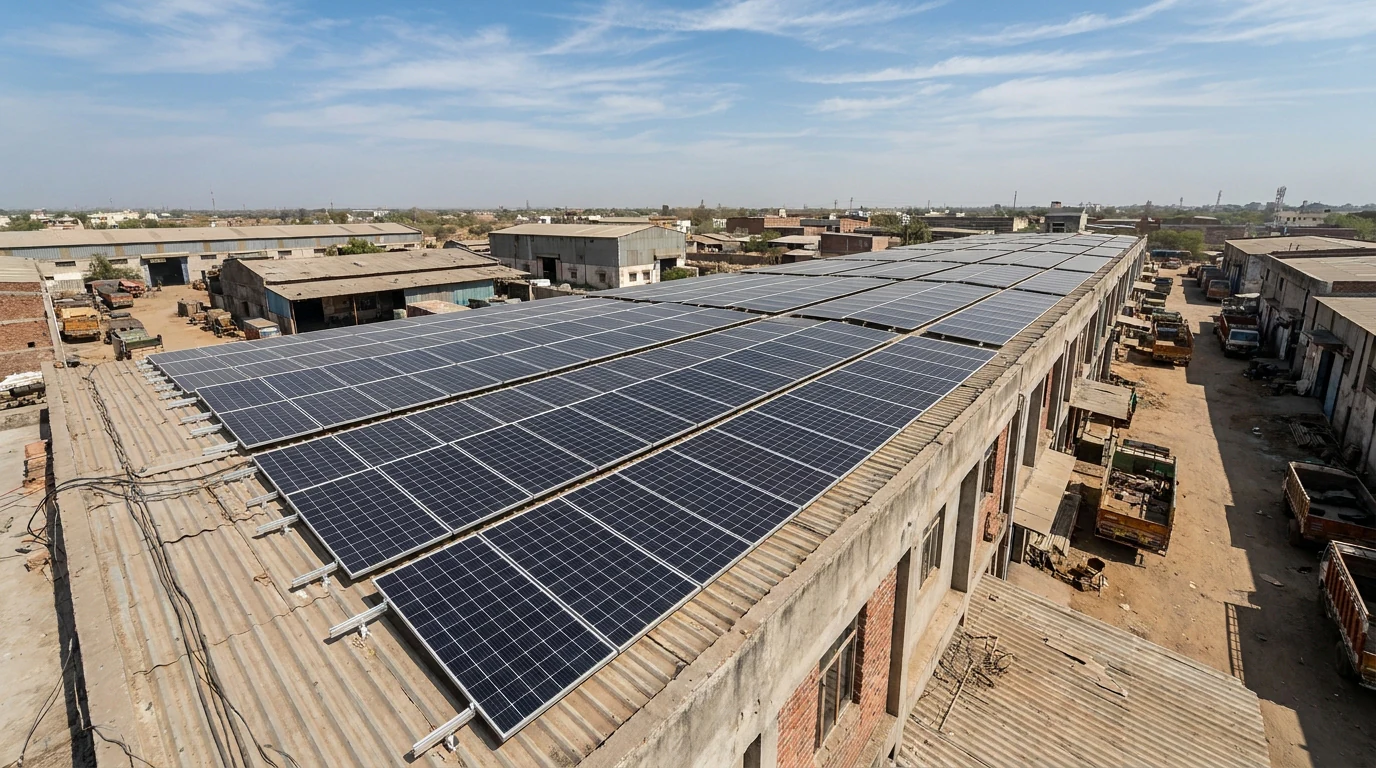
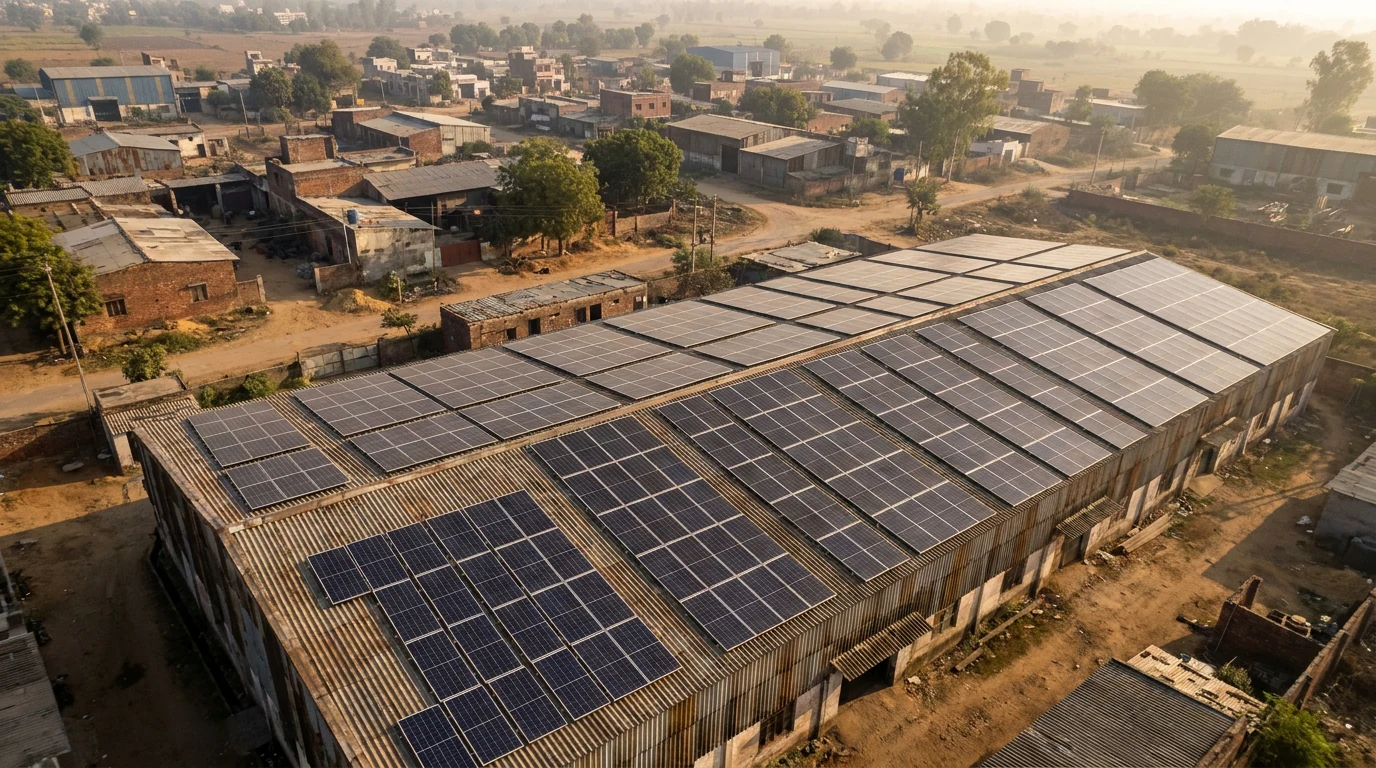
A typical Indian MSME building rooftop fully covered with monocrystalline solar panels on a clamp-fit mounting structure under midday sun.
What Is Holding MSMEs Back From Solar Adoption?
Despite strong potential, adoption among MSMEs remains lower than expected.
Some common barriers include:
Upfront Investment Concerns
Traditional solar ownership models require capital investment.
For many MSMEs, allocating funds toward machinery, expansion, and operations may take priority.
This is where alternative models like OPEX and RESCO can help.
Lack Of Awareness
Many businesses still have questions around:
- Expected savings
- Solar feasibility
- Installation process
- Maintenance
- Financing options
Having the right solar partner can simplify this journey.
Operational Constraints
Many MSMEs operate from:
- Leased facilities
- Shared industrial spaces
- Limited rooftop areas
These factors require customised solar planning.
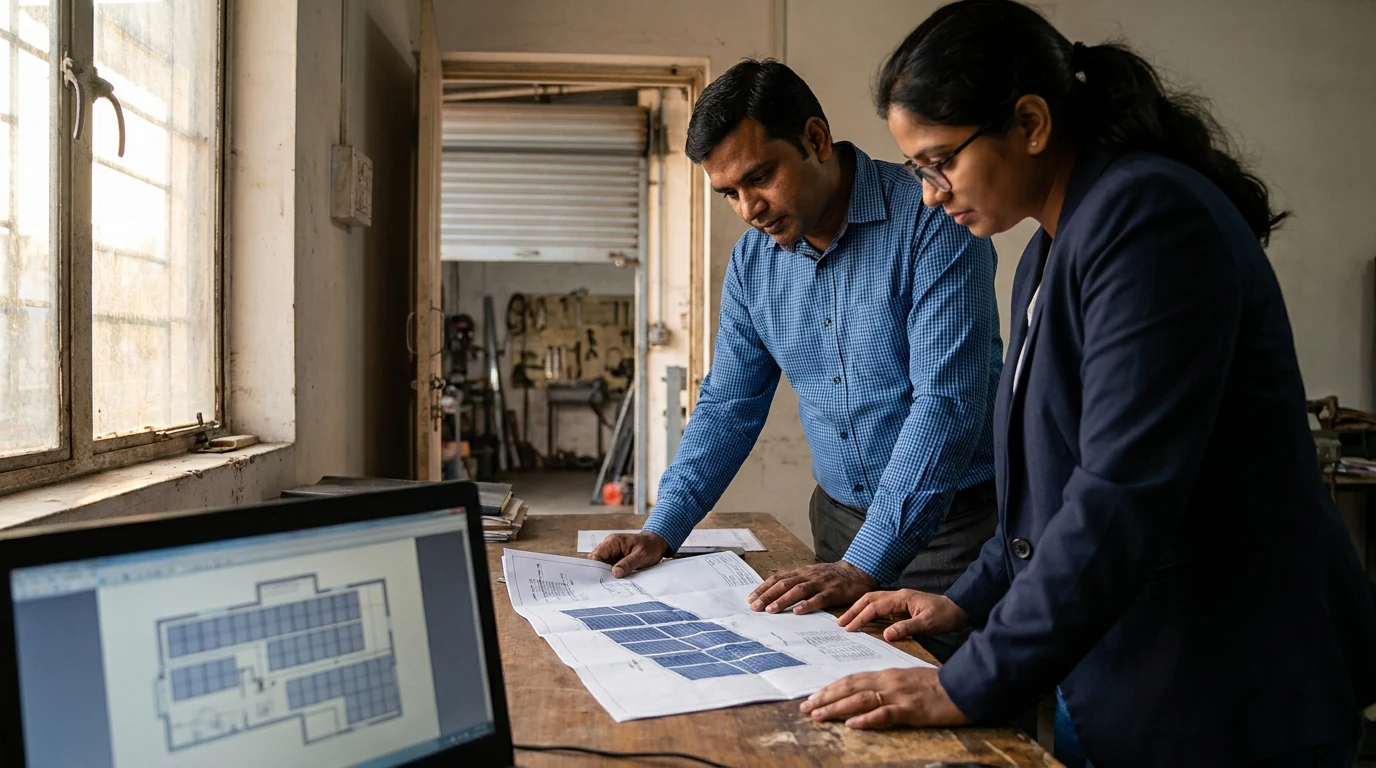
Two MSME business owners reviewing a printed solar proposal alongside a rooftop layout drawing on a laptop in a modest workshop office.
How Can MSMEs Choose The Right Solar Solution In India?
For MSMEs, choosing solar is not just about installing panels, it is about selecting a solution that delivers measurable savings, reliable performance, and long-term value.
The right solar approach depends on three key factors:
- Energy requirements
- Site feasibility
- Business priorities
At PowerMore, we help MSMEs evaluate these factors before designing a solar solution that fits their operational needs.
Evaluate Savings Beyond The Initial Cost
The lowest installation cost does not always mean the best solar investment.
Since solar plants operate for 20 to 25 years, businesses should evaluate:
- Expected energy savings
- System performance
- Maintenance requirements
- Long-term returns
A well-designed solar system should reduce energy costs consistently, not just look attractive on paper.
Select The Right Ownership Model
Every business has different investment priorities.
CAPEX Model. Businesses invest in and own the solar plant. Suitable for MSMEs looking for asset ownership, long-term returns, and complete control.
OPEX Model. A third party invests in, owns, and maintains the solar plant, while the business pays for the electricity generated. Suitable for MSMEs looking to avoid a large upfront investment, preserve capital, and adopt solar faster.
PowerMore helps businesses evaluate the right model based on their energy consumption and financial goals.
Start With The Right Engineering
Solar performance begins before installation.
A detailed site assessment helps identify:
- Available rooftop area
- Structural feasibility
- Shadow impact
- Energy consumption patterns
At PowerMore, our engineering-first approach ensures every project is designed for maximum generation and long-term performance.
Choose A Solar Partner, Not Just An Installer
A successful solar project depends on more than equipment.
MSMEs should work with partners who provide:
- End-to-end EPC execution
- Quality component selection
- Transparent project planning
- Long-term support
PowerMore works with businesses from feasibility assessment to commissioning, ensuring solar projects deliver the expected value.
Because the right solar decision today can create energy savings for years to come.
The Future Of MSME Solar In India
India's renewable energy transition cannot happen without MSMEs.
As technology improves and adoption models become simpler, more small and medium businesses are expected to explore solar as part of their long-term energy strategy.
The opportunity is significant: every rooftop can become a source of cleaner, smarter, and more cost-efficient energy.
For MSMEs, solar is no longer just an environmental initiative. It is becoming a smarter way to run a business.
Questions buyers ask us.
Yes. Solar can help MSMEs reduce electricity expenses, improve energy independence, and strengthen long-term cost efficiency.
Yes. Rooftop solar can be customised based on available space, electricity consumption, and business requirements.
OPEX solar allows businesses to use solar power without purchasing the solar plant. A third party owns and maintains the system while the business pays for the electricity consumed.
Savings depend on electricity consumption, tariff structure, system size, and location.
Yes. Manufacturing businesses with high daytime electricity consumption are among the strongest candidates for rooftop solar.
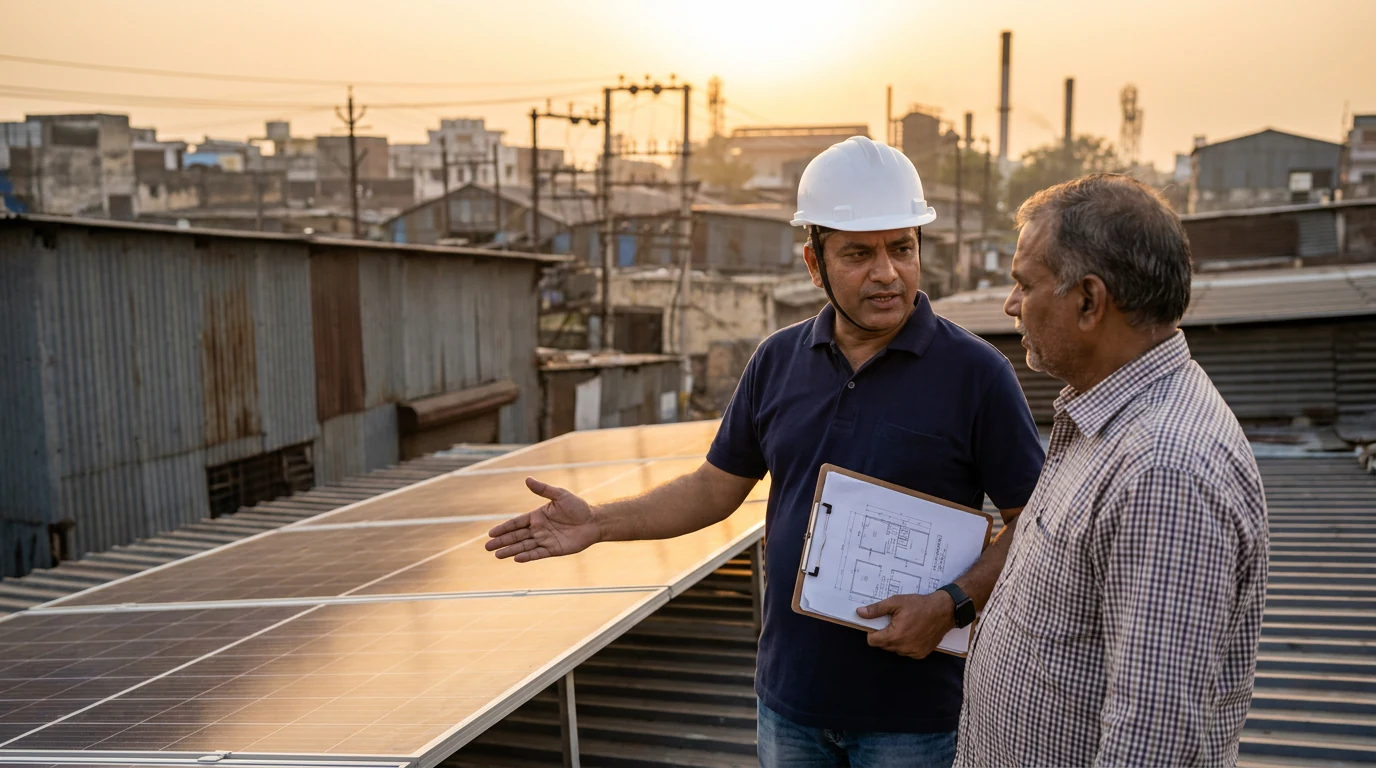
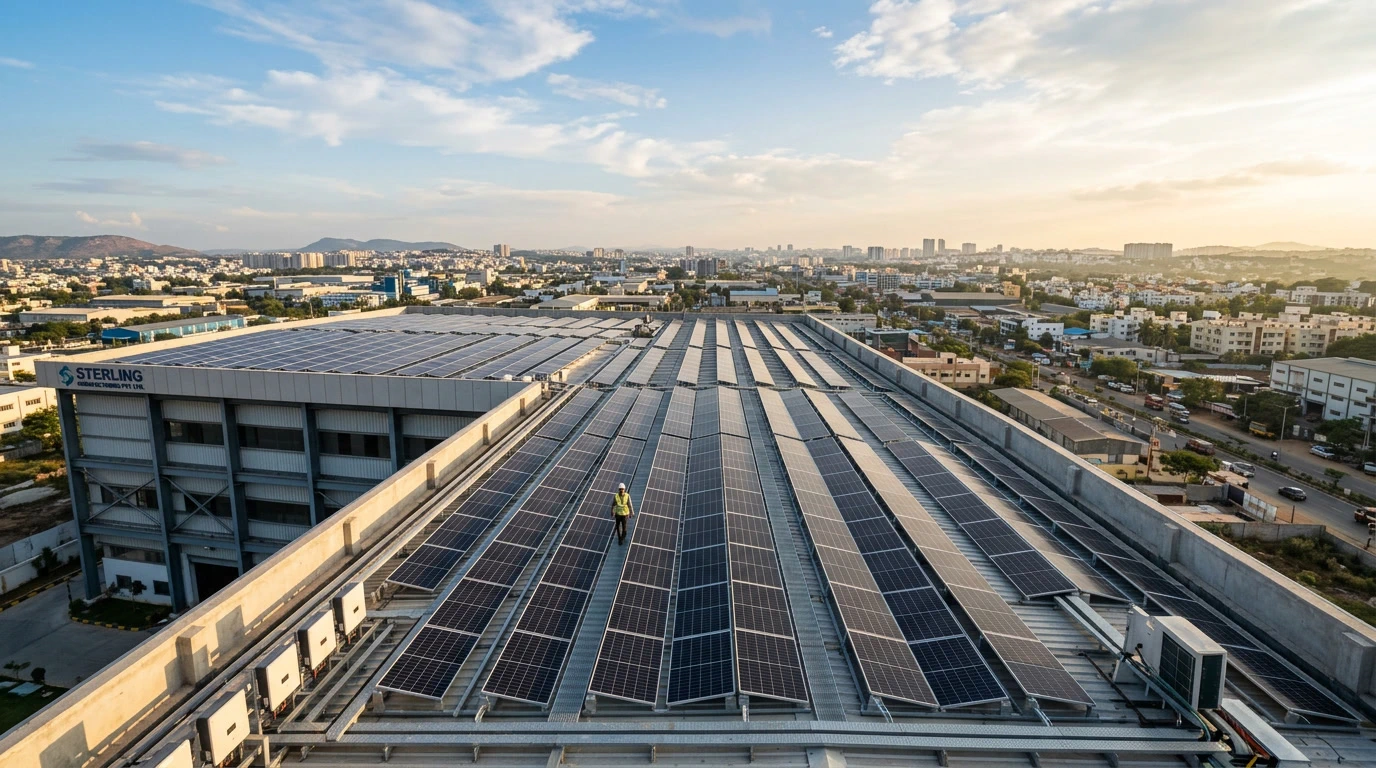
A Powermore solar engineer on an MSME rooftop walking the business owner through a freshly installed solar array at golden hour.
PowerMore helps MSMEs and commercial businesses design and implement reliable solar solutions that align with their energy needs and growth goals.
Talk to our experts to understand the right solar approach for your facility.