
Delhi NCR Rooftop Solar Rules & DISCOM Process (2026)
Delhi rooftop solar can cut commercial electricity costs by nearly 70%. Here's the real DISCOM process across BSES and Tata Power, and how to avoid common approval delays.
Delhi's rooftop solar process runs through one critical detail most businesses overlook until it costs them weeks: which DISCOM actually covers the property. Get that wrong, and the entire approval timeline restarts from zero.
Which DISCOM Covers Your Facility?
Three electricity distributors operate across Delhi: BSES Rajdhani covers South and West Delhi, BSES Yamuna covers East and Central Delhi, and TPDDL covers North and Northwest Delhi. Each runs its own application process, uses different consumer number formats, and follows slightly different timelines.
This distinction matters more than it seems. Selecting the wrong DISCOM on the application portal is one of the most common mistakes businesses make in Delhi, if BSES Yamuna receives an application meant for TPDDL, it gets rejected after 12-20 days, forcing a restart from scratch with the correct DISCOM.
Rooftop solar array on a Delhi NCR commercial building where DISCOM selection determined the approval path.
Which Solar Model Fits Your Business?
Capex, Opex PPA, or Open Access — get a site-specific recommendation with system size, savings, and payback in 24 hours.
The Rooftop Solar Approval Process
The standard net metering process across all three DISCOMs follows a similar sequence: the rooftop solar system is installed according to approved specifications, inspected for compliance and safety, and a bidirectional meter is installed to record both imported and exported electricity.
A critical compliance detail: Delhi's net metering order requires residential and commercial consumers to use BIS-certified solar panels (conforming to IS 14286) and BIS-certified inverters, and DISCOM inspectors specifically check BIS certificate numbers during post-installation inspection. A missing BIS number on either the panel or inverter is the single most common reason for BSES and TPDDL inspection rejection, costing an additional 3-6 weeks in reprocessing time.
Realistic Timelines
A clean application with proper documentation and an experienced installer typically brings the total process close to 65 days from start to finish. For facilities in apartment complexes or multi-tenant buildings, RWA (Resident Welfare Association) approval, where applicable, adds a further 2-6 weeks on top of the standard timeline.
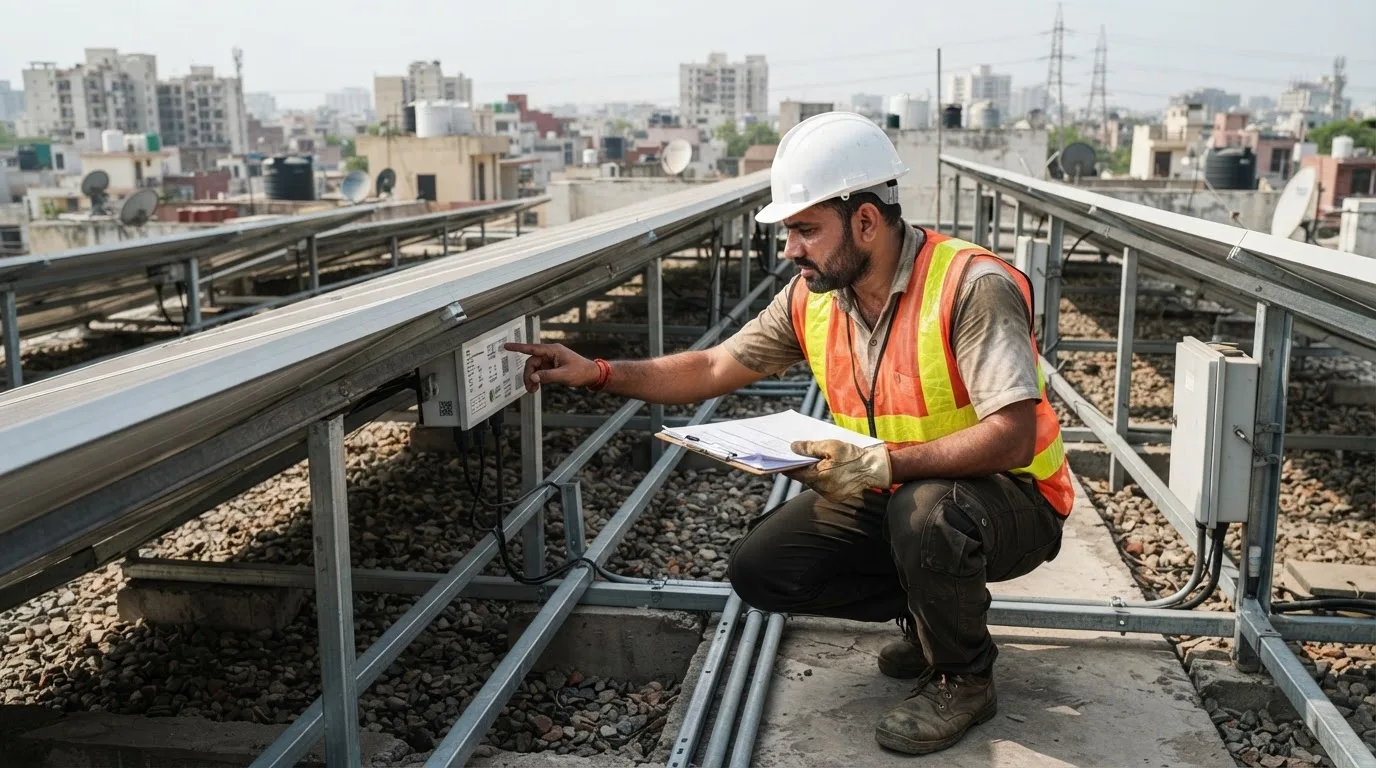
Solar engineer surveying a Delhi rooftop for shadow analysis and DISCOM-compliant installation planning.
How Net Metering Actually Works
During the day, solar panels produce electricity, some is used directly, and any surplus goes to the grid. At night or on cloudy days, the facility draws from the grid as usual. At month end, the bill reflects only the net units, what was imported minus what was exported. If exports exceed imports in a given month, the credits carry forward to the next billing cycle.
What This Means Financially For Commercial Consumers
Delhi's commercial electricity tariffs carry more hidden cost than the headline rate suggests. The current 2026 surcharges and PPAC (Power Purchase Adjustment Cost) levels add significantly on top of standard energy charges, with PPAC currently fluctuating between 25-35% depending on the billing cycle.
Against this backdrop, a business that owns its rooftop in an industrial area can generate solar power at an effective cost of roughly ₹3.50-4.00 per unit, spread over 25 years, compared to a DISCOM rate that can run as high as ₹14.00 per unit, translating to savings of nearly 70% for facilities that can install rooftop solar directly.
What About Businesses Without Usable Rooftop Space?
Many Delhi businesses operate from rented spaces or multi-story buildings with shared or unavailable roof access. For these facilities, Virtual Net Metering (VNM) allows subscribing to a solar plant located elsewhere, with the credits adjusted directly against the business's BSES or Tata Power DDL bill, without needing rooftop access at all.
For Larger Loads: The Open Access Route
For industrial consumers whose consumption exceeds what rooftop capacity can practically cover, open access follows a more administrative path than standard rooftop net metering: a feasibility study analyzing 12 months of electricity bills and 15-minute load data, selecting between a group captive or third-party PPA model, securing a No Objection Certificate (NOC) from the relevant DISCOM, applying to the State Load Despatch Centre (SLDC) for connectivity, installing ABT meters and telemetry systems for real-time monitoring, and finally signing the PPA before commencement. Once synced to the grid, the monthly DISCOM bill reflects an "Adjustment of Solar Units" line item.
Questions buyers ask us.
It depends on location: BSES Rajdhani covers South and West Delhi, BSES Yamuna covers East and Central Delhi, and TPDDL covers North and Northwest Delhi.
With clean documentation and an experienced installer, the full process typically takes around 65 days; RWA approval for apartment complexes can add 2-6 weeks further.
A missing BIS certification number on the panel or inverter is the most frequent cause of inspection rejection by BSES and TPDDL.
Yes, through Virtual Net Metering (VNM), which lets a business subscribe to an off-site solar plant and receive credits directly on its DISCOM bill.
Yes. Open access involves a more administrative process, including SLDC applications, DISCOM NOCs, and ABT metering, suited to larger industrial loads beyond typical rooftop capacity.
At PowerMore, every Delhi NCR project starts by confirming the correct DISCOM and its specific documentation requirements before any application is filed, avoiding the most common and costly mistake in the region's approval process.
Speak to our team to navigate Delhi's solar approval process.