
What Is A Solar PPA (Power Purchase Agreement)? A Guide For Businesses
Considering solar without upfront cost? Here's how a Power Purchase Agreement (PPA) works, what businesses should check before signing, and how it powers the OPEX solar model.
Most businesses hit the same wall when they start exploring solar: the idea makes sense, but the upfront cost doesn't.
That's the exact problem a Solar PPA was built to solve.
A Power Purchase Agreement lets a business run on solar power without ever owning the plant that produces it. No capital outlay, no asset to maintain, no engineering to manage — just electricity, delivered at a rate that's usually locked in for years. Here's how that actually works, and what to look for before signing one.
What Is A Solar PPA, Exactly?
Strip away the legal language, and a Solar PPA is simple: a business agrees to buy electricity, not equipment.
A solar developer designs, funds, installs, and operates the plant, typically right on the business's own rooftop. The business never touches the capital cost. Instead, it pays only for the units of electricity the plant actually produces, at a tariff both sides agree to upfront.
The shift in mindset is the whole point: a business stops thinking of solar as infrastructure it has to build, and starts thinking of it as a utility it simply switches to.

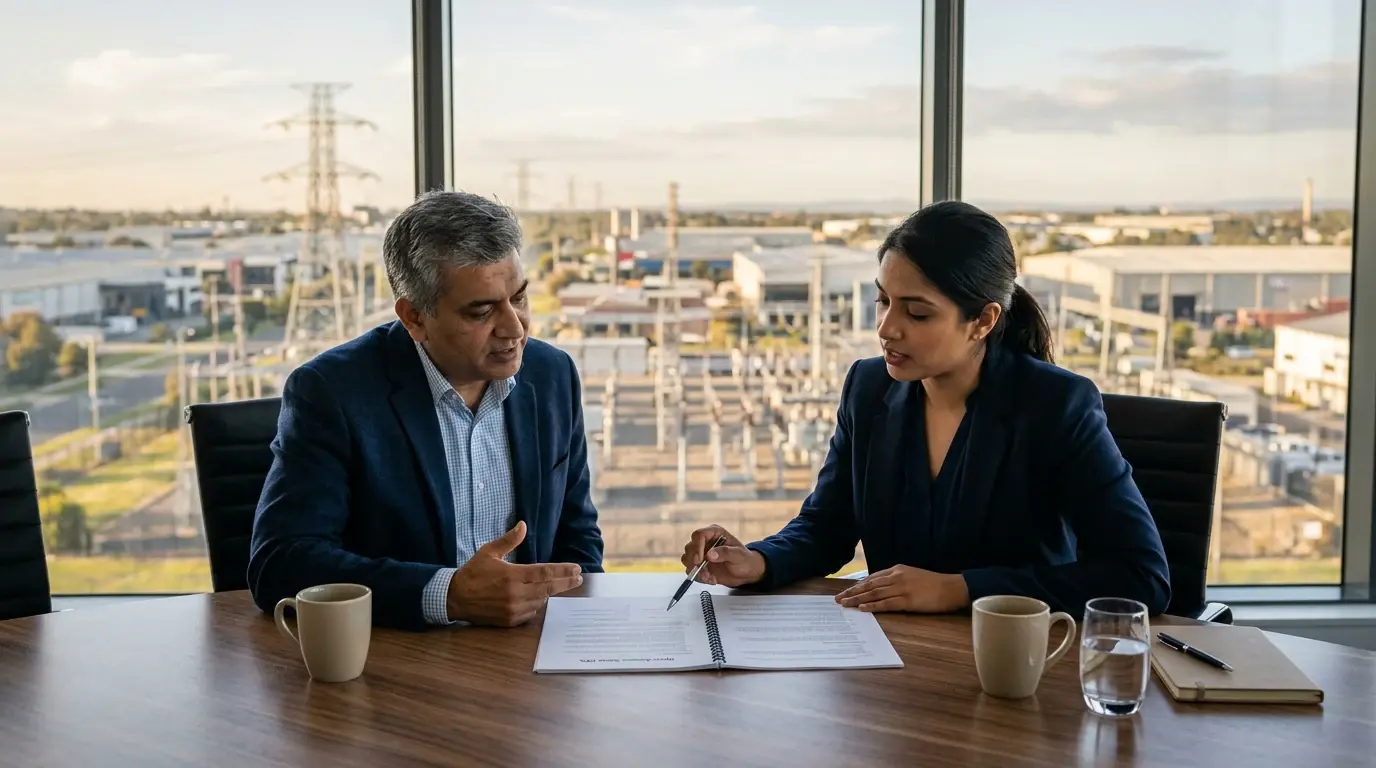
Indian business owner and solar developer reviewing a Power Purchase Agreement across a boardroom table.
Which Solar Model Fits Your Business?
Capex, Opex PPA, or Open Access — get a site-specific recommendation with system size, savings, and payback in 24 hours.
How Does A Solar PPA Actually Work?
Step 1: The Developer Assesses The Site
Consumption patterns, rooftop space, and technical feasibility all get mapped out before anything is proposed.
Step 2: Both Sides Agree On The Tariff
A per-unit rate is set, usually below or in line with the current grid tariff, along with how long the agreement runs, commonly somewhere between 10 and 25 years.
Step 3: The Plant Gets Built, On The Developer's Dime
Design, procurement, installation, all funded and executed by the developer. The business doesn't write a check for any of it.
Step 4: The Business Simply Uses The Power
Electricity flows, the business consumes it, and the bill reflects only what was used, at the agreed rate.
Step 5: The Developer Keeps It Running
Monitoring, servicing, performance tracking, all remain the developer's job for the life of the contract.
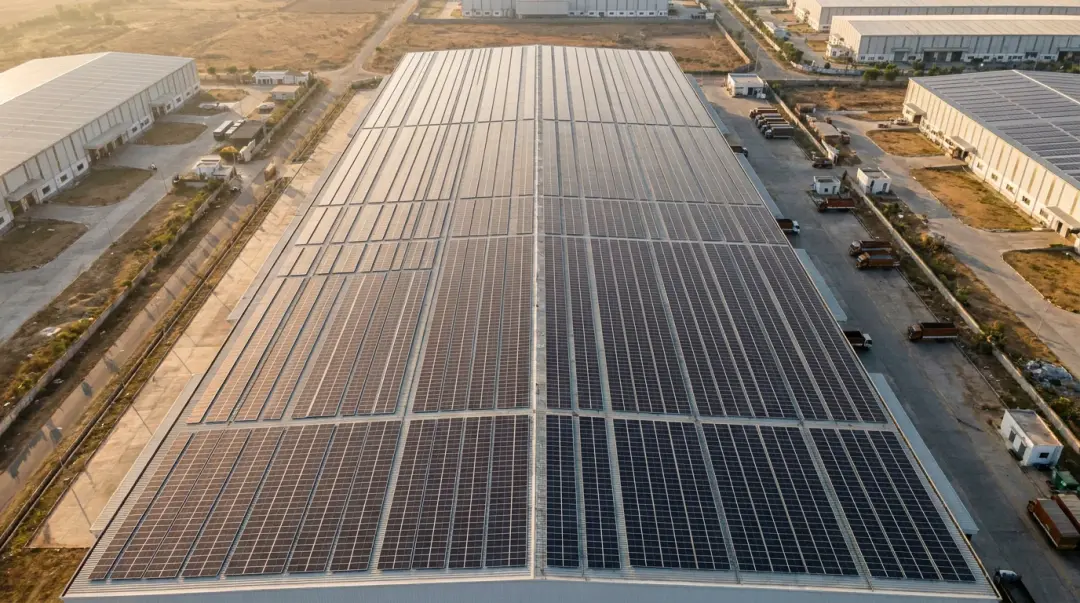
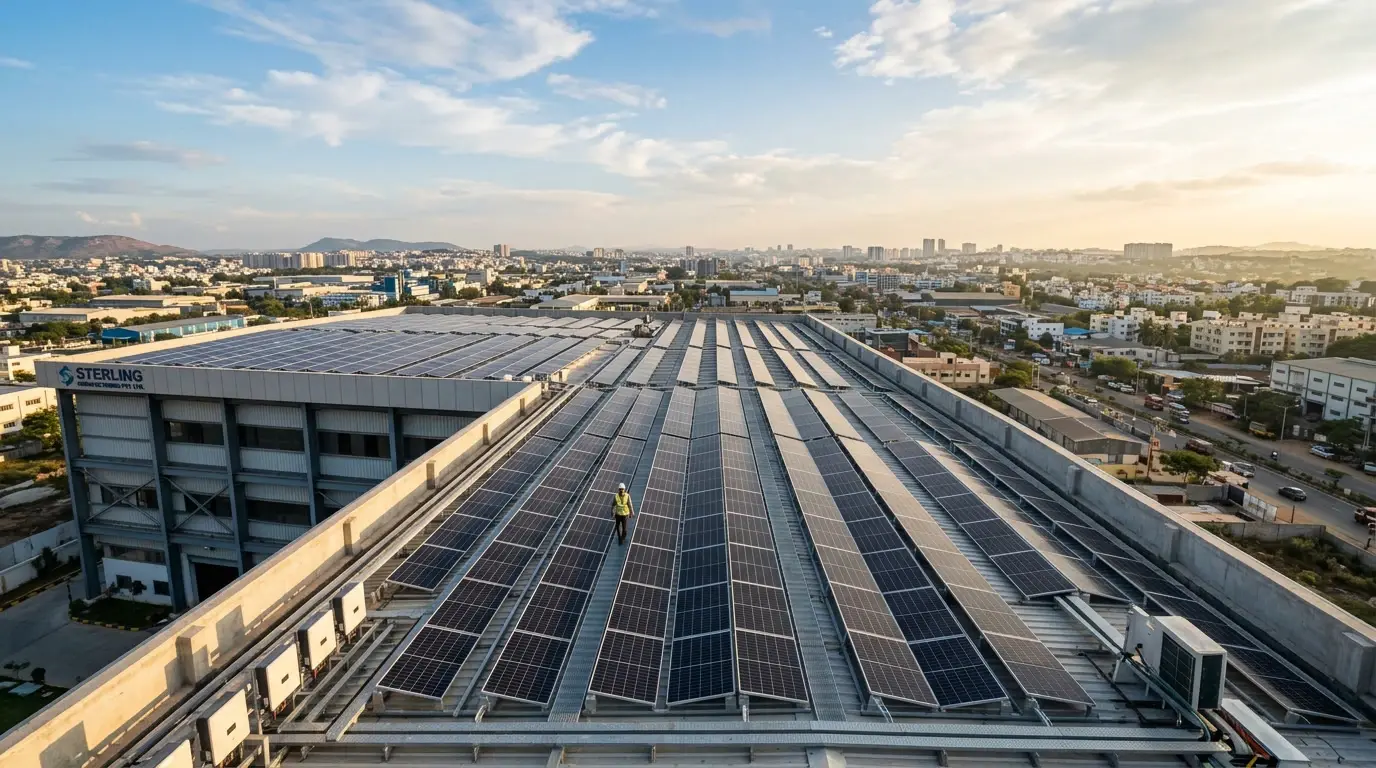
Commercial rooftop solar plant seen from below, with a warehouse below serving as the offtaker under a PPA arrangement.
Why Businesses Actually Choose This Route
Zero Capital Tied Up
No large sum diverted from expansion, hiring, or equipment upgrades just to fund a solar plant.
A Tariff That Doesn't Move With The Market
While grid tariffs climb year after year, PPA rates are typically fixed or follow a predictable, pre-agreed escalation, giving finance teams something they rarely get with electricity: certainty.
Someone Else Owns The Headache
Repairs, monitoring, underperformance, none of it lands on the business. The developer owns the asset, so the developer owns the risk that comes with it.
Lower Exposure, Full Upside
The business gets the cost savings of solar without carrying the operational or financial risk of owning the plant.
What To Check Before Signing Anything
How The Tariff Actually Moves
Is it flat for the entire term, or does it escalate? And critically, how does that compare to where grid tariffs are likely headed over the same years?
How Long You're Actually Locked In
A 15 or 20-year commitment is not a small decision. Be honest about whether the business will still be operating from this exact site for that long.
What Happens If You Need Out
Relocation, restructuring, an early exit, all of it should have clear terms attached before signing, not discovered later.
Whether Underperformance Has Teeth
Ask if the agreement includes a minimum generation guarantee, and what actually happens if the plant falls short.
Who You're Actually Signing With
The developer owns and runs this plant for the next decade or two. Their financial stability and O&M track record matter just as much as the tariff on paper.
Is A Solar PPA The Same Thing As OPEX Solar?
Essentially, yes. The PPA is the legal engine behind the OPEX model. When a business chooses OPEX over CAPEX, in other words, using solar power instead of owning solar equipment, the PPA is the document that spells out the tariff, the duration, and who's responsible for what.
Questions buyers ask us.
It's a contract where a business buys solar electricity from a developer at a fixed rate, without ever owning or paying for the solar system itself.
No. The developer covers the installation cost entirely; the business only pays for the electricity it consumes.
Most commercial and industrial solar PPAs in India run 10 to 25 years, depending on the terms negotiated.
The developer. Since they own the plant, they're on the hook for keeping it running and performing.
Only within whatever exit terms are written into the contract, which is exactly why those terms deserve scrutiny before signing.
At PowerMore, every PPA is built around how a business actually consumes power, not a generic template stretched to fit. That means the tariff and terms are designed to genuinely work in the business's favor for the full length of the agreement, not just look good on the first page.
Speak to our team to explore Solar PPA options for your business.