
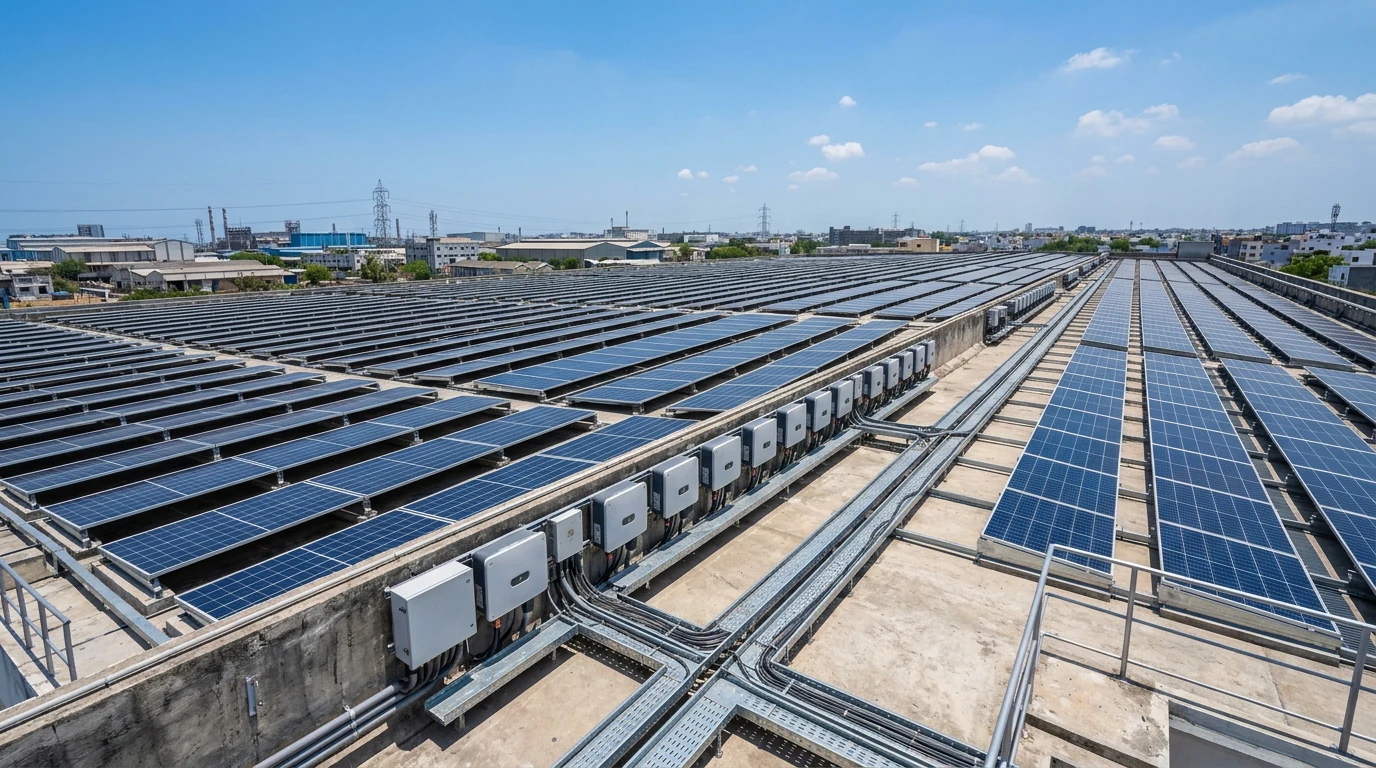
Commercial Solar Cost Per KW In India (2026 Pricing Guide)
What does commercial solar actually cost per kW in India in 2026? Here's a realistic pricing breakdown by system size, plus what affects the final number.
Ask five different solar companies what commercial solar costs per kW, and it's possible to get five different numbers.
That's not because anyone's being dishonest, it's because the real answer depends on system size, panel technology, and site conditions. This guide breaks down what commercial solar actually costs in India in 2026, and why the number moves the way it does.
What Does Commercial Solar Cost Per KW In 2026?
Commercial per-watt costs generally fall between ₹40 and ₹50 per watt for mid-size installations, while larger industrial-scale systems typically range between ₹35,000 and ₹45,000 per kW, since cost per watt decreases as system size increases.
Translated into rupee-per-kW terms across common system sizes:
25 kW System
Suited to small businesses just crossing the commercial threshold. A 25 kW commercial system is generally the most common entry point, with typical costs around ₹12 lakh.
50-100 kW System
A 100 kW system typically costs between ₹40 lakh and ₹60 lakh, depending on component quality and site requirements. This size suits mid-sized commercial establishments, small manufacturing units, and educational institutions.
500 kW System
A 500 kW commercial system typically falls between ₹2 crore and ₹2.75 crore, suiting larger manufacturing facilities, IT campuses, hospitals, and commercial complexes with significant energy consumption.
1 MW And Above
At 1 MW and above, costs are evaluated per MW and typically range from ₹3.5 crore to ₹4.5 crore per MW, though other estimates place a full 1 MW ground-mounted plant closer to ₹4 crore to ₹5 crore, including balance-of-system components, installation, and grid commissioning.
A word of caution on these numbers: every one of these ranges is a market estimate, not a fixed price, and genuine site-specific factors (structure type, panel technology, location, inverter grade) can shift the final number meaningfully. Treat this as a planning reference, not a quote.
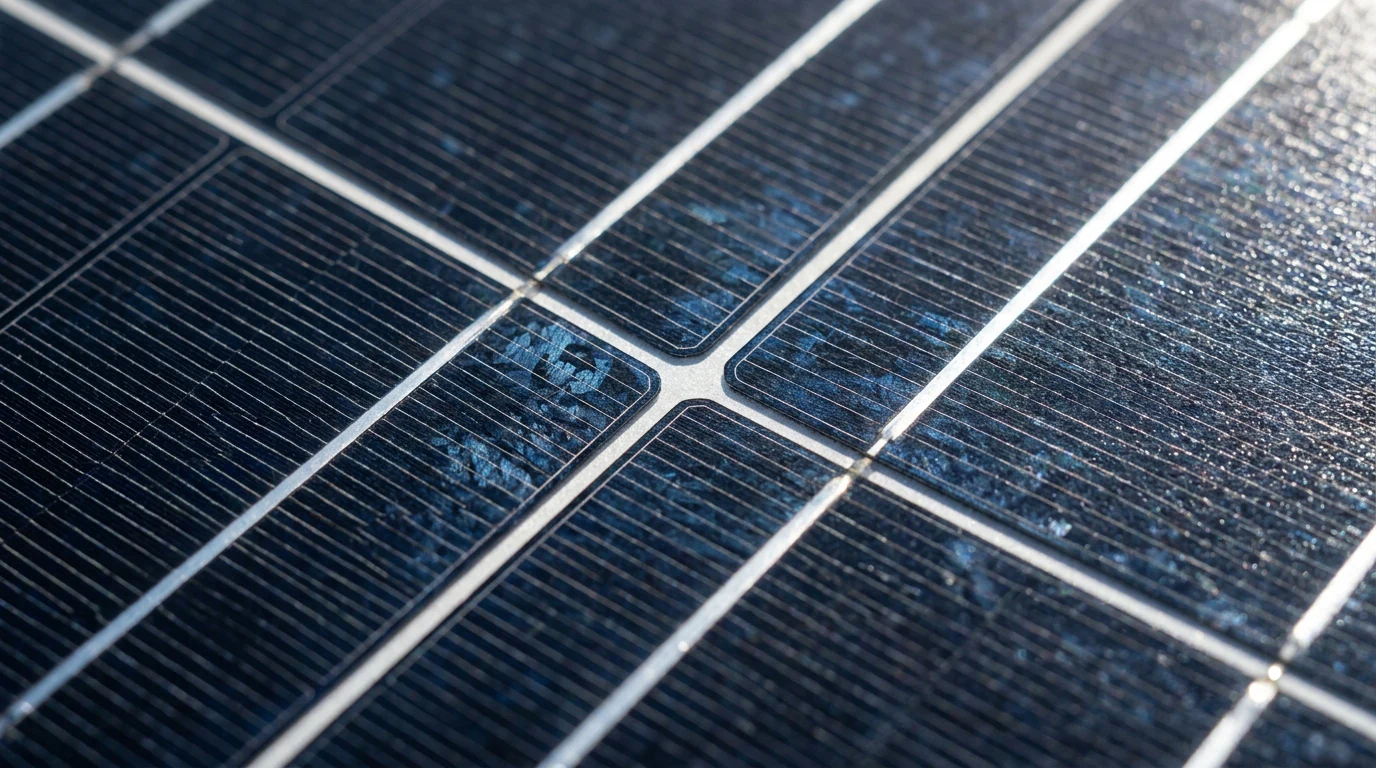
Extreme close-up macro of a monocrystalline solar panel surface showing individual PERC cells with busbars and anti-reflective coating.
Which Solar Model Fits Your Business?
Capex, Opex PPA, or Open Access — get a site-specific recommendation with system size, savings, and payback in 24 hours.
Why Does The Per-KW Cost Vary So Much?
Panel Technology
Mono PERC panels remain the widely recommended default for Indian conditions, with moderate cost and high efficiency. TOPCon panels cost more but deliver better long-term generation, particularly relevant where every unit of output counts. Bifacial panels capture sunlight from both surfaces, boosting output by roughly 10-15%, useful for ground-mounted industrial setups with reflective surroundings.
System Size
Larger systems bring the per-watt cost down through economies of scale, even though the total investment is naturally higher.
Inverter Quality
A higher-grade inverter with more MPPT inputs and remote monitoring costs more upfront but reduces downtime and shading losses, a meaningful factor for facilities where uptime matters.
Site And Structural Requirements
Roof type, mounting complexity, and location-specific labour costs all shift the final number, since prices can vary 5-15% across states due to logistics, local taxes, and DISCOM requirements.
Regulatory Compliance
From June 2026, all solar projects undergoing net metering or open access must use modules and cells produced in India and certified by ALMM, which affects both component sourcing and final project cost.

Stack of monocrystalline solar panel modules on pallets at an Indian industrial warehouse loading dock.
What About Panel Cost Vs Complete System Cost?
One of the most common points of confusion: panel price is not system price.
Solar panel prices alone, excluding installation, range roughly ₹18-24 per watt for PERC panels and ₹20-28 per watt for TOPCon panels in 2026. But a working commercial system also includes the inverter, mounting structure, wiring, earthing, protection equipment, and labour, which is why the fully installed cost lands considerably higher than the panel price alone.
How Does Payback Compare Across System Sizes?
Payback periods for commercial solar in India typically fall between 3-4 years, with businesses saving 50-70% on electricity costs post-installation. Where commercial tariffs run higher, in the ₹10-14 per unit range, payback can compress to as fast as 2.5-3 years.
Tax treatment also plays a role: commercial buyers don't qualify for residential subsidies but benefit from accelerated depreciation, which materially reduces effective cost over time.

Indian business owner reviewing a solar CAPEX vs OPEX financial spreadsheet on a rugged tablet with a solar advisor on the shop floor of a manufacturing plant.
CAPEX Vs OPEX: Does Ownership Model Change The Cost Equation?
In a CAPEX model, the business purchases and owns the system upfront and earns full savings after the 3-5 year payback period. In an OPEX or RESCO model, a developer owns the system and the business pays a fixed per-unit rate, resulting in immediate savings with zero upfront investment.
The right model depends on available capital and appetite for asset ownership, a decision worth weighing separately from the per-kW cost itself.
Questions buyers ask us.
A 100 kW commercial solar system typically costs between ₹40 lakh and ₹50 lakh, depending on location, panel brand, and structural requirements.
Yes, generally. Commercial buyers benefit from lower per-watt costs due to scale, though they don't receive the residential subsidy available to smaller home systems.
The per-kW cost includes panels, inverter, mounting structure, wiring, earthing, protection equipment, and installation labour, not just the panels themselves.
Most commercial solar installations in India achieve payback within 3-4 years, depending on system size, local tariffs, and consumption patterns.
Yes. Larger systems generally have a lower cost per kW due to economies of scale, even though the total investment is higher.
At PowerMore, pricing conversations start with a real site assessment, not a brochure rate card. Every quote reflects the business's actual load, roof conditions, and component choices, so the number a business sees upfront is the number that holds up through commissioning.
Speak to our team for a site-specific solar cost estimate.