

Haryana Solar Policy For Industries: Net Metering & Open Access Charges
A breakdown of Haryana's solar policy for industries, covering net metering rules and open access charges, including the cross-subsidy surcharge waiver.
Haryana's industrial belt, spanning Manesar, Faridabad, Gurugram, and beyond, faces some of the highest commercial electricity tariffs in North India, commonly in the ₹7-10 per unit range. The state's solar policy is built specifically to make renewable adoption financially attractive against that backdrop, through two main routes: rooftop net metering and open access.
Net Metering For Industries In Haryana
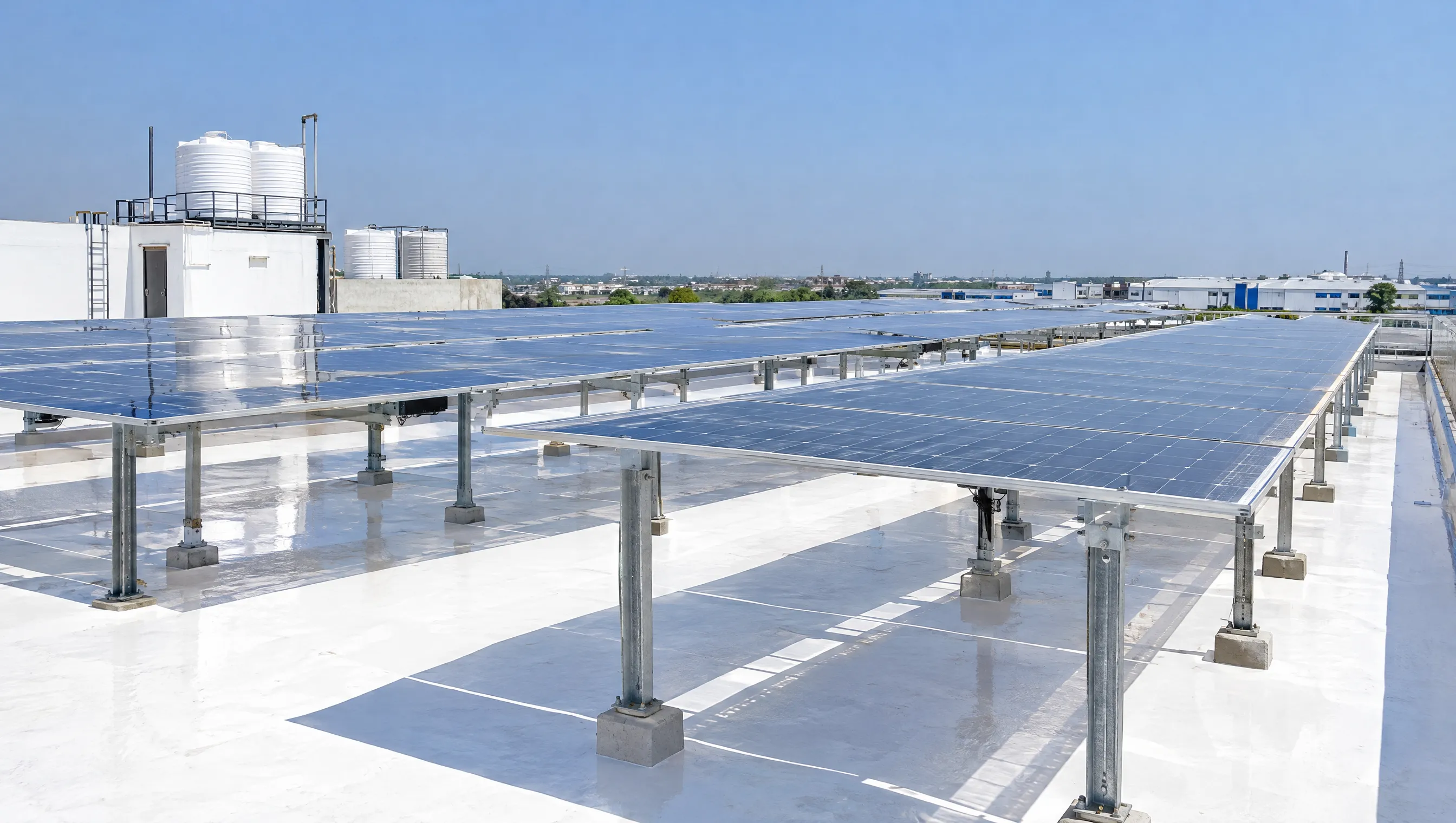
Under the Haryana Electricity Regulatory Commission's (HERC) Rooftop Solar Regulations, 2021, eligible consumers can install grid-connected rooftop solar systems on either a net metering or gross metering basis.
Under net metering, electricity generated from the rooftop system is first used to meet the consumer's internal needs, with only the surplus fed into the grid. Under gross metering, all generation is fed directly into the grid at the interconnection point, with the consumer separately billed for total consumption.
For third-party owned systems (RESCO/OPEX model), the developer continues to own the equipment and can claim depreciation on the capital cost, while the consumer benefits from solar power without owning the asset.
Solar meter type: A unidirectional solar meter is required as an integral part of the net metering setup, installed at the point where electricity is actually generated.
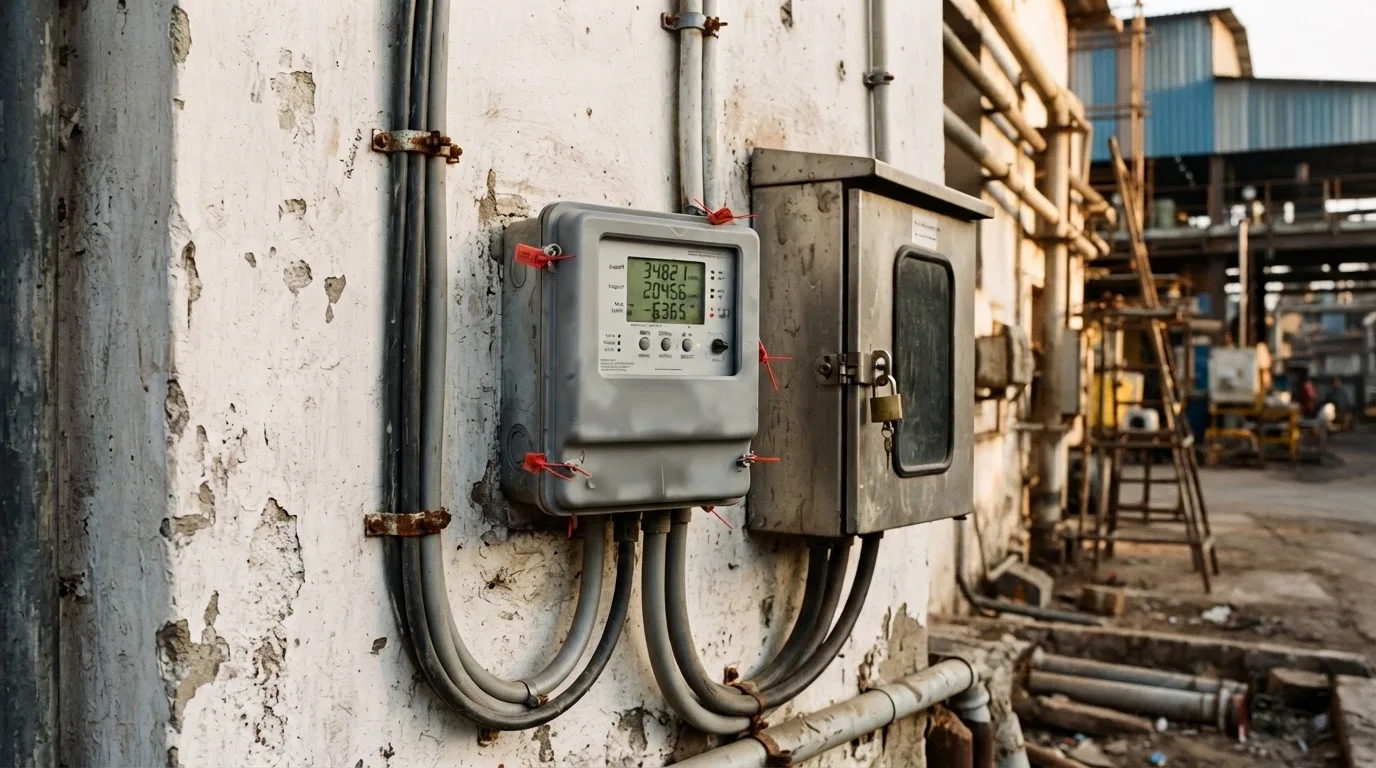
Bidirectional meter installed at an industrial facility as part of a rooftop net metering setup.
Which Solar Model Fits Your Business?
Capex, Opex PPA, or Open Access — get a site-specific recommendation with system size, savings, and payback in 24 hours.
Open Access For Larger Industrial Consumers
For industrial consumers whose demand or scale exceeds what rooftop capacity can practically cover, open access allows sourcing solar power directly from an off-site developer, delivered through the existing grid.
The standout feature of Haryana's policy: it provides a full waiver on cross-subsidy surcharge (CSS) for open access solar power, a charge that in many other states can significantly erode the savings open access would otherwise deliver. This waiver is one of the more industry-friendly provisions in Haryana's current policy and a meaningful reason the state has become an active open access solar market.
What Does This Look Like In Real Numbers?
An auto components manufacturer in Manesar, with a 15 MW connected load at 66kV, signed a 25-year PPA with a solar developer for a 5 MW open access project at ₹3.95 per unit energy charge, landing at approximately ₹4.78 per unit including all applicable state charges. Against their existing DISCOM rate of ₹7.32 per unit, that works out to an effective saving of roughly ₹2.44 per unit, translating into approximately 30% savings on annual power consumption across millions of units consumed.
This example illustrates a broader pattern: for most commercial and industrial consumers in Haryana, open access solar tends to deliver savings by a significant margin, given how high the state's industrial tariffs run relative to open access landed costs.
What Other Charges Apply?
Beyond the PPA tariff itself, open access consumers in Haryana pay a set of additional grid charges, commonly including wheeling charges (for using the local DISCOM network) and transmission charges (for using higher-voltage transmission infrastructure), alongside applicable technical losses such as transmission loss (typically 3-4%) and wheeling loss (typically 4-6%).
With the CSS waiver in place, however, Haryana's overall charge structure for open access remains comparatively favorable next to several neighboring states in North India's industrial belt.
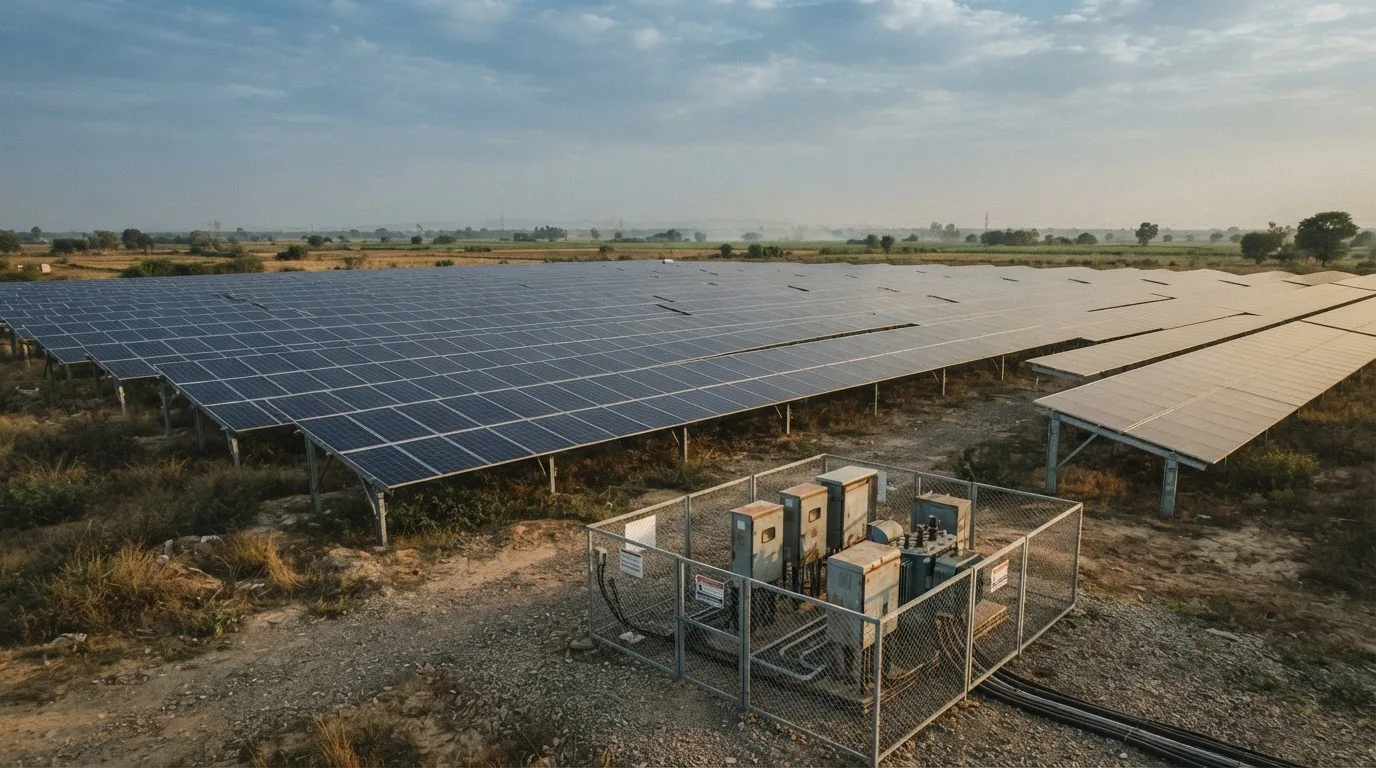
Breakdown of open access charges and technical losses that apply beyond the headline PPA tariff.
Broader Industrial Provisions In Haryana's Solar Policy
Beyond net metering and open access, Haryana's solar policy also supports:
- Utility-scale capacity and land leasing, including panchayat land leased for 30-year terms, relevant for large industrial groups exploring dedicated or group captive plants
- Battery and hybrid system support, recognizing solar-plus-storage as part of the state's broader renewable roadmap
- CAPEX and RESCO model support, giving industries flexibility in how they structure ownership of rooftop systems
What Businesses Should Check Before Proceeding
Eligibility And Capacity Thresholds
Confirm current capacity eligibility for net metering versus open access under the latest HERC regulations, since thresholds and provisions can be revised over time.
Applicable DISCOM
Haryana's industrial belt is served by different DISCOMs (UHBVN and DHBVN) depending on district, and administrative processes can vary between them.
Full Charge Breakdown, Not Just The Headline Tariff
While Haryana's CSS waiver is a genuine advantage, wheeling, transmission, and technical losses still apply and should be factored into the real landed cost before comparing tariffs.
Questions buyers ask us.
Yes. Haryana's solar policy provides a full waiver on cross-subsidy surcharge for open access solar power, a significant financial incentive for industrial consumers.
Net metering offsets a facility's own consumption first, exporting only surplus generation. Gross metering feeds all generation directly to the grid, with consumption billed separately.
Yes. Under the RESCO model, a developer owns and maintains the system while the industrial consumer benefits from the power generated, without owning the asset.
Savings vary by consumption and tariff, but real-world examples show industrial consumers saving around 30% on annual power costs through open access solar arrangements.
Yes. Even with the CSS waiver, wheeling and transmission charges, along with associated technical losses, apply to open access transactions.
At PowerMore, every Haryana project factors in the specific DISCOM, applicable charges, and eligibility thresholds relevant to that facility, rather than applying a generic estimate. That means businesses get an accurate picture of real savings before committing to net metering or open access.
Speak to our team to evaluate solar options under Haryana's policy.