Peak Shaving Explained: How BESS Cuts Demand Charges
See how peak shaving with BESS reduces demand charges for commercial and industrial businesses, with real numbers on savings.
Industrial electricity bills carry two separate charges: one for energy consumed (kWh), and one for peak demand (kVA), the highest power draw recorded during any 15-minute window in the billing cycle. That second charge alone can account for 30-70% of a total electricity bill, and it's set by a single spike, not average usage. A brief surge from a chiller startup or a machine ramping up can define the demand charge for the entire month, even if it lasted just minutes.
Peak shaving is how BESS solves this exact problem.
What Is Peak Shaving?
Peak shaving is the practice of reducing a facility's recorded power draw from the grid during short windows of high demand, using a Battery Energy Storage System (BESS) to absorb the spike instead of letting it register on the meter.
The battery charges during off-peak hours, when electricity is cheap and demand is low, then discharges automatically the moment site demand approaches a set threshold. The grid never sees the spike, the battery absorbs it instead, keeping the facility's recorded peak demand lower for the entire billing cycle.
Unlike load shifting, which requires rescheduling energy-intensive operations to off-peak hours, peak shaving needs no operational changes. Production continues exactly as scheduled while the battery handles the spike in the background.

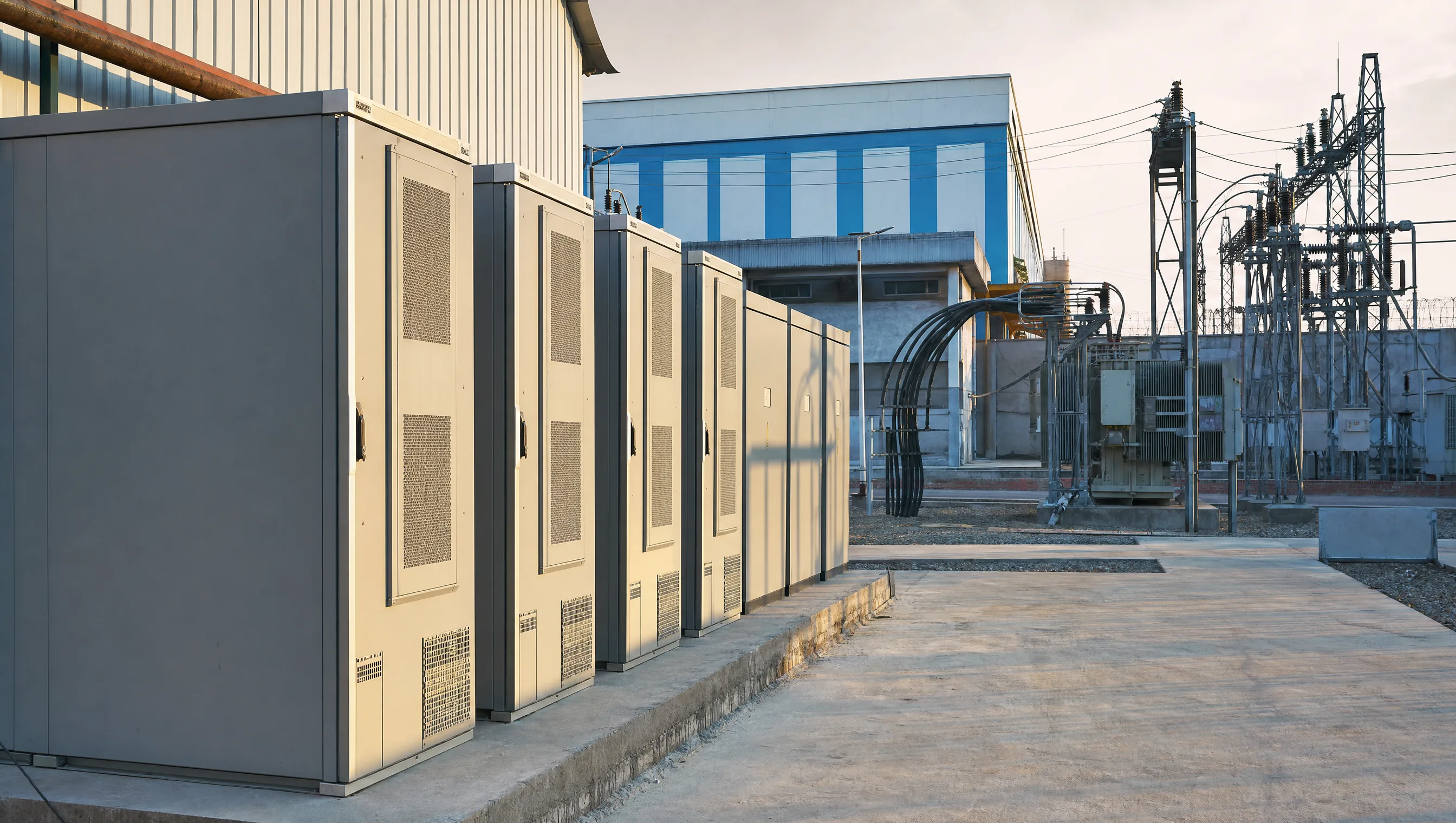
Battery energy storage cabinet installed alongside solar and grid connection at a commercial facility.
Which Solar Model Fits Your Business?
Capex, Opex PPA, or Open Access — get a site-specific recommendation with system size, savings, and payback in 24 hours.
How Much Can Businesses Actually Save?
Facilities on HT (High Tension) industrial tariffs typically pay ₹250-500 per kVA per month in demand charges.
A 200 kW BESS reducing peak demand by 100 kW can save ₹25,000-50,000 per month, or roughly ₹3-6 lakh annually, from demand charge reduction alone, entirely separate from backup power or time-of-day arbitrage benefits.
Combined with time-of-day arbitrage (charging cheap, discharging during expensive peak hours), businesses commonly see overall electricity cost reductions of 10-40%, with the strongest savings going to facilities with highly variable loads or frequent short-duration demand spikes.
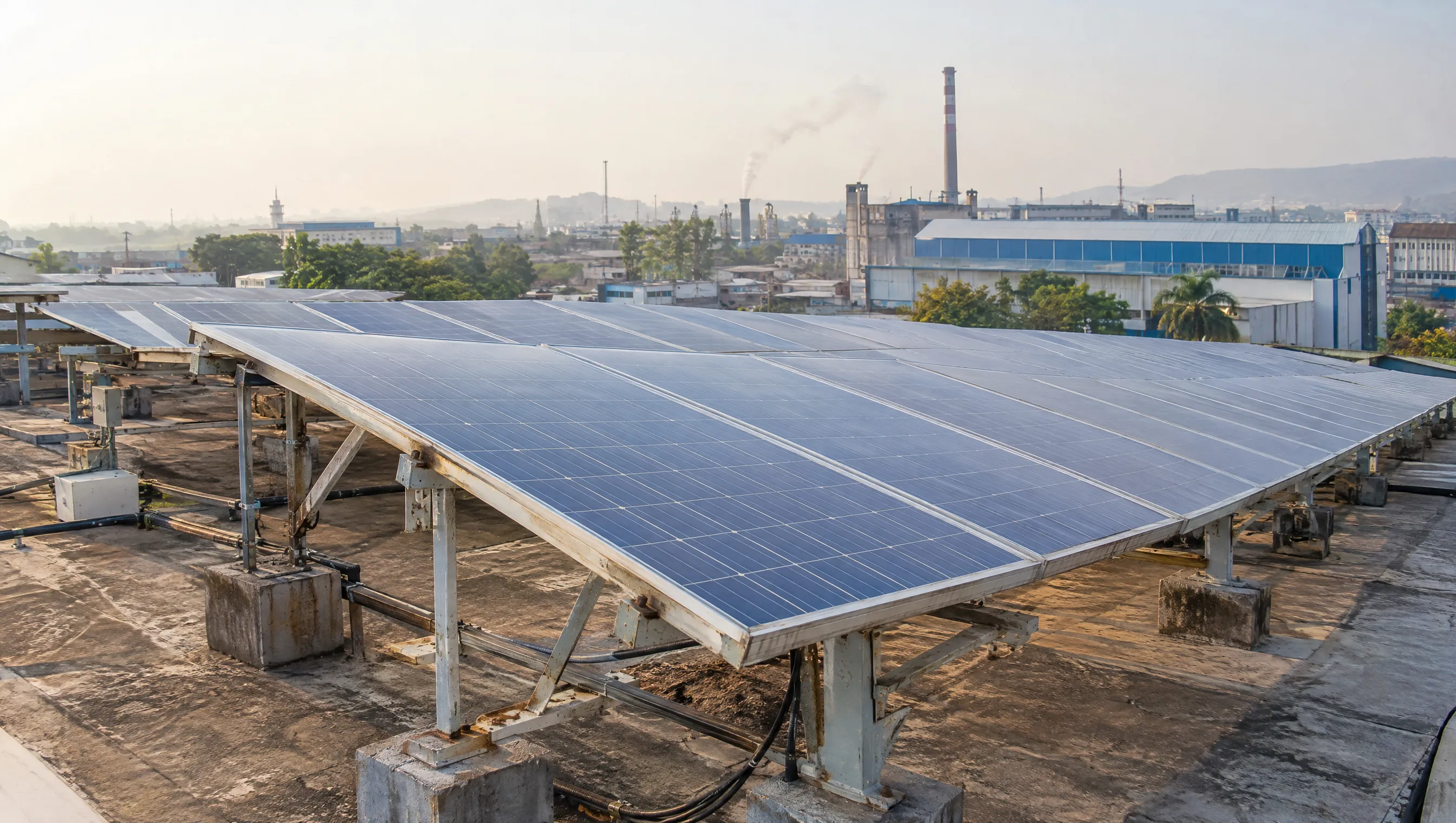
Industrial park with warehouses and factories showing the kind of variable-load facility that benefits from peak shaving.
Which Facilities Benefit Most From Peak Shaving
Peak shaving delivers the strongest returns for facilities that share three traits: frequent short-duration power spikes (HVAC startups, compressor cycles, machinery ramp-up), high demand charges relative to their overall energy costs, and limited ability to reschedule operations around off-peak hours.
In practice, this points to a fairly specific set of businesses:
Manufacturing Units
Machinery ramp-up and cyclical equipment loads create exactly the kind of short, sharp spikes peak shaving is designed to absorb.
Cold Storage Facilities
Compressor cycling runs continuously, and unlike other operations, load can't simply be shifted to off-peak hours without risking spoilage.
Large Commercial Buildings With Heavy HVAC Or Chiller Loads
Startup surges from large cooling systems are a classic case of a costly demand spike lasting only minutes but setting the tariff for the entire billing cycle.
Is Peak Shaving Worth The Investment?
Payback periods on a properly sized BESS typically fall in the 3-5 year range, factoring in demand charge savings alone. Add solar integration and arbitrage benefits, and payback often improves further.
Correct sizing is the deciding factor: a BESS designed around a facility's actual demand profile, not a generic estimate, is what determines whether peak shaving delivers real savings or only marginal ones.
Questions buyers ask us.
A 200 kW BESS reducing peak demand by 100 kW can save ₹25,000-50,000 per month, depending on the applicable tariff rate.
No. It works automatically in the background, unlike load shifting, which requires rescheduling operations.
Typically 3-5 years, based on demand charge savings alone.
Facilities with frequent short-duration power spikes and high demand charges, including manufacturing, cold storage, and large commercial buildings with heavy HVAC loads.
At PowerMore, peak shaving strategy starts with a facility's actual demand pattern and tariff structure, not a generic estimate. That's what turns peak shaving into real, calculable savings from day one.
Speak to our team to evaluate peak shaving for your facility.