
How Much Roof Area Is Needed For 100kW, 500kW, Or 1MW Solar?
Planning a commercial solar installation? Here's how much rooftop or ground area a 100kW, 500kW, or 1MW solar system actually requires.
Before a business can even think about cost or savings, there's a more basic question that determines whether solar is even feasible on a given site: is there enough space?
The answer depends on system size, panel technology, and whether the installation is rooftop or ground-mounted. Here's a practical breakdown.
The Basic Rule Of Thumb
A standard 1 kW rooftop solar system requires roughly 100 to 130 square feet of flat, shadow-free area, ideally south-facing for optimal generation. This figure is the baseline used across the industry for space planning, though actual requirements shift slightly based on panel efficiency and site-specific factors like roof shape and shading.
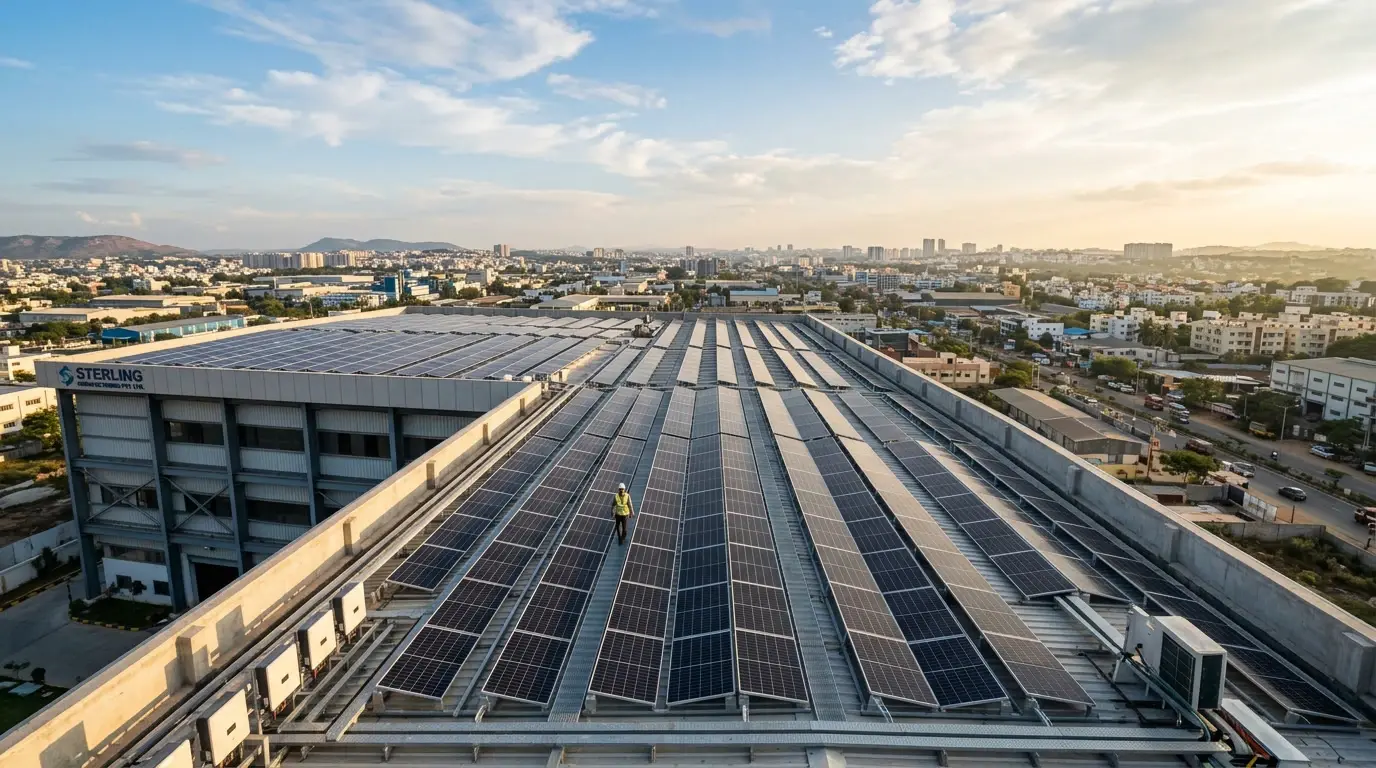
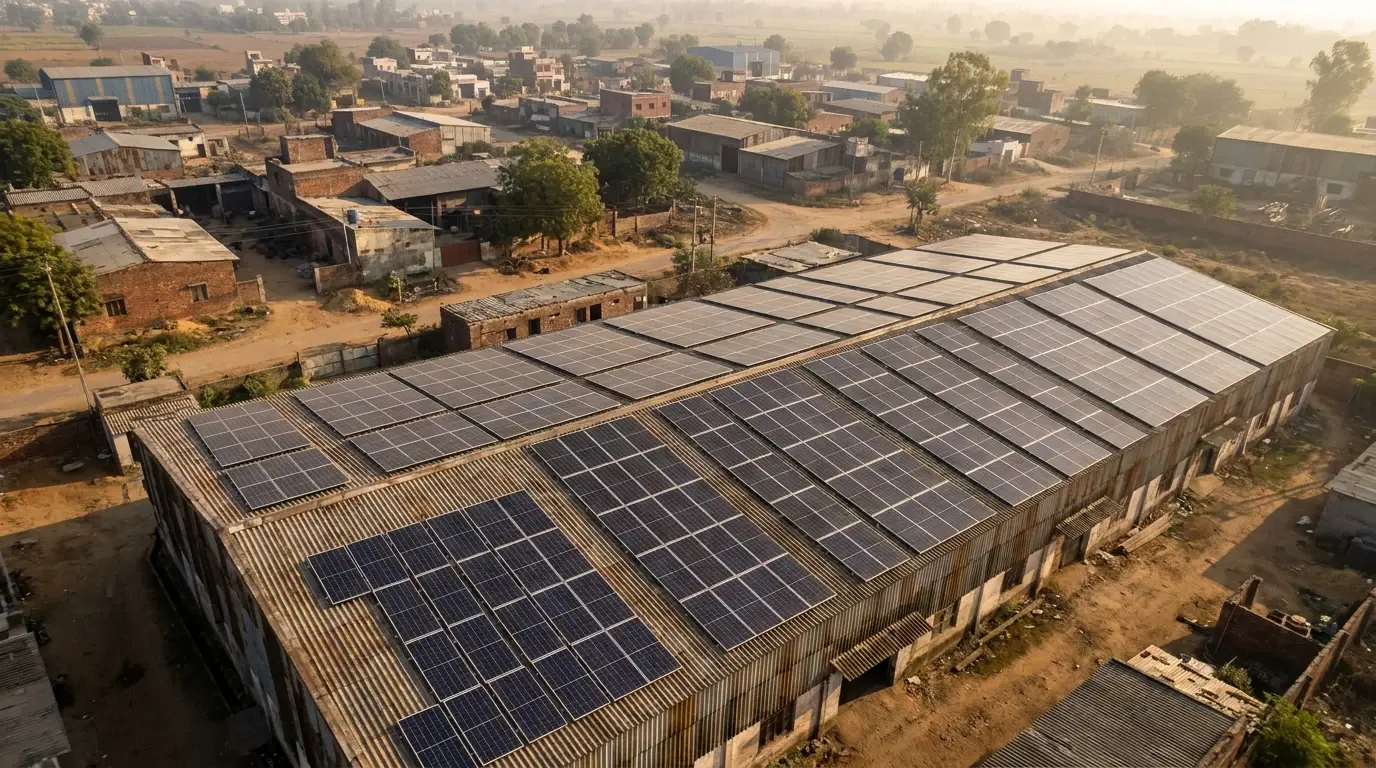
Aerial view of a large Indian commercial rooftop being surveyed for a solar installation.
Which Solar Model Fits Your Business?
Capex, Opex PPA, or Open Access — get a site-specific recommendation with system size, savings, and payback in 24 hours.
Space Required By System Size
100 kW Solar System
A 100 kW system typically requires around 10,000 to 13,000 square feet of shadow-free roof or ground area, roughly the size of a large warehouse floor or a mid-sized factory roof.
500 kW Solar System
A 500 kW system generally needs approximately 50,000 to 65,000 square feet, or roughly 1.1 to 1.5 acres, suited to larger manufacturing units, big-box warehouses, or corporate campuses with extensive rooftop area.
1 MW Solar System
A 1 MW rooftop installation requires approximately 100,000 to 130,000 square feet, or roughly 2.3 to 3 acres, typically only feasible for very large industrial rooftops or facilities with multiple buildings. For ground-mounted 1 MW installations, land requirement generally runs higher, commonly in the range of 4 to 5 acres, since ground-mounted arrays need spacing between rows to avoid inter-row shading.
A quick caution on these figures: these are planning-stage estimates, not exact specifications. Actual space required varies with panel wattage, mounting angle, and site layout, so a proper site assessment is what determines the real number for a specific facility.
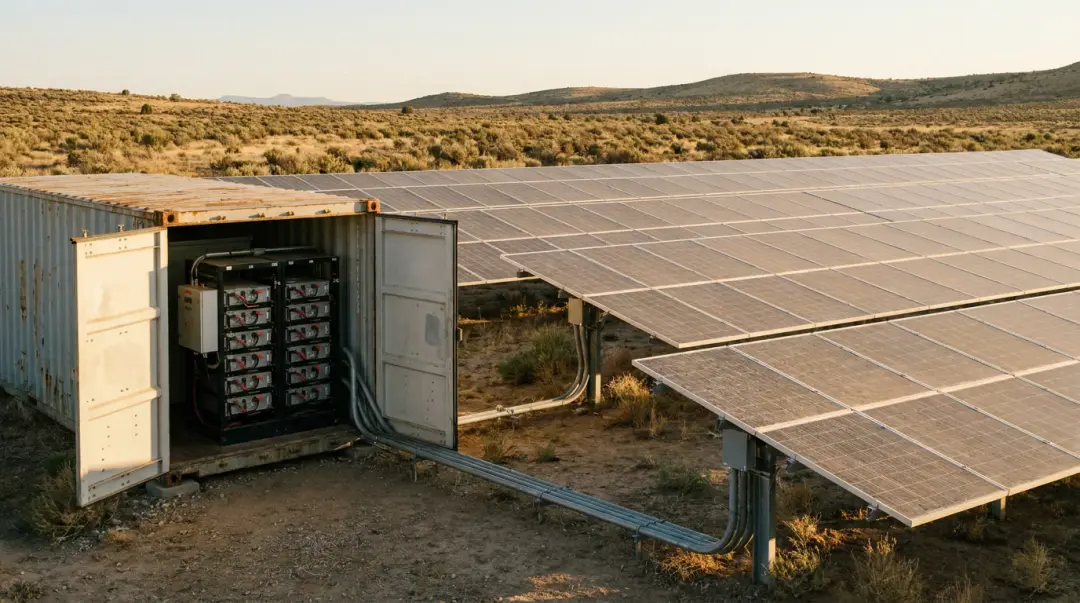
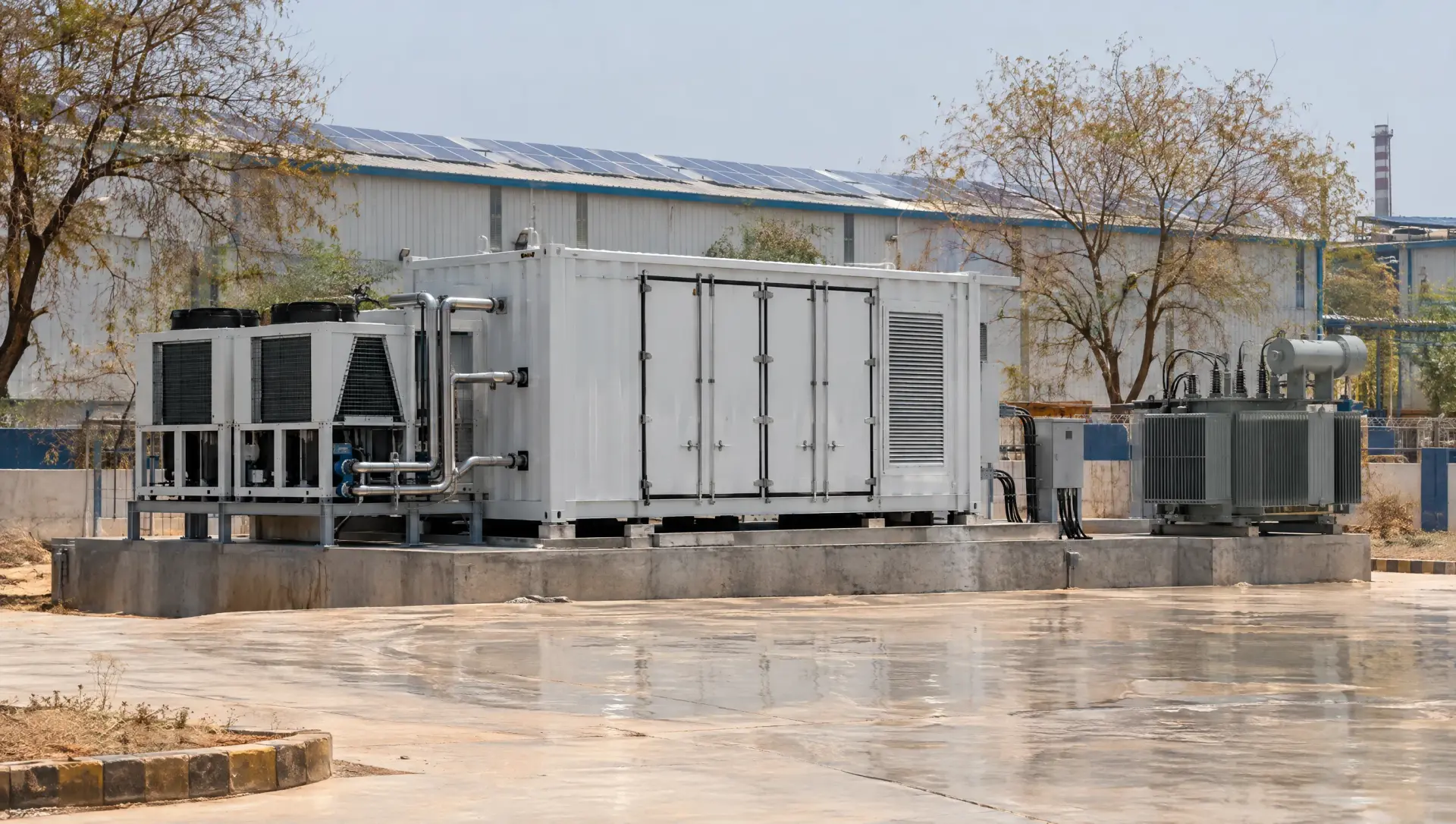
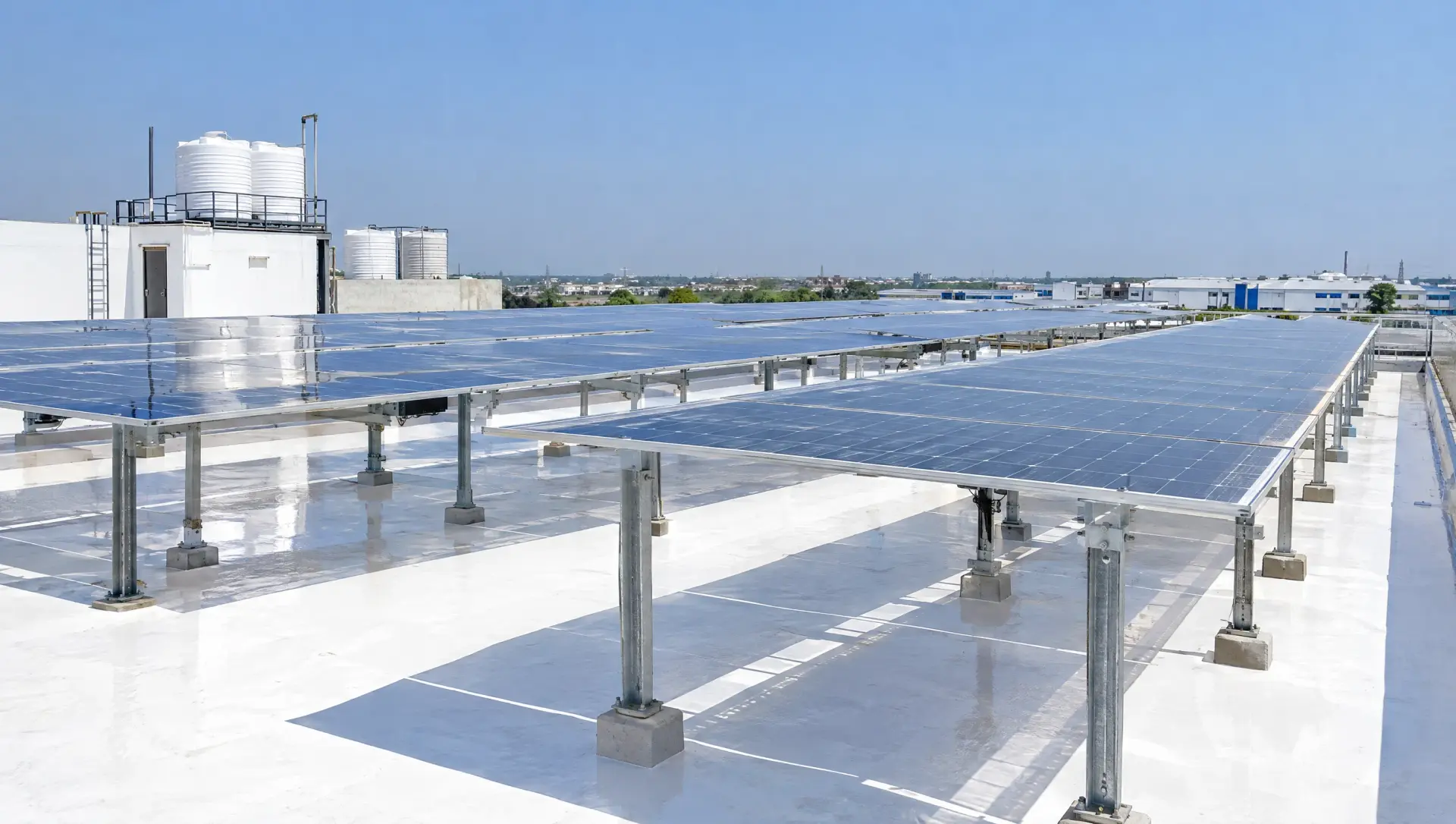
Ground-mounted solar plant showing row spacing between panel arrays.
Why Does Ground-Mounted Solar Need More Space Than Rooftop?
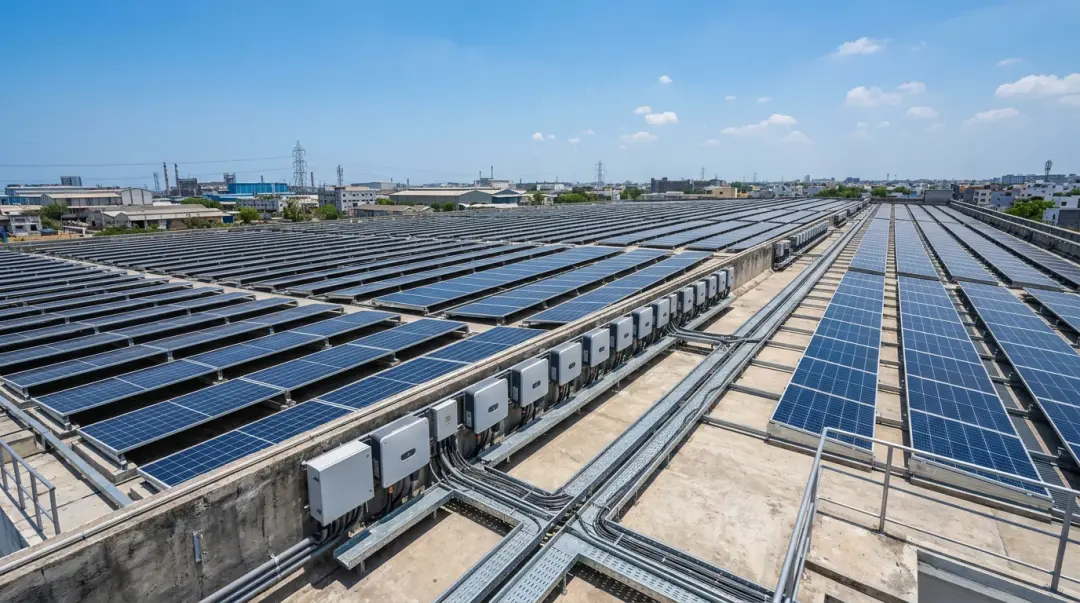
Rooftop systems are typically installed at a relatively flat tilt, since roof space is limited and every square foot needs to count. Ground-mounted systems, by contrast, are usually tilted at a steeper, more optimal angle for generation, which requires greater spacing between rows to prevent one row of panels from shading the row behind it.
This is why a 1 MW ground-mounted plant needs meaningfully more land than the equivalent rooftop installation would need in roof area, even though the generation capacity is identical.
Does Panel Technology Change The Space Requirement?
Yes, to some extent. Higher-efficiency panels, such as TOPCon or bifacial modules, generate more power per square foot than standard panels, which can reduce the total area needed for the same system capacity. For businesses with genuinely limited roof space, opting for higher-efficiency panels is one practical way to fit more capacity into a constrained area, though this typically comes at a higher per-watt cost.
What If A Business Doesn't Have Enough Roof Space?
A few practical options exist when available rooftop area falls short of what a business's energy needs would ideally call for:
Combining Rooftop And Ground-Mounted Solar
If a facility has adjoining open land, a hybrid placement approach can scale total capacity beyond what the roof alone would allow.
Opting For Solar Open Access
For businesses with genuinely limited space, sourcing solar power from an off-site plant through open access removes the space constraint entirely, since the plant isn't located on the business's own premises.
Choosing Higher-Efficiency Panels
As mentioned, more efficient panels can extract more capacity from the same physical area, a relevant option for businesses trying to maximize output from a fixed rooftop.
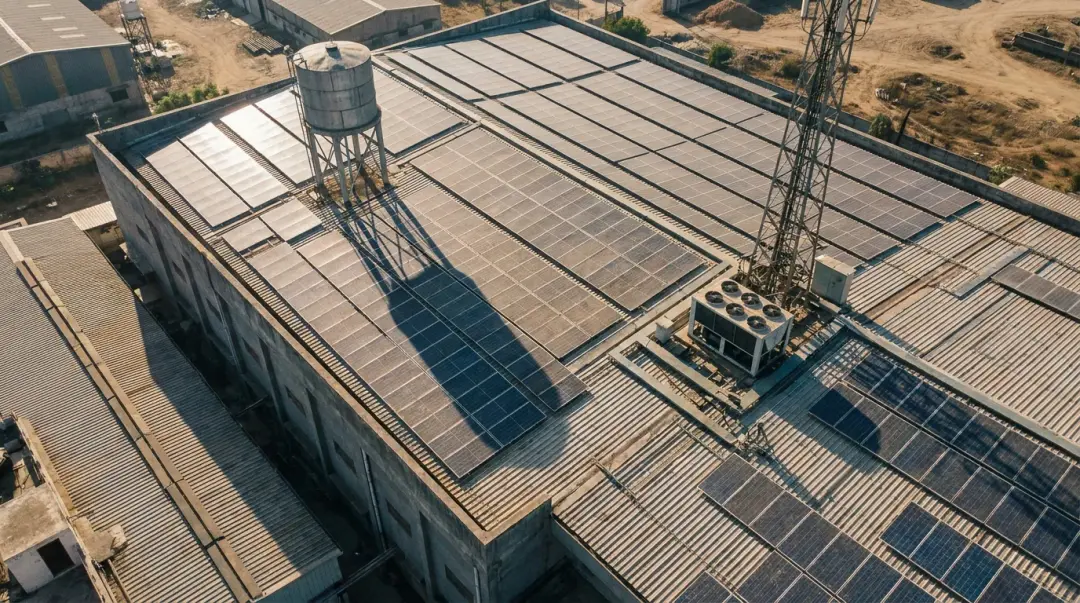
Solar engineer with a tablet performing a shadow-free area assessment on a commercial rooftop.
Why This Should Be Checked Before, Not After, Budgeting
Space availability directly affects system sizing, and system sizing directly affects cost, savings, and payback period. A business that budgets for a 500 kW system without first confirming it has enough shadow-free area risks a mismatch between financial planning and physical feasibility, something a proper site assessment and shadow analysis catches early, rather than after commitments are already made.
Questions buyers ask us.
Approximately 10,000 to 13,000 square feet of shadow-free area, depending on panel type and roof layout.
Yes. Ground-mounted 1 MW installations typically require 4 to 5 acres, more than the rooftop equivalent, due to spacing needed between panel rows to avoid shading.
Yes, options include combining rooftop with ground-mounted space if available, choosing higher-efficiency panels, or exploring solar open access to source power from an off-site plant.
Yes. Higher-efficiency panels, like TOPCon or bifacial modules, generate more power per square foot, which can reduce the overall area required for a given system size.
No. Actual space needed depends on roof shape, shading, orientation, and structural layout, which is why a site-specific assessment gives a more accurate figure than general estimates.
At PowerMore, space feasibility is confirmed before any system size is proposed. A detailed site assessment and shadow analysis determine exactly how much usable, shadow-free area a facility actually has, so the recommended system size reflects real physical constraints, not a generic estimate.
Speak to our team for a site-specific space assessment.