
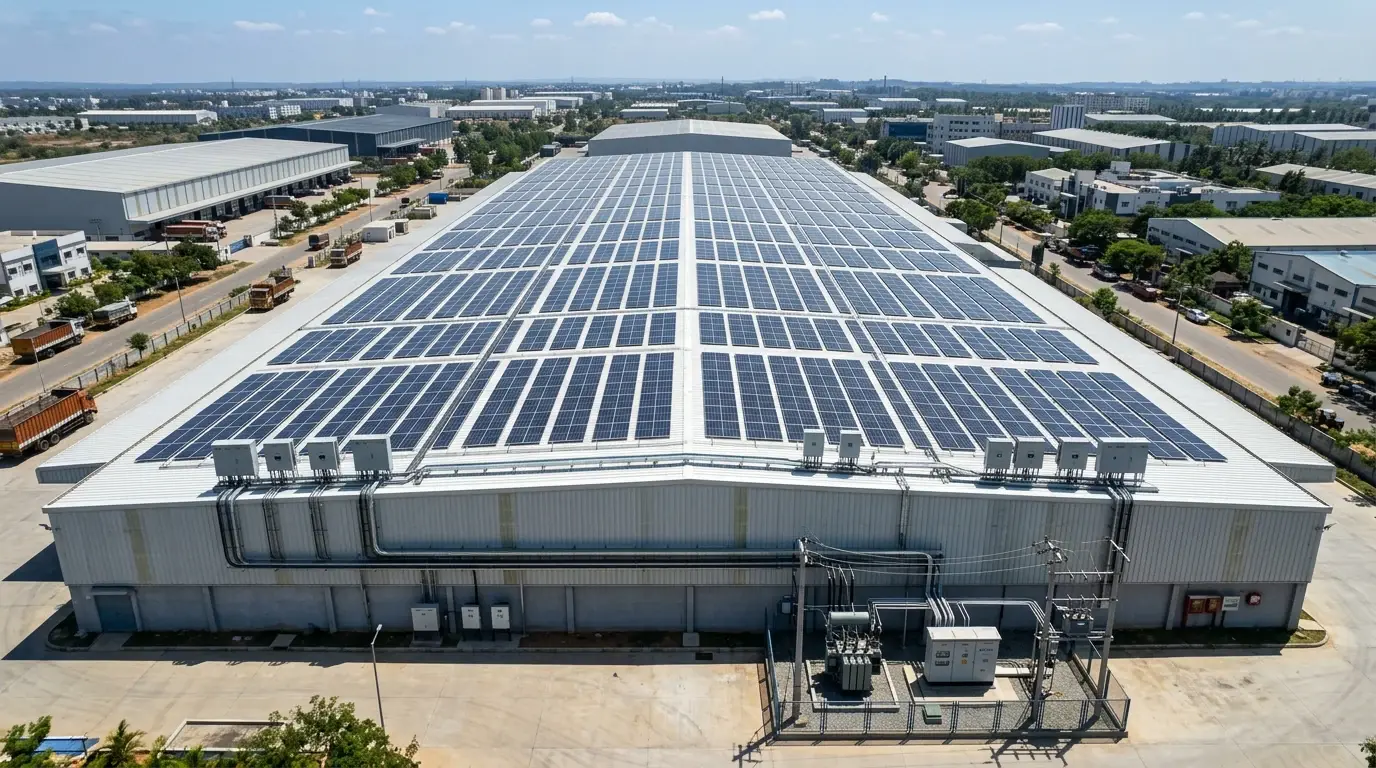
Rooftop Solar Vs Ground-Mounted Solar: Which Is Right For Your Facility?
Deciding between rooftop and ground-mounted solar for your business? Here's how cost, space efficiency, and structural factors compare between the two.
For businesses with both a rooftop and available land, one of the first decisions in going solar isn't about panels or financing, it's about where the plant actually goes.
Rooftop and ground-mounted systems both generate the same electricity in principle, but they differ meaningfully in cost, structural demands, and how much energy they can ultimately produce. Here's how the two options actually compare.
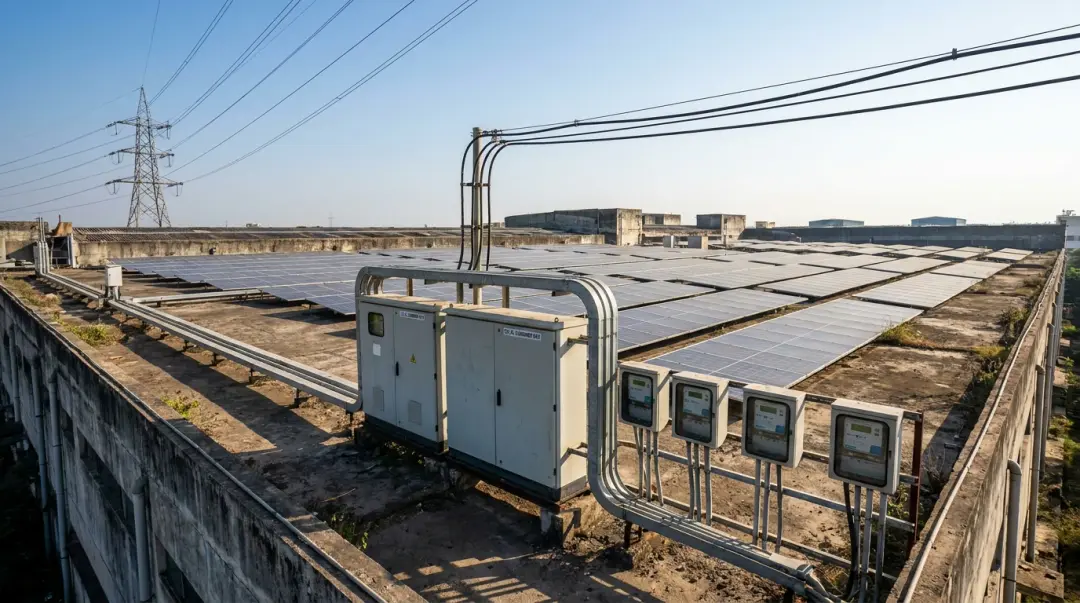
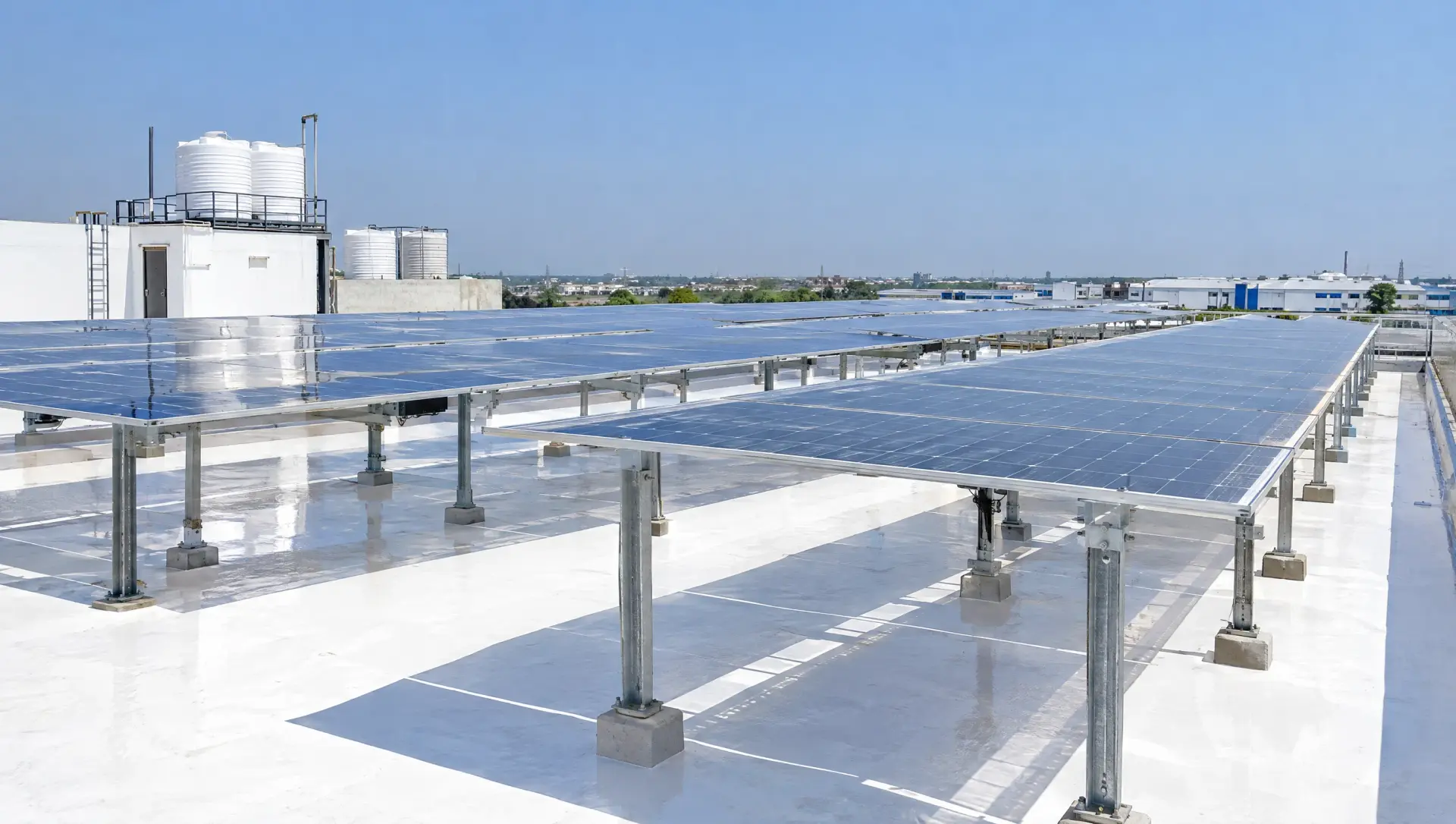
Commercial rooftop with rows of solar panels, DC combiner boxes visible at the roof edge.
What Is Rooftop Solar?
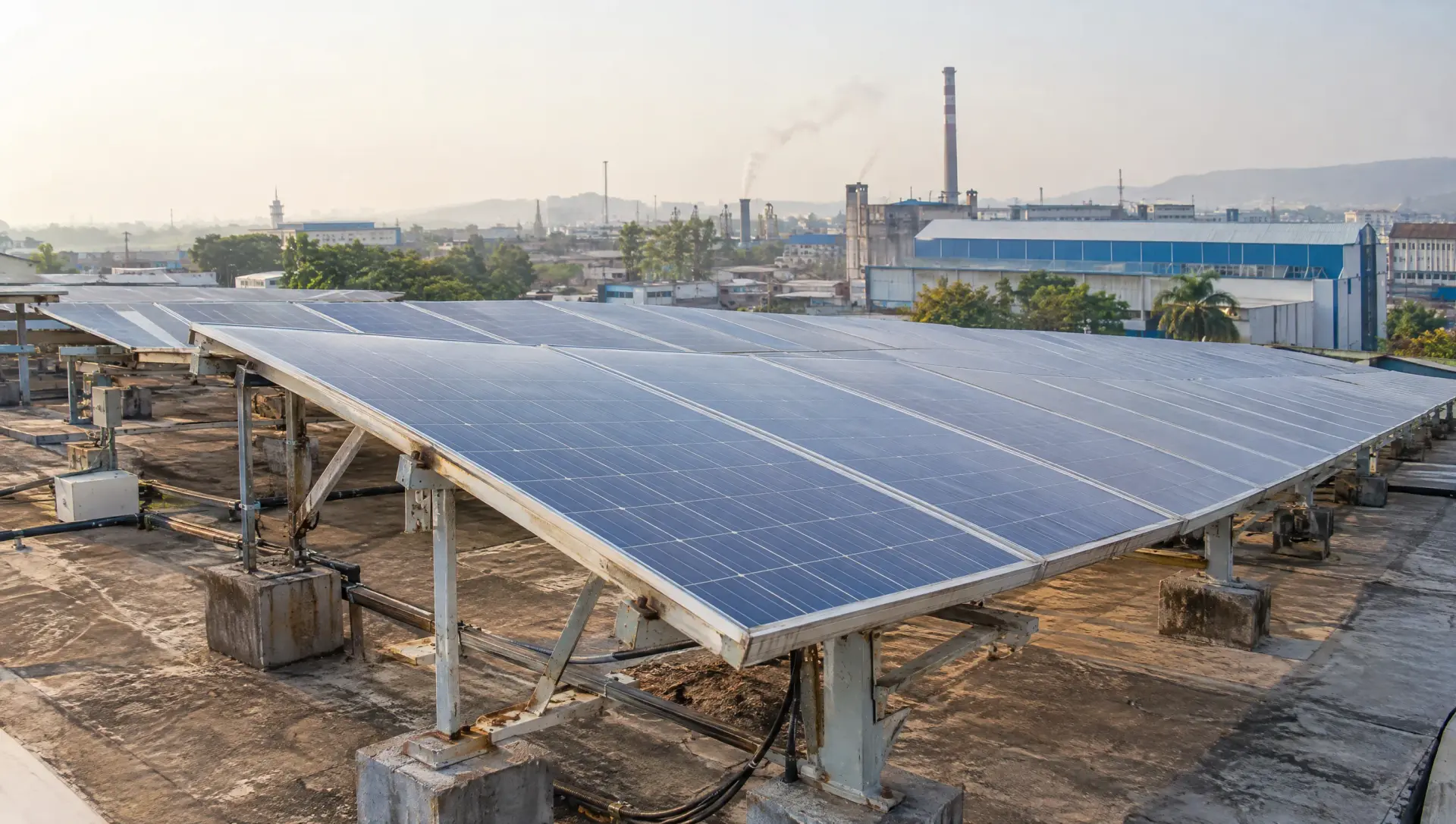
Rooftop solar involves installing panels directly on a building's existing roof, using the structure that's already there rather than building new ground infrastructure.
Key characteristics:
- Uses existing space, no additional land required
- Structural load capacity of the roof determines how much can be installed
- Typically the default choice when land is limited or expensive
- Mounting can vary depending on roof type: RCC, metal sheet, or industrial shed roofing each require different structural approaches
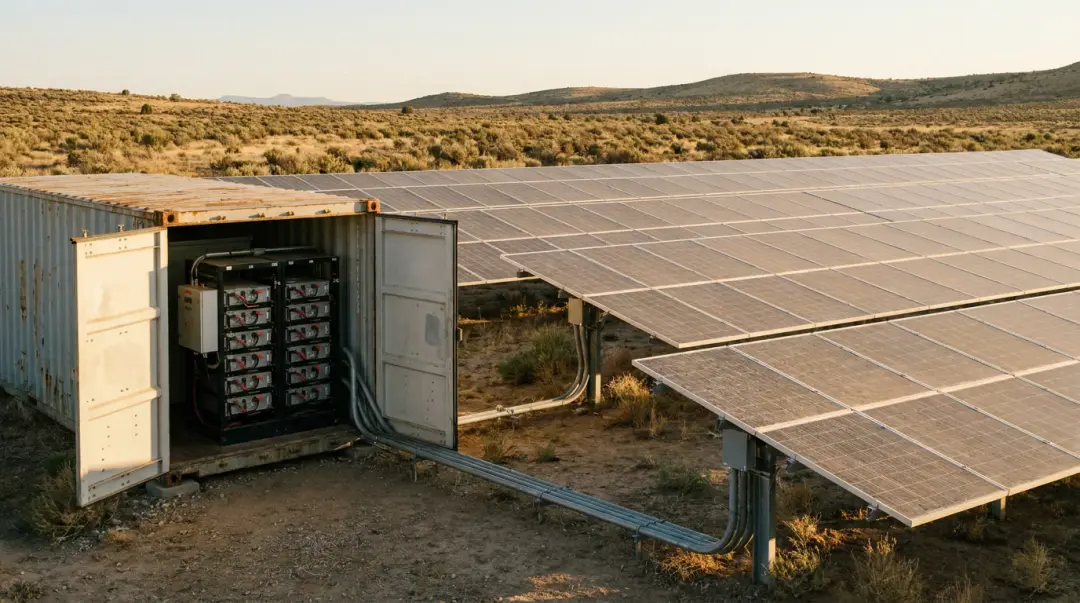
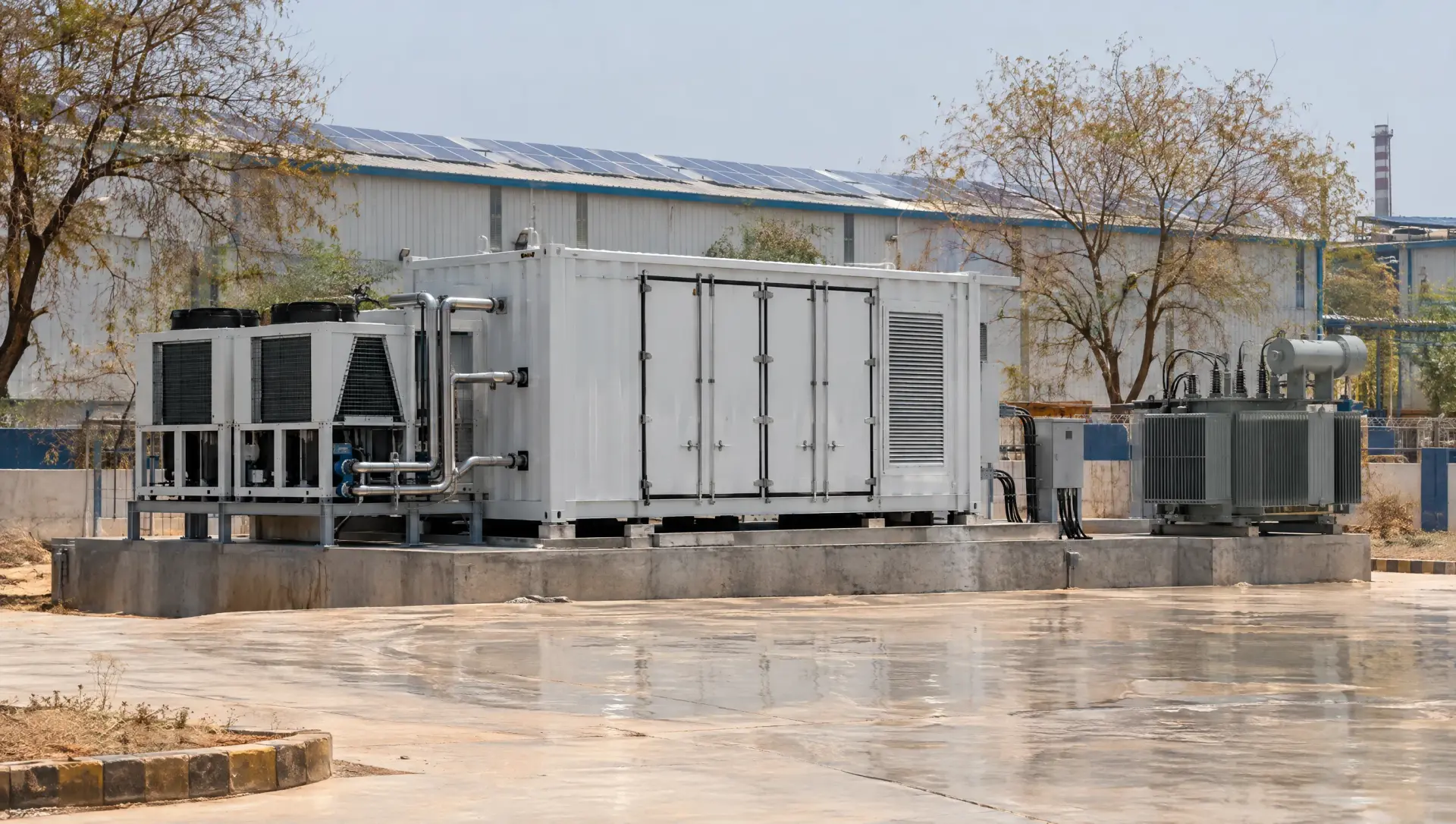
Ground-mounted solar plant with rows of panels on open land next to a facility.
Which Solar Model Fits Your Business?
Capex, Opex PPA, or Open Access — get a site-specific recommendation with system size, savings, and payback in 24 hours.
What Is Ground-Mounted Solar?
Ground-mounted solar involves building the panel structure on open land, using dedicated foundations and mounting frames rather than an existing rooftop.
Key characteristics:
- Not constrained by roof size, load capacity, or shape
- Panels can be oriented and tilted for optimal sun exposure, independent of building design
- Requires available land, either owned or leased
- Generally allows for larger system capacity than a rooftop of similar area, since panel spacing and orientation can be fully optimized
Comparing The Two: Cost, Space, And Performance
Capital Cost
Rooftop systems are typically less expensive per kW, since they use existing structures and don't require land acquisition or extensive civil work. Ground-mounted systems involve additional costs for foundations, mounting structures, and site preparation, but this is often offset by better generation efficiency at scale.
Space Efficiency
Rooftop solar is constrained by the building's roof area and structural capacity. Ground-mounted solar has no such ceiling, land availability is the only real limit, making it a better fit for businesses wanting to scale capacity significantly beyond what a roof alone could support.
Energy Generation Efficiency
Ground-mounted systems generally allow for better panel orientation and tilt optimization, since installers aren't working around existing roof angles, HVAC units, or structural obstructions. This can translate into meaningfully higher generation per panel compared to a rooftop system working around a less-than-ideal roof.
Structural Considerations
Rooftop solar requires a structural assessment to confirm the roof can bear the additional load, particularly relevant for older buildings or lightweight industrial shed roofing. Ground-mounted solar avoids this concern entirely, since it's built independently of any existing structure.
Maintenance And Accessibility
Ground-mounted systems are generally easier to access for cleaning, repairs, and panel replacement, since technicians work at ground level rather than navigating rooftop access and safety requirements.
Which Facilities Suit Rooftop Solar?
Rooftop solar tends to be the better fit when:
- Land is limited, expensive, or unavailable near the facility
- The existing roof has adequate structural capacity and reasonable shading conditions
- The business wants to avoid the additional civil work and cost associated with ground-mounted structures
- The facility's own electricity needs can be substantially met within available rooftop capacity
Which Facilities Suit Ground-Mounted Solar?
Ground-mounted solar tends to be the better fit when:
- The business has access to adjoining or nearby open land
- Energy requirements exceed what available rooftop space can generate
- The roof has structural limitations, poor orientation, or heavy shading that would significantly compromise a rooftop system
- The business is planning for future capacity expansion beyond current needs
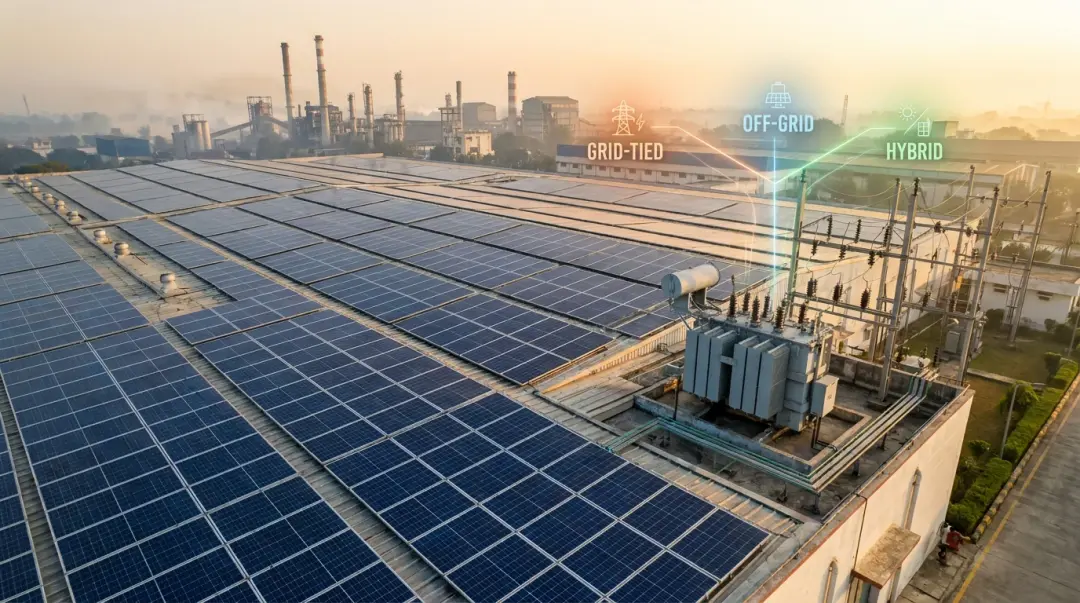
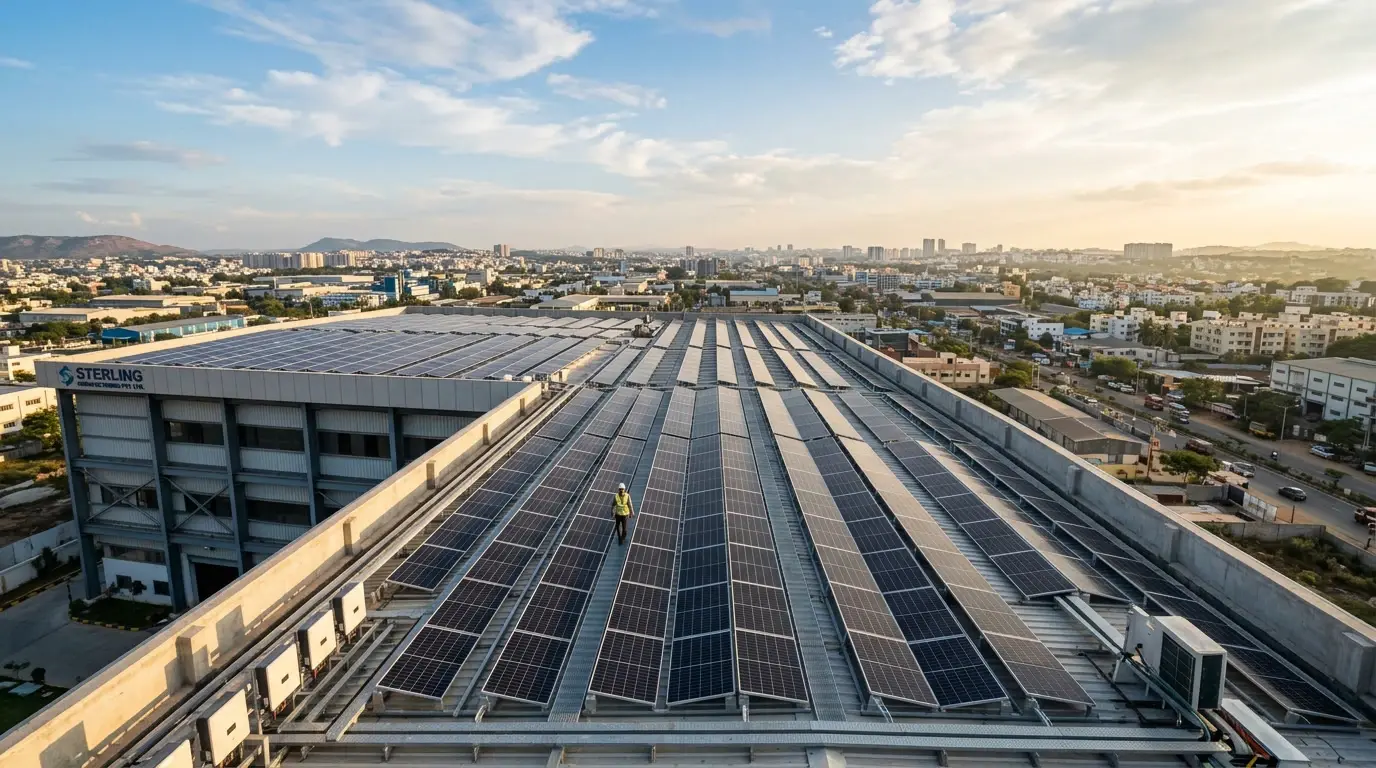
Aerial view of an Indian industrial facility with both rooftop panels and an adjoining ground-mount plant.
Can A Facility Use Both?
Yes, and for larger industrial facilities with both available roof space and adjoining land, a combined approach is increasingly common. Rooftop capacity covers a portion of the load using existing space, while a ground-mounted addition scales up total generation beyond what the roof alone could support.
This hybrid approach to system placement is different from the on-grid/off-grid/hybrid classification covered elsewhere; it's specifically about where panels are physically installed, not how the system interacts with the grid.
Questions buyers ask us.
Generally, yes, per kW, due to the additional cost of foundations and site preparation. However, ground-mounted systems can often achieve better generation efficiency, which can offset some of the higher upfront cost over time.
Yes. A structural assessment confirms the roof can safely bear the additional load of panels and mounting hardware before installation.
Ground-mounted systems often achieve higher generation efficiency due to optimal panel orientation and fewer obstructions, though the actual difference depends on the specific rooftop conditions being compared against.
Yes. This is common for larger industrial facilities that need more capacity than their rooftop alone can provide.
Not exclusively, but it does typically require more available land, making it more practical for facilities with adjoining plots, such as factories, warehouses, and larger commercial campuses.
At PowerMore, the choice between rooftop and ground-mounted solar isn't assumed, it's evaluated. Every project starts with a genuine assessment of available roof structure, land, shading, and energy targets, so the final system placement is based on what actually maximizes generation for that specific facility, not a default recommendation.
Speak to our team to evaluate the right system placement for your facility.