Can A Data Centre In India Actually Run On Solar?
Data centres need near-continuous power. See how solar, paired with storage and open access procurement, actually performs against that requirement.
A data centre cannot go dark for even a few seconds. So when the question "can it run on solar" comes up, the instinctive answer from most people, including some in the industry, is no, because the sun sets and servers don't.
That answer turns out to be more wrong than right.
Recent modelling on solar-plus-storage systems in India has found that this combination can realistically supply up to 90% of a continuous, round-the-clock load, without wind, without any other generation source, using solar and batteries alone. The real constraint isn't nighttime. It's something else entirely, and it changes how this question should actually be evaluated.
Why "The Sun Sets" Isn't The Real Problem
The instinctive objection to solar for 24x7 loads is that solar doesn't generate at night. This is true, but it's also the easy part of the problem: batteries exist specifically to solve it, by storing daytime surplus and discharging it through the evening and overnight hours.
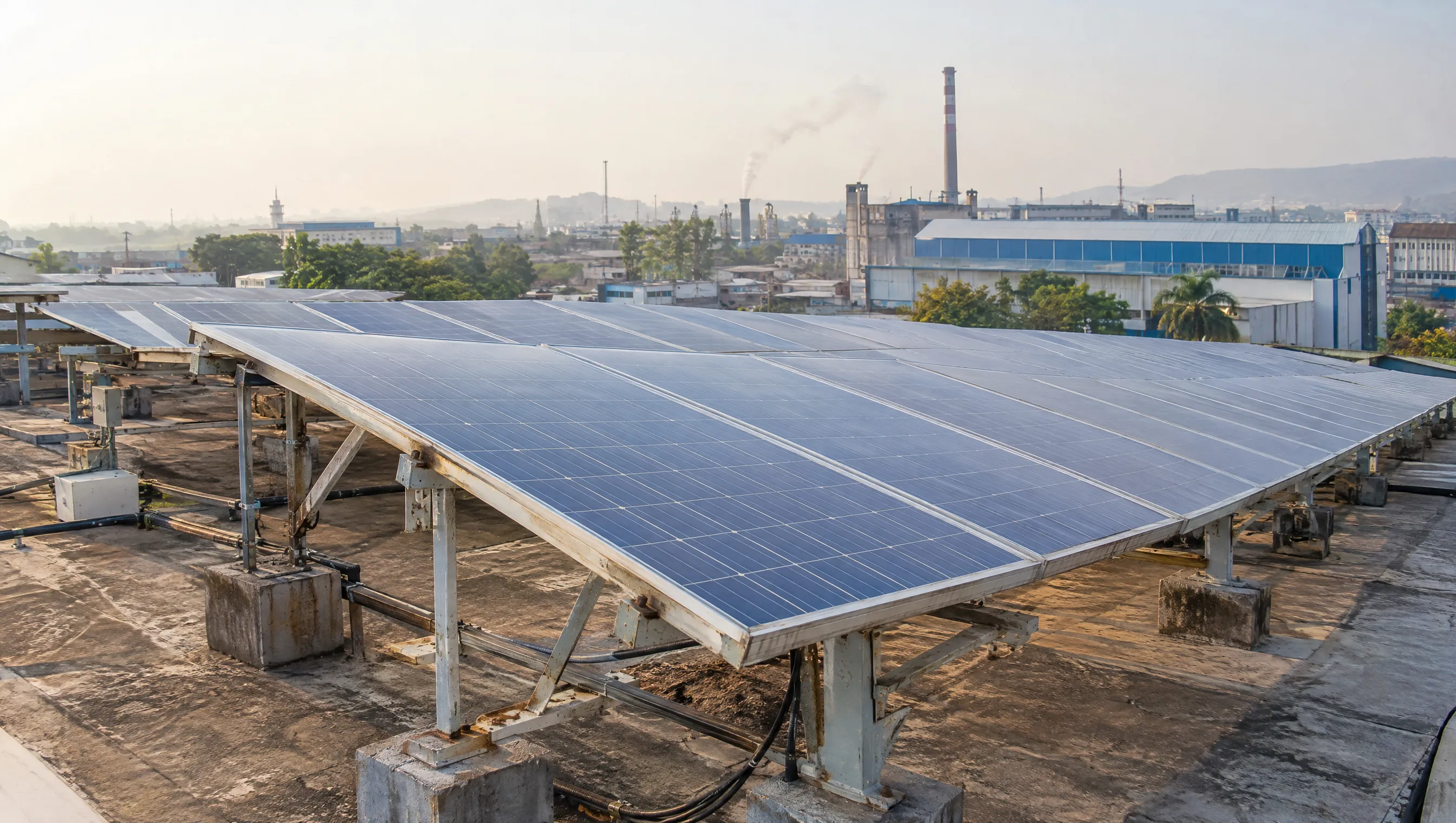
The harder problem is the monsoon. During extended periods of weak or inconsistent solar generation, batteries can only discharge what they were able to store in the first place. A well-sized system can comfortably ride through a normal night. Riding through several consecutive days of low generation is a different, more expensive engineering problem, and it's the main reason pushing coverage from 90% toward 100% gets disproportionately costly, rather than nighttime being the bottleneck.
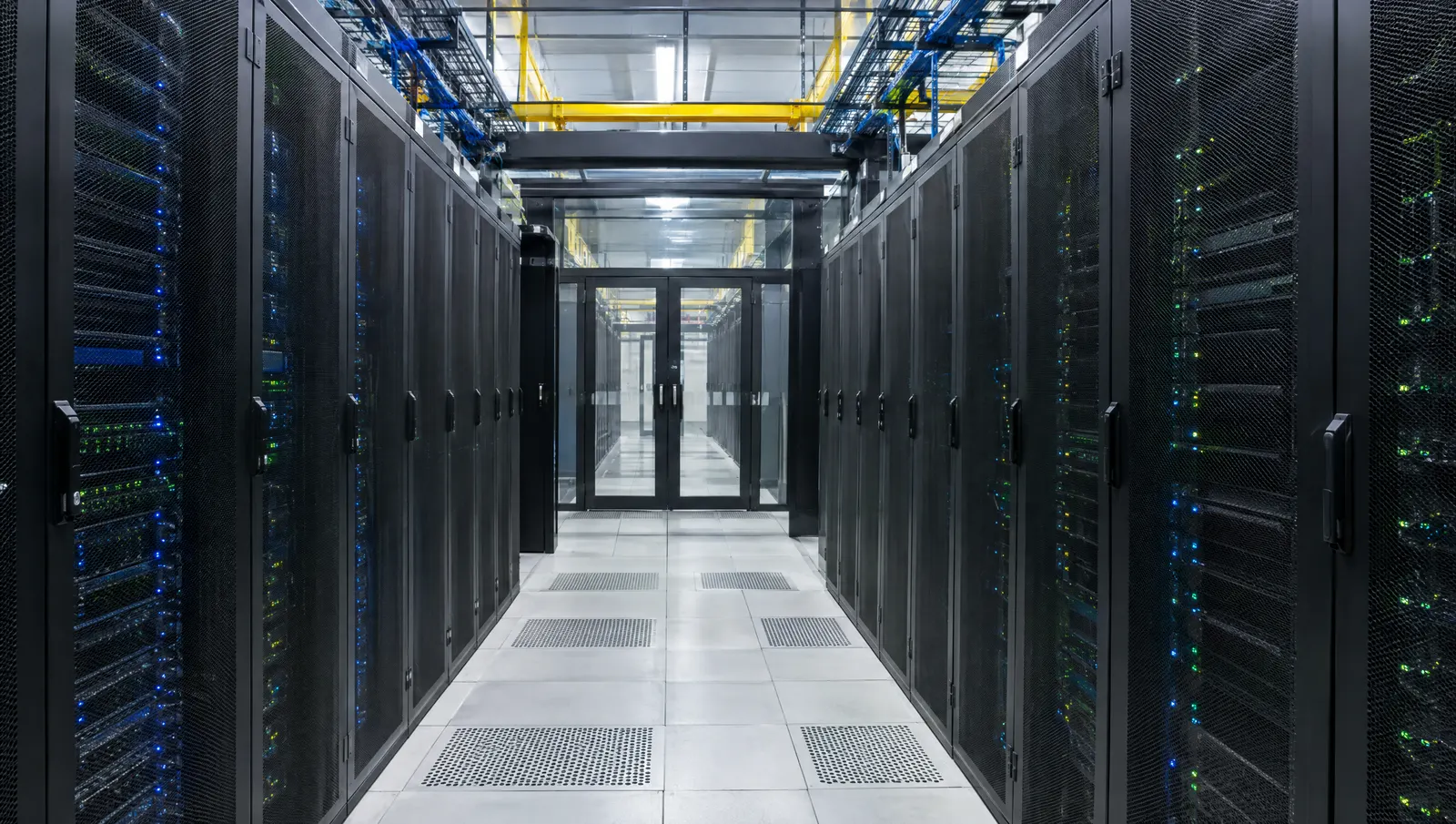
Cold aisle inside an Indian data centre server hall, a load that runs continuously around the clock.
Which Solar Model Fits Your Business?
Capex, Opex PPA, or Open Access — get a site-specific recommendation with system size, savings, and payback in 24 hours.
What "Running On Solar" Actually Requires
For a load as large and continuous as a data centre, this isn't a rooftop solar conversation. It requires three things working together:
Large-Scale Solar Generation
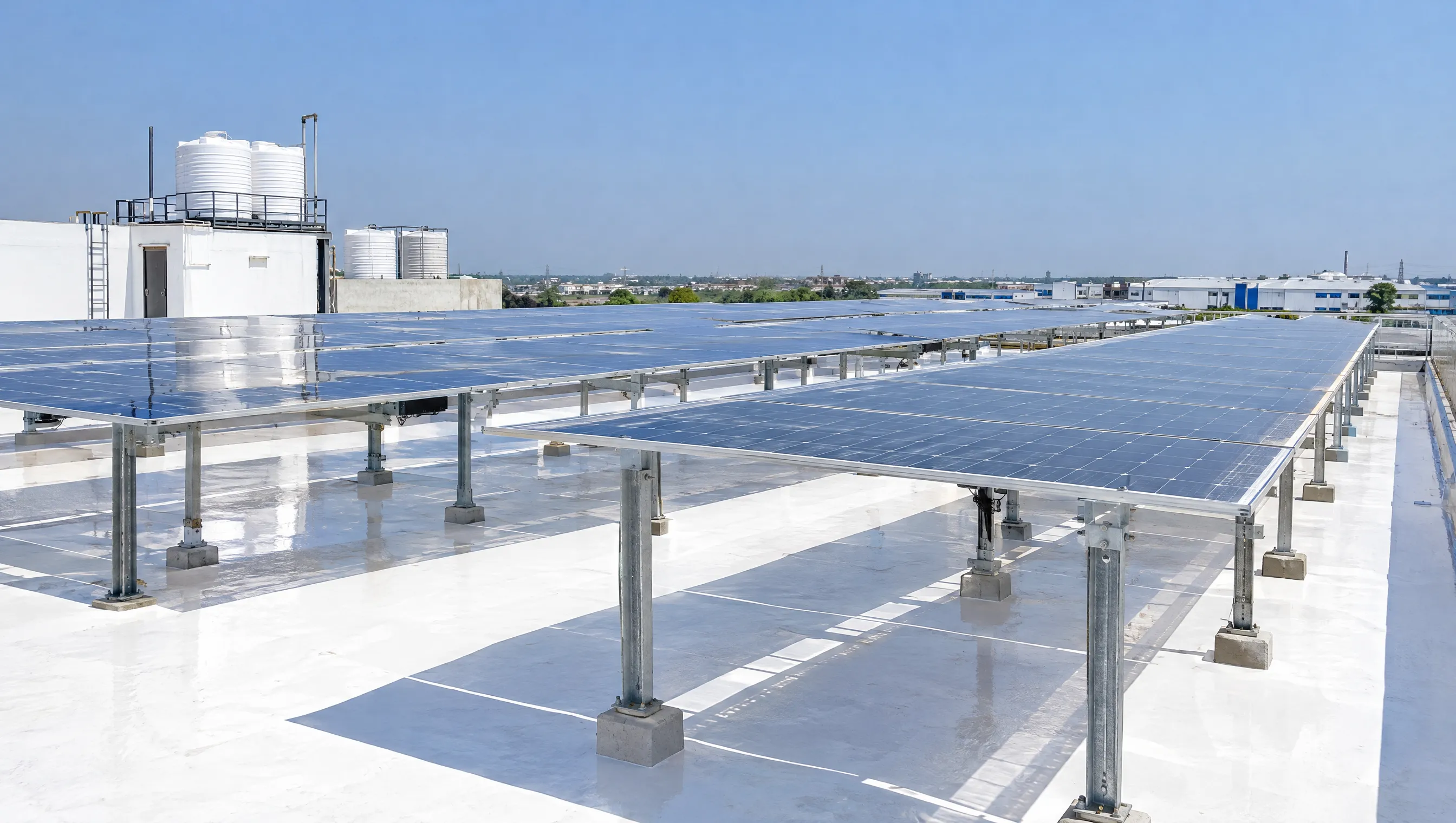
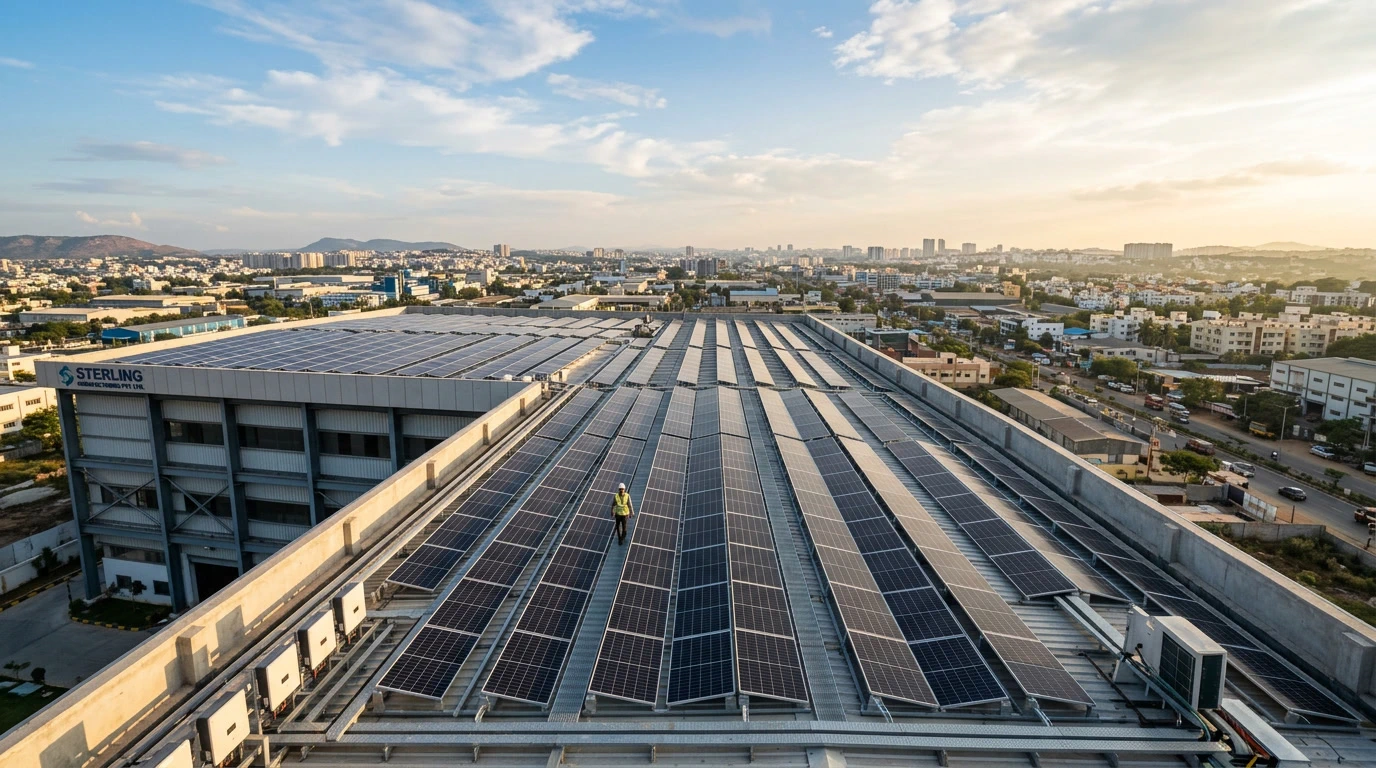
Given the scale of a data centre's continuous demand, the solar capacity required is typically sourced through open access or group captive solar projects, often located off-site, rather than rooftop solar alone, which usually cannot generate enough within available roof area.
Substantial Battery Storage
To meaningfully shift daytime solar into evening, night, and low-generation periods, storage needs to be sized well beyond what a typical peak-shaving application would need: closer to several hours of full-load autonomy, scaled to the facility's actual demand.
Grid And Backup Power
Even in a well-designed system, grid supply and diesel backup remain part of the architecture, covering demand during extended low-generation periods and providing redundancy that a data centre's uptime requirements do not allow it to go without.
The Procurement Routes That Make This Possible
Data centres don't typically source solar the way a factory sources rooftop solar for its own building. The scale involved usually points toward:
Open Access
Procuring power directly from a solar generator located elsewhere in the state, paying wheeling and transmission charges to route it through grid infrastructure.
Group Captive
Multiple consumers, or a consumer holding partial ownership in a generation asset, jointly benefit from captive power. This is relevant when a single facility's load doesn't justify owning an entire solar plant outright.
Solar PPAs
Long-term agreements to purchase solar power at a fixed tariff from a third-party developer, without owning the generation asset.
Renewable power procured through captive or group captive structures can often be delivered at a lower cost per unit than conventional industrial grid tariffs, though actual savings depend heavily on state-specific wheeling, banking, and cross-subsidy surcharge structures.
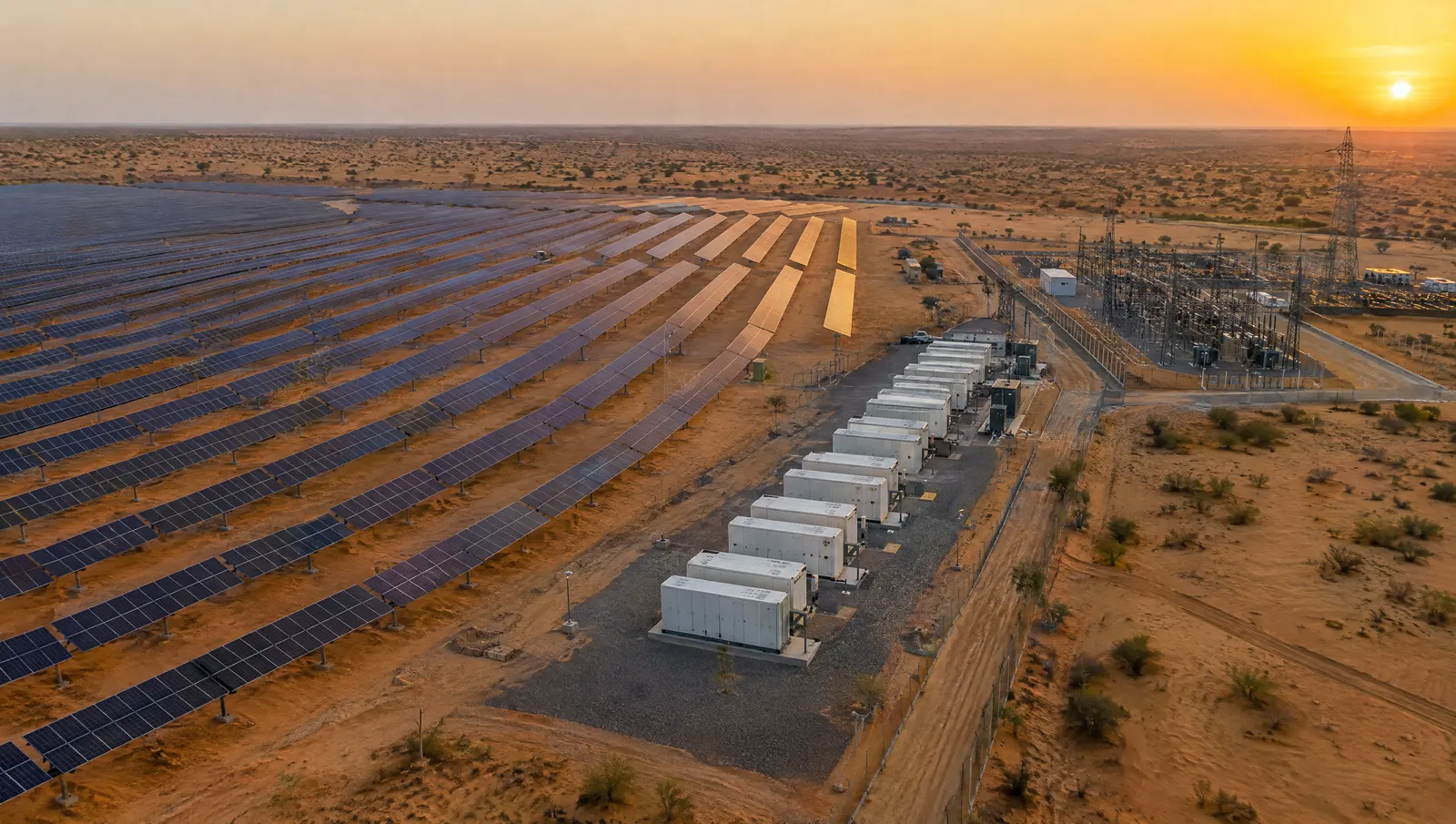
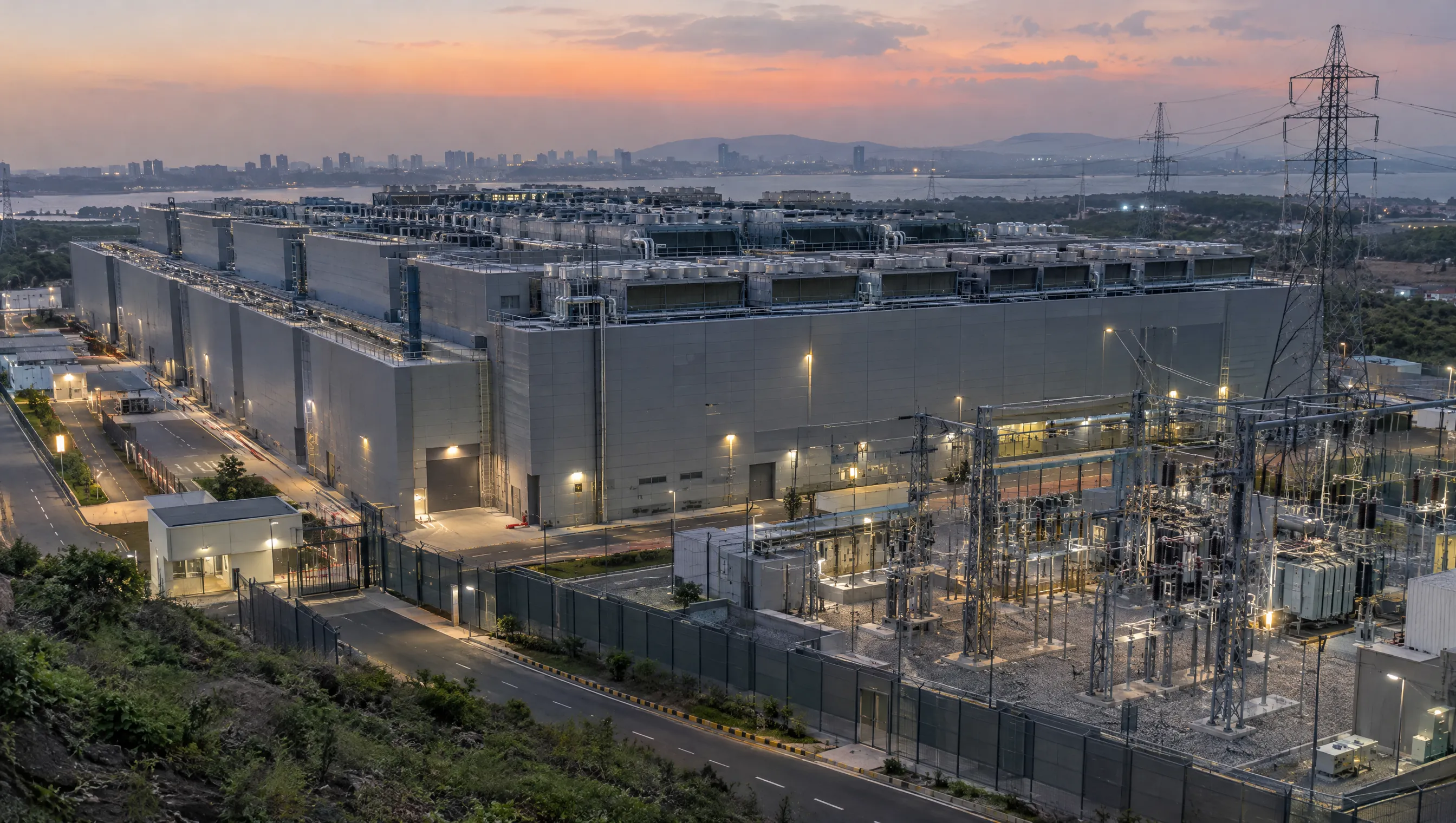
Off-site ground-mounted solar plant with containerised battery storage and a pooling substation in Rajasthan.
Why State-Level Policy Matters As Much As System Design
Open access and group captive economics vary significantly by state, driven by differences in wheeling charges, cross-subsidy surcharges, and banking provisions. Some states currently offer meaningfully better conditions for third-party solar procurement than others.
Regulatory requirements are also evolving. Several states have begun introducing storage obligations tied to larger captive renewable allocations, and national-level co-located storage mandates for new solar projects are also under discussion. This makes the policy landscape as relevant to feasibility as the technical design itself, and it's not static.
What A Data Centre Operator Should Actually Evaluate
Before concluding solar is or isn't viable, an operator should look at:
- Actual continuous load profile and uptime requirement for the facility
- Available solar procurement options in the relevant state: open access, group captive, or PPA
- Current wheeling, banking, and cross-subsidy surcharge structure in that state
- Battery storage sizing required to cover both daily cycles and extended low-generation periods
- Applicable storage-related regulatory requirements tied to the scale of renewable capacity being procured
This is a considerably more involved evaluation than sizing rooftop solar for a typical factory, and it benefits from input from both an EPC partner and a power procurement specialist familiar with the specific state's open access framework.
Questions buyers ask us.
Not fully, but closer than most assume. Solar paired with adequately sized battery storage can realistically cover up to around 90% of a continuous data centre load. The remaining share is typically covered by grid or backup power during extended low-generation periods.
No. Properly sized battery storage handles normal overnight demand reasonably well. The bigger challenge is extended periods of weak generation, such as during the monsoon season.
Data centre loads are typically far larger than what available rooftop area can generate, making off-site procurement through open access or group captive routes necessary at this scale.
Open access involves procuring power from an external generator through the grid, while group captive involves shared or partial ownership in a generation asset among multiple consumers.
Not currently. Coverage beyond roughly 90% requires disproportionately more solar and storage capacity to handle rare low-generation periods, making the cost curve steepen sharply as it approaches full independence.
At PowerMore, we evaluate solar feasibility for data centres against actual load profiles, uptime requirements, and state-specific procurement economics, because a workable solar strategy for this load type depends on far more than available rooftop area.
Speak to our team to evaluate solar options for your data centre.