
Solar For Hotels & Hospitals: Why Solar+BESS Makes Sense
Hotels and hospitals run power-hungry operations day and night. Here's why pairing solar with battery storage (BESS) is the right fit for both.
Hotels and hospitals share a load pattern almost no other commercial building has: genuinely round-the-clock demand. A hotel runs HVAC, lighting, kitchens, and laundry well past sunset. A hospital runs ICUs, operating theatres, and diagnostic equipment that simply cannot afford a gap in power, day or night.
That's exactly why solar alone isn't the full answer for either, and why solar paired with battery storage (BESS) is becoming the standard design for both.
Why These Two Sectors Are Genuinely High-Consumption
Hotels use roughly 50% more energy than a similarly sized residential building, even without full occupancy, driven by HVAC, laundry, kitchens, and guest amenities running continuously. Hospitals carry similarly heavy loads: life-support equipment, diagnostic imaging, climate-controlled storage, and round-the-clock facility management, none of which can tolerate downtime.
For hospitals specifically, solar can realistically meet up to 70% of total energy needs, rising to as much as 90% when paired with battery storage in a hybrid setup.
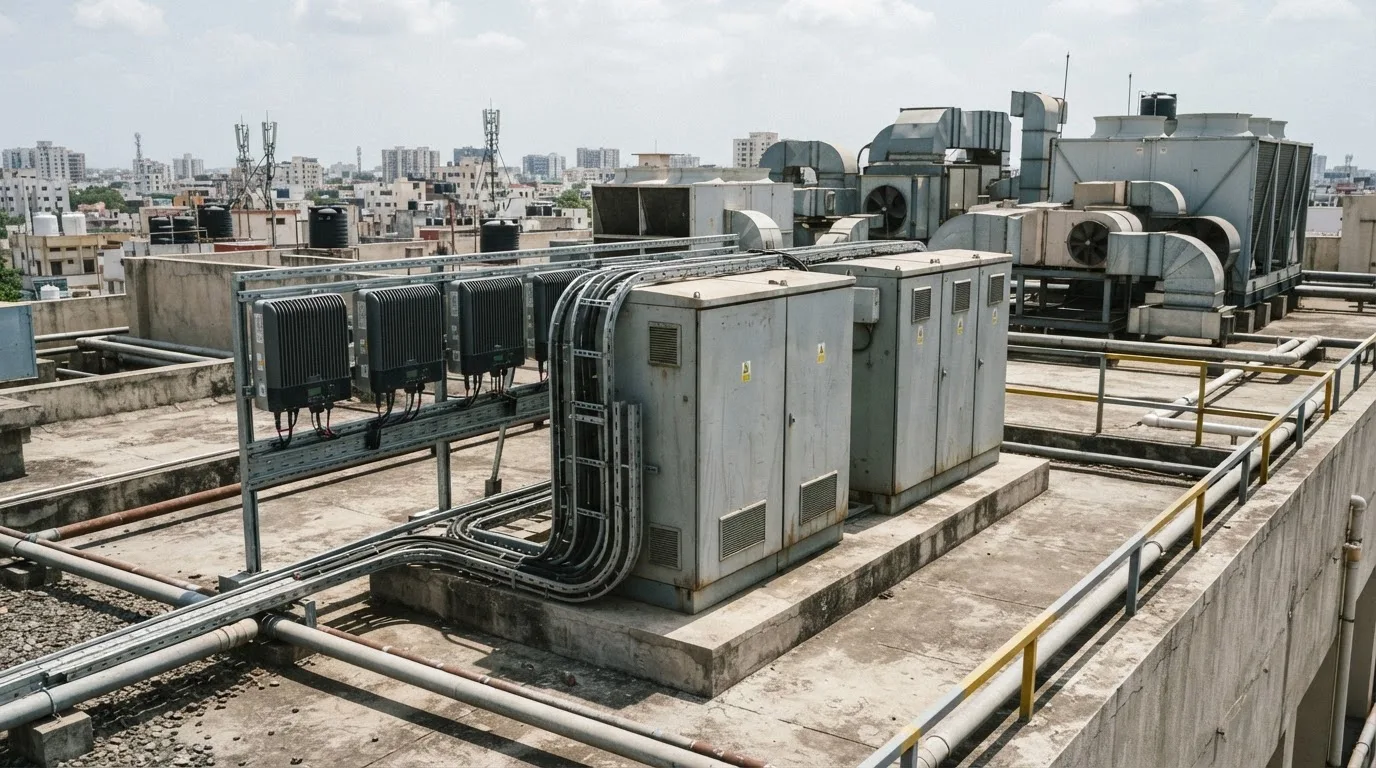
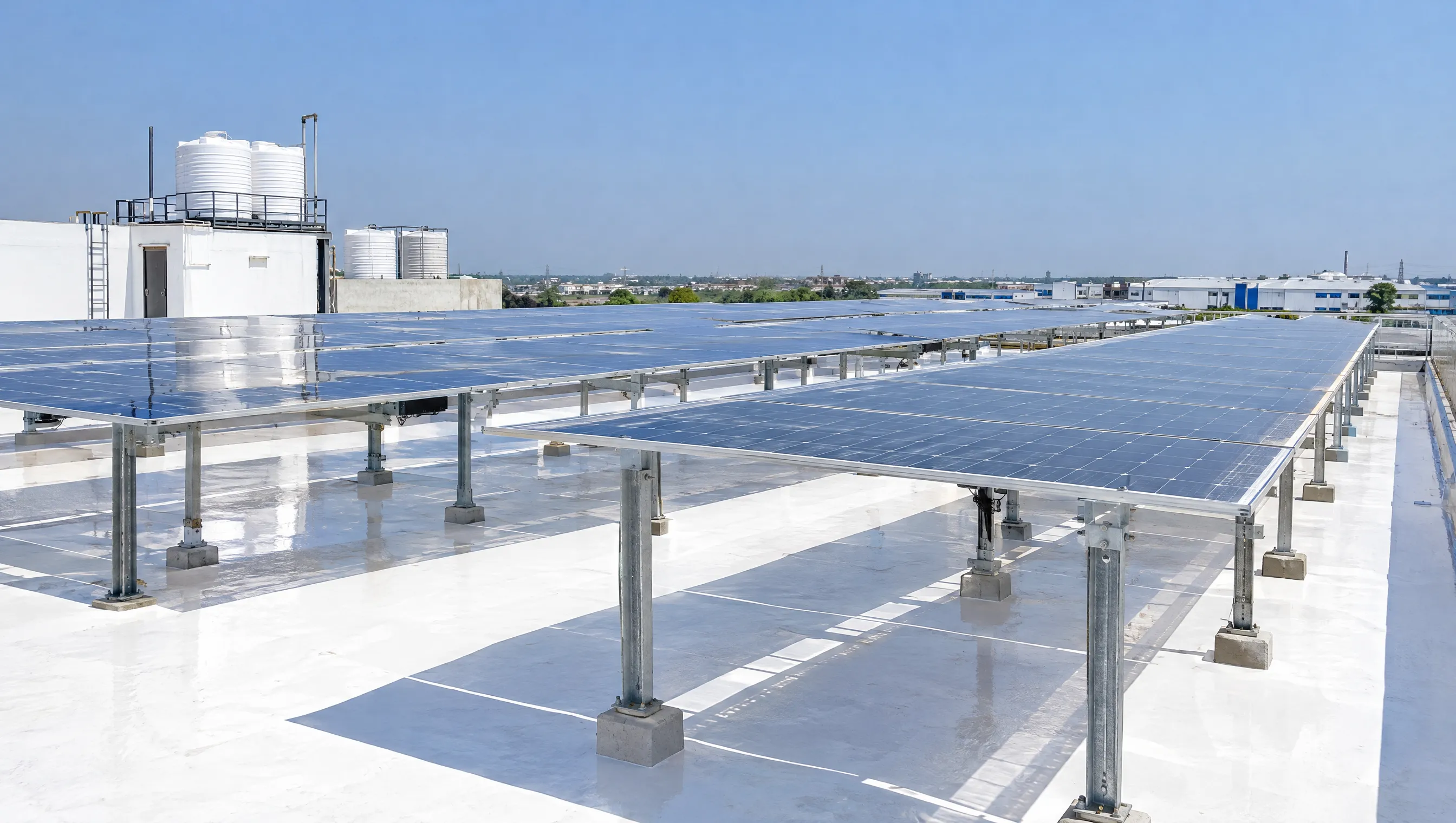
Hybrid solar system on a large commercial rooftop with battery storage cabinets alongside PV panels.
Which Solar Model Fits Your Business?
Capex, Opex PPA, or Open Access — get a site-specific recommendation with system size, savings, and payback in 24 hours.
Why Solar Alone Falls Short Here
Both sectors have a genuine day-night mismatch: solar generates during daylight, but hotel and hospital demand doesn't dip meaningfully after dark. A hospital's ICU load doesn't shrink at 9 PM. A hotel's evening check-ins, restaurant service, and overnight HVAC keep consumption high well after solar generation stops.
This is precisely the gap BESS is designed to close: storing daytime solar surplus and releasing it through the night, when grid dependency would otherwise remain high.
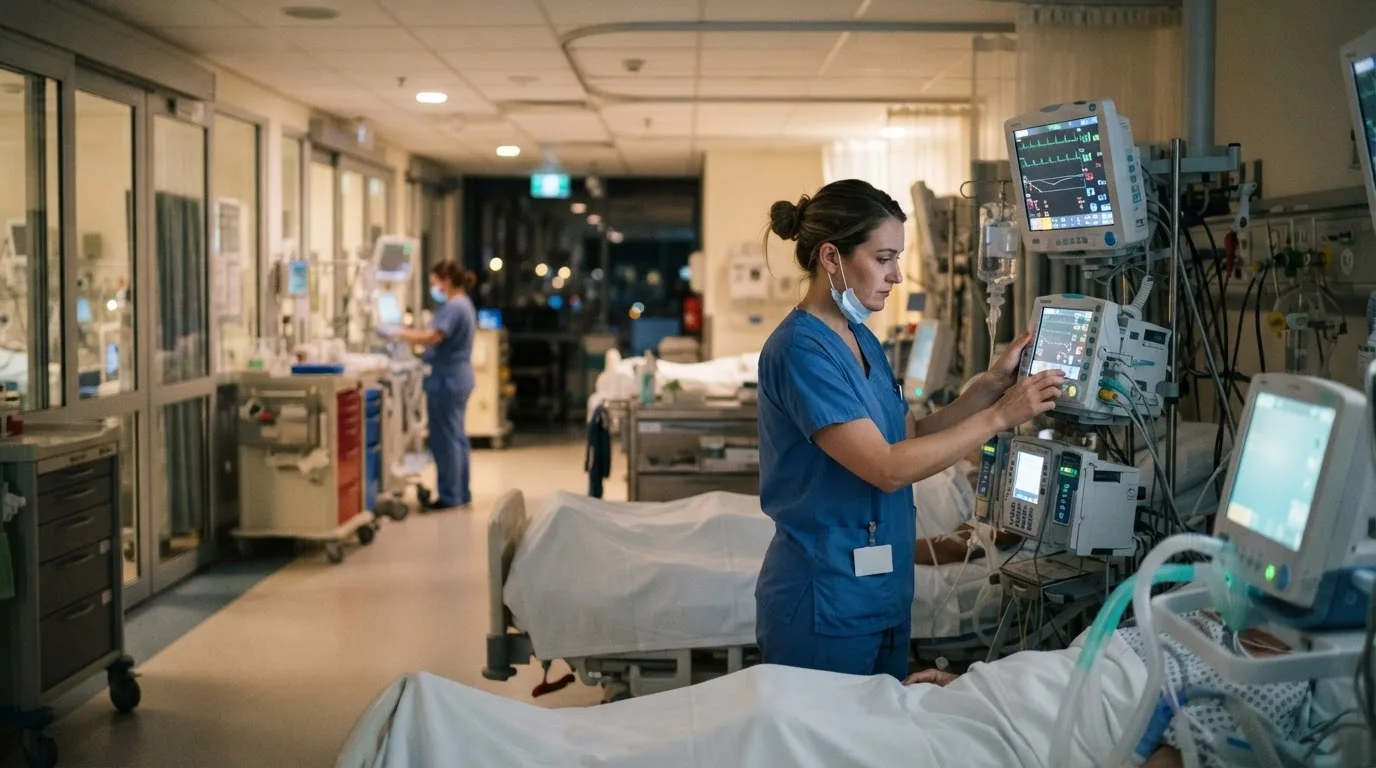
Bidirectional meter on a facility that uses stored solar to cover evening and overnight load.
What BESS Adds Beyond Storage
Uninterrupted Power For Critical Loads
For hospitals, this isn't a convenience, it's a requirement. Battery storage maintains continuous power for life-saving equipment, with no startup delay, unlike diesel generators that require time to kick in.
Reduced Diesel Dependency
Taj Exotica Resort & Spa added a 2 MW BESS in late 2025, helping reduce diesel consumption by nearly 200,000 litres annually, a meaningful case of what solar+BESS achieves at scale in hospitality.
Peak Demand Reduction
Both sectors carry high peak loads (check-in rush, meal service times, or medical emergencies), and BESS can shave those peaks, reducing demand charges alongside energy costs.
Power Quality Stability
Battery storage also stabilizes supply against voltage fluctuations, relevant for hospitals running sensitive diagnostic and life-support equipment that can't tolerate instability.
What Does This Cost, Realistically?
For hotels, solar system costs typically range from ₹20-30 lakh for smaller properties, up to ₹60-80 lakh for larger hotels around 500 kW capacity, with cost per kW decreasing at scale.
For hospitals, battery backup specifically adds ₹8,000-20,000 per kWh when designed for full 24/7 uninterrupted coverage, a meaningful addition on top of the base solar system cost, but one that directly addresses the sector's non-negotiable uptime requirement.
Across both sectors, a healthcare facility can save up to 40% on electricity bills through solar, while some hospital solar-plus-BESS installations report savings of ₹10-50 lakh annually depending on facility size.
Which Configuration Makes Sense?
Standard rooftop solar (no storage) works if the facility's consumption is heavily daytime-weighted and grid reliability is strong.
Hybrid solar+BESS is the stronger fit for most hotels and virtually all hospitals, given genuine day-night load and, for hospitals, an absolute requirement for uninterrupted critical power.
Questions buyers ask us.
Rarely alone. Hospitals can meet up to 70% of energy needs with solar, rising to 90% with battery storage. Hotels see similar partial offsets, with the exact share depending on system size and consumption pattern.
Because critical equipment like ICU and OT machinery cannot tolerate any power gap, and BESS provides instant backup with no startup delay, unlike diesel generators.
Yes, battery storage adds real cost, but for hospitals and 24/7-operating hotels, the added reliability and reduced diesel dependency typically justify the investment.
Healthcare facilities can save up to 40% on electricity bills, with some hospital solar+BESS installations reporting ₹10-50 lakh in annual savings depending on scale.
Yes. Battery storage also stabilizes power against voltage fluctuations, relevant for equipment sensitive to power quality, not just outright outages.
At PowerMore, solar for hotels and hospitals starts with mapping the facility's actual day-night load curve and critical power needs, before recommending standard rooftop solar or a solar+BESS configuration. That ensures the system matches real operational demands, not a generic daytime-only assumption.
Speak to our team to evaluate solar+BESS for your hotel or hospital.