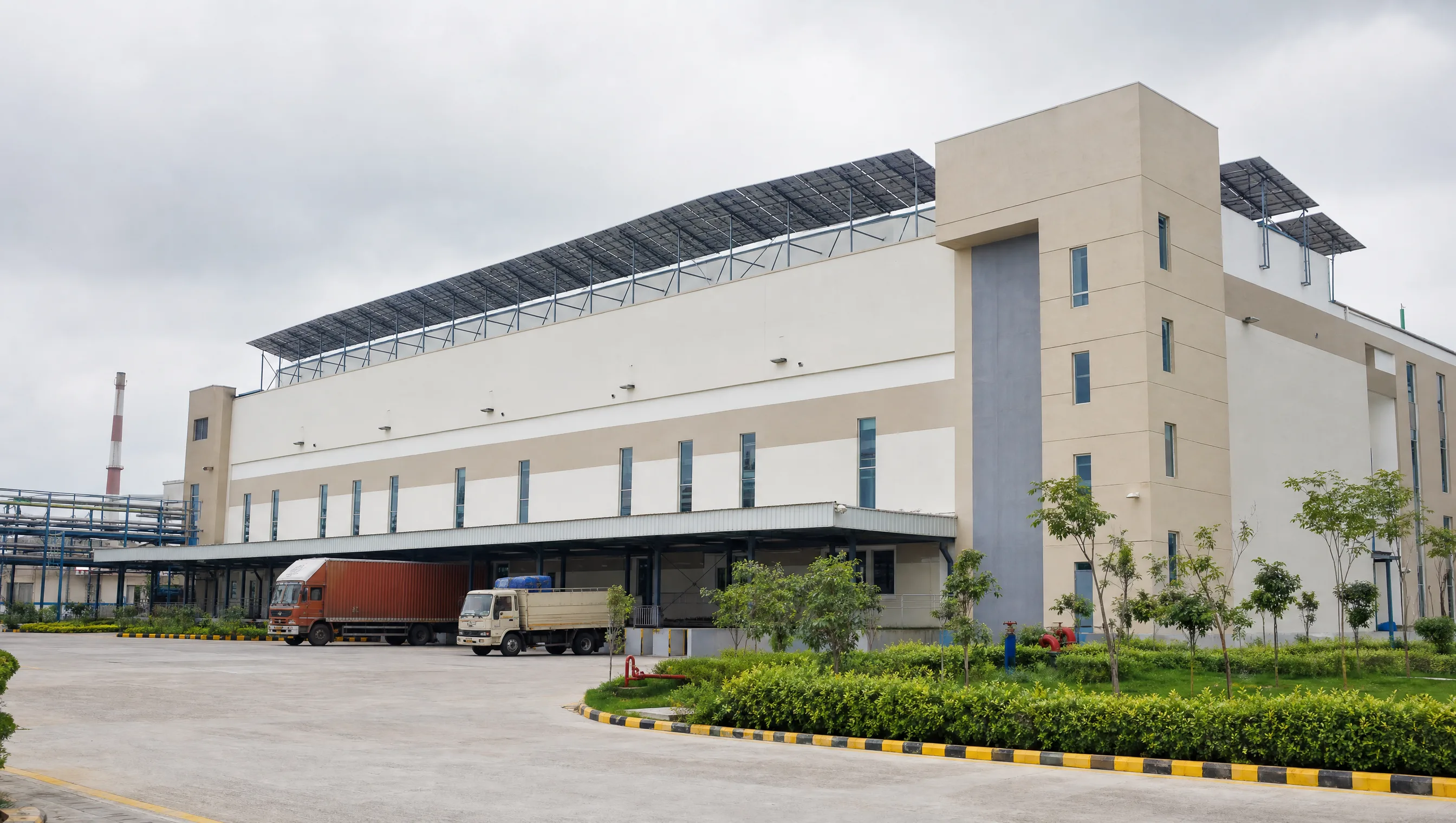
Solar For Pharma & Chemical Plants: What's Different
Pharma and chemical plants run continuous, high-value processes with strict power quality needs. Here's how solar is designed differently for this sector.
Pharma and chemical manufacturing don't tolerate interruption. A voltage fluctuation a warehouse would barely notice can compromise an entire production batch in a facility running temperature-sensitive reactions or precision dosing.
That makes solar for this sector fundamentally different from a standard commercial rooftop project, not because the panels work differently, but because everything around them has to account for tighter tolerances.
Why These Plants Are Genuinely Energy-Intensive
Pharma and chemical facilities run continuous, 24/7 production lines, with baseloads ranging from 500 kVA for a mid-sized unit to 10 MVA or more for a large chemical cluster. Combined with HT industrial tariffs commonly running ₹8-9 per kWh plus demand charges, electricity is consistently one of the largest recurring costs, making even a partial solar offset financially significant.
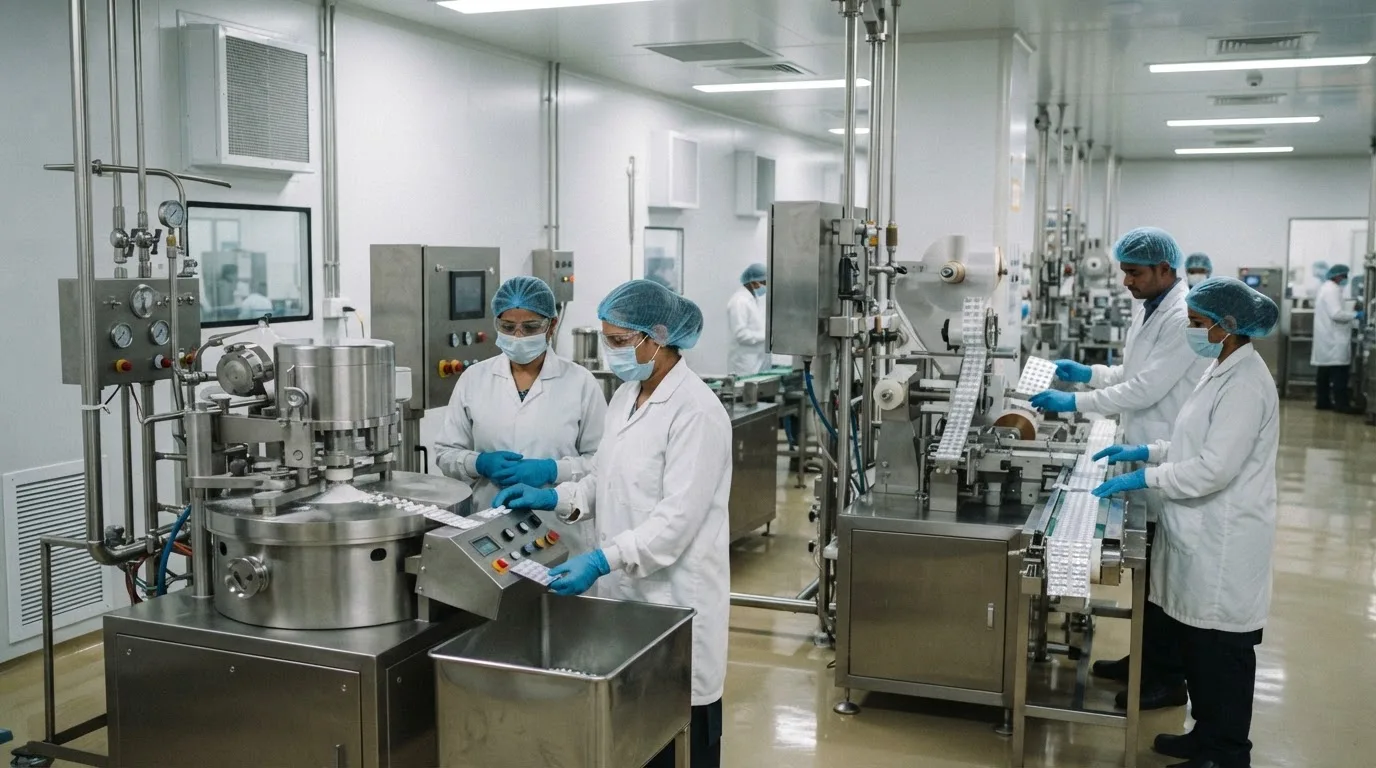
Interior of a modern manufacturing plant showing continuous production lines and heavy electrical infrastructure.
Which Solar Model Fits Your Business?
Capex, Opex PPA, or Open Access — get a site-specific recommendation with system size, savings, and payback in 24 hours.
What Makes Solar Design Different Here
Power Quality Requirements
Sensitive manufacturing processes, particularly in pharma, need power with minimal voltage fluctuation. Solar integration has to be engineered so it doesn't introduce instability into production that depends on consistent power quality.
Hazardous Area Compliance
Chemical plants often have zones classified for fire or explosion risk. Wiring routes and equipment placement need to account for hazardous-area compliance standards, not just standard rooftop electrical codes.
Uninterrupted Process Requirements
Continuous reactor schedules and temperature-controlled storage mean solar has to integrate without disrupting production timing, making commissioning a more carefully sequenced process than a standard installation.
Roof And Site Complexity
Dense equipment layouts, piping, and exhaust systems require genuinely custom system design rather than a standard rooftop template.
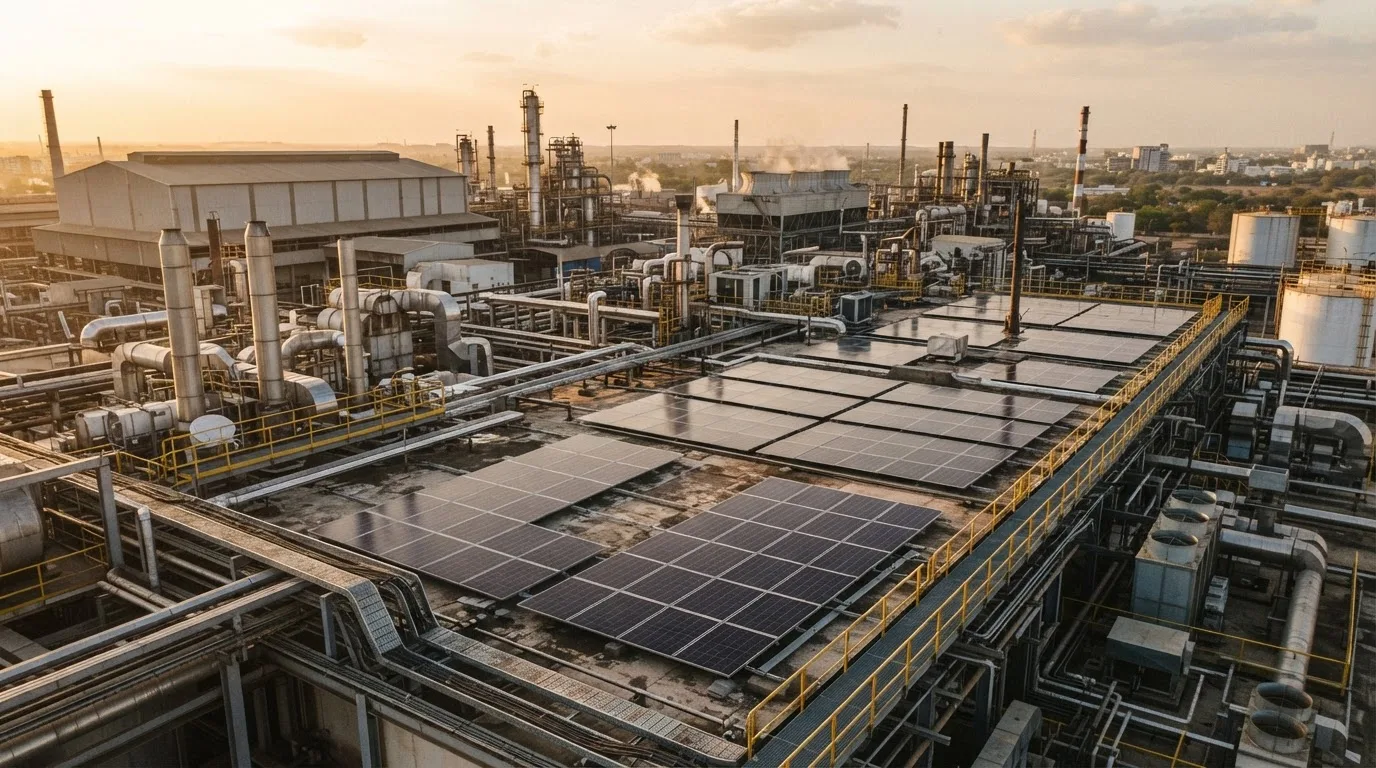
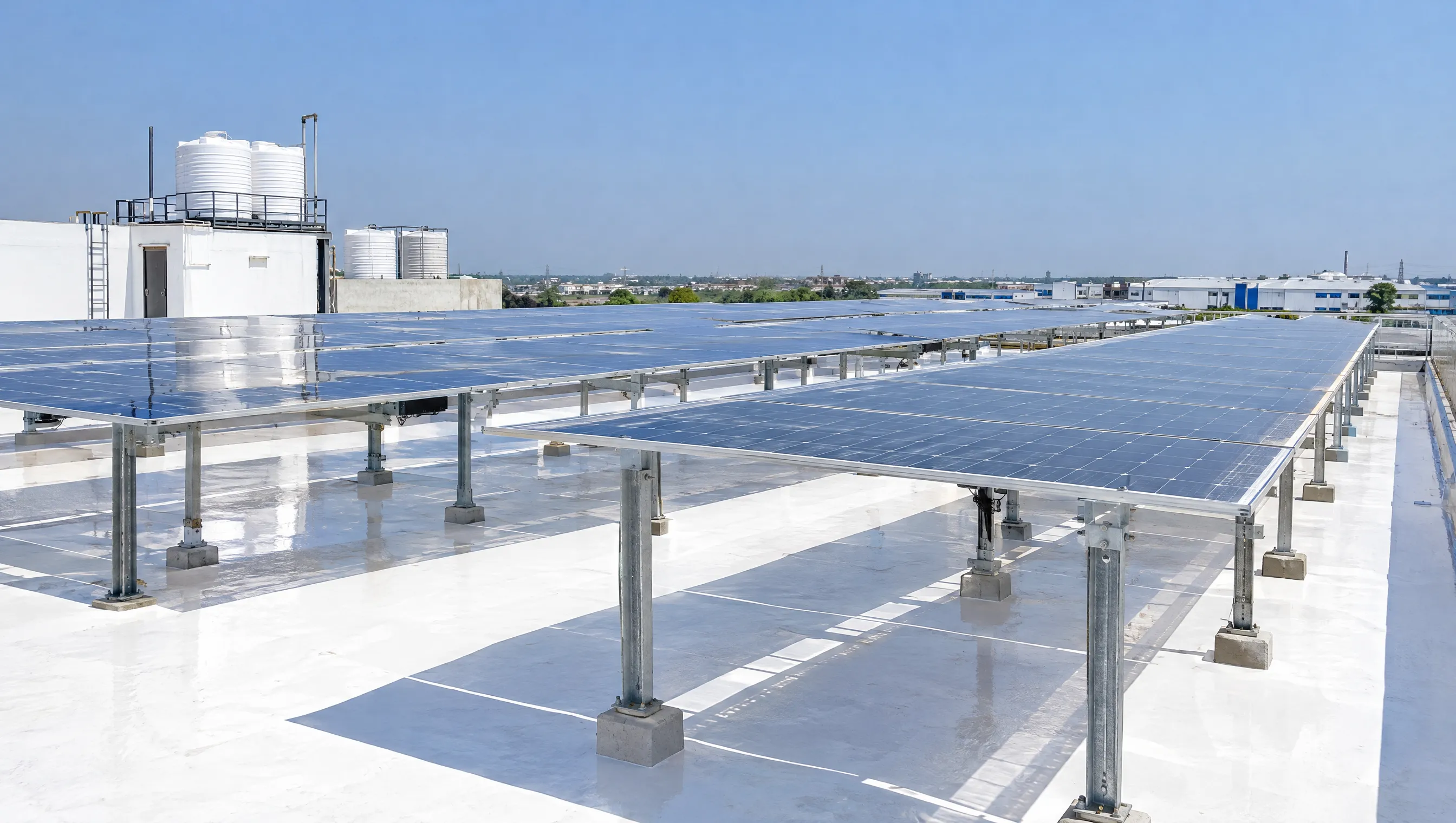
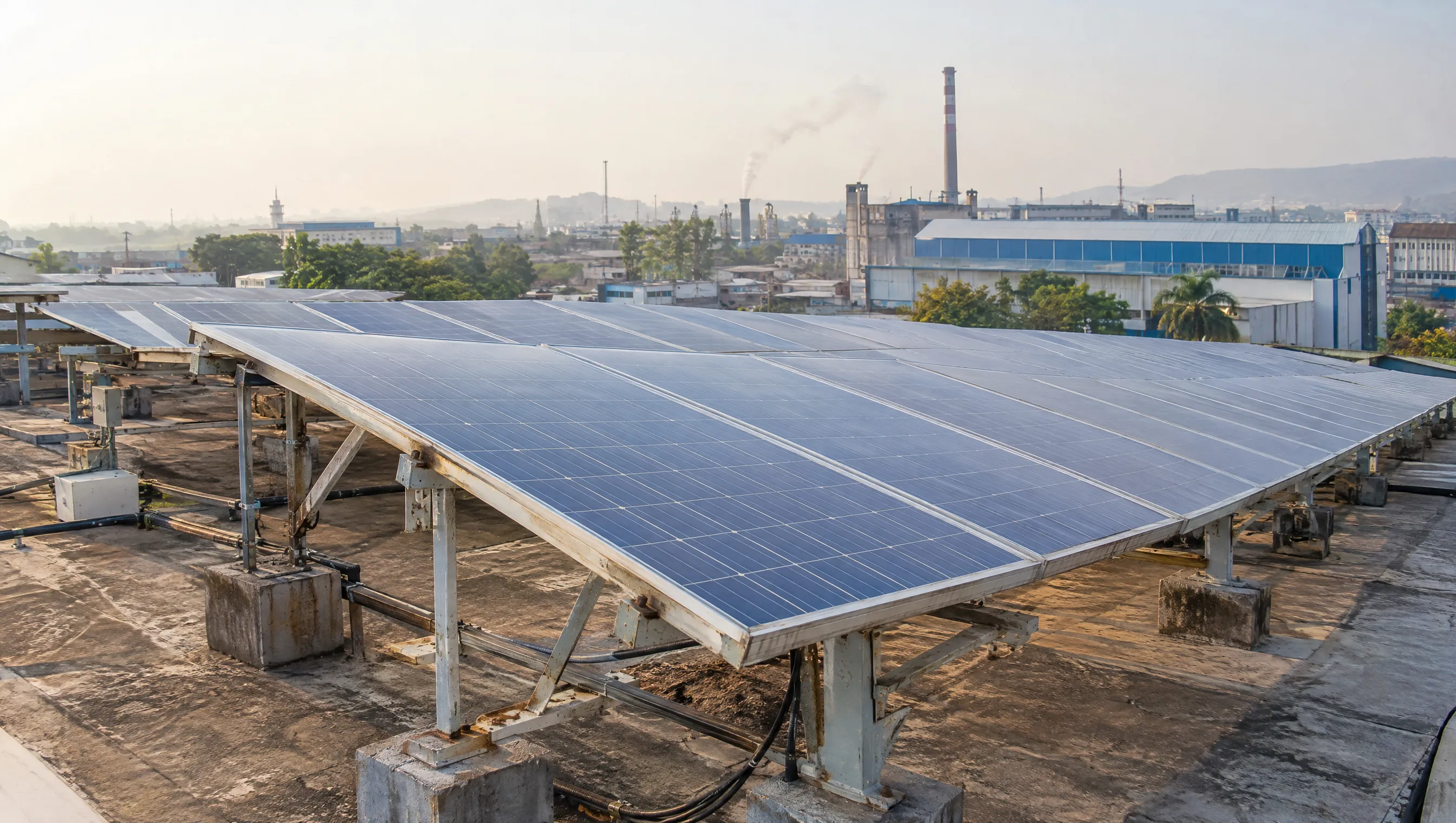
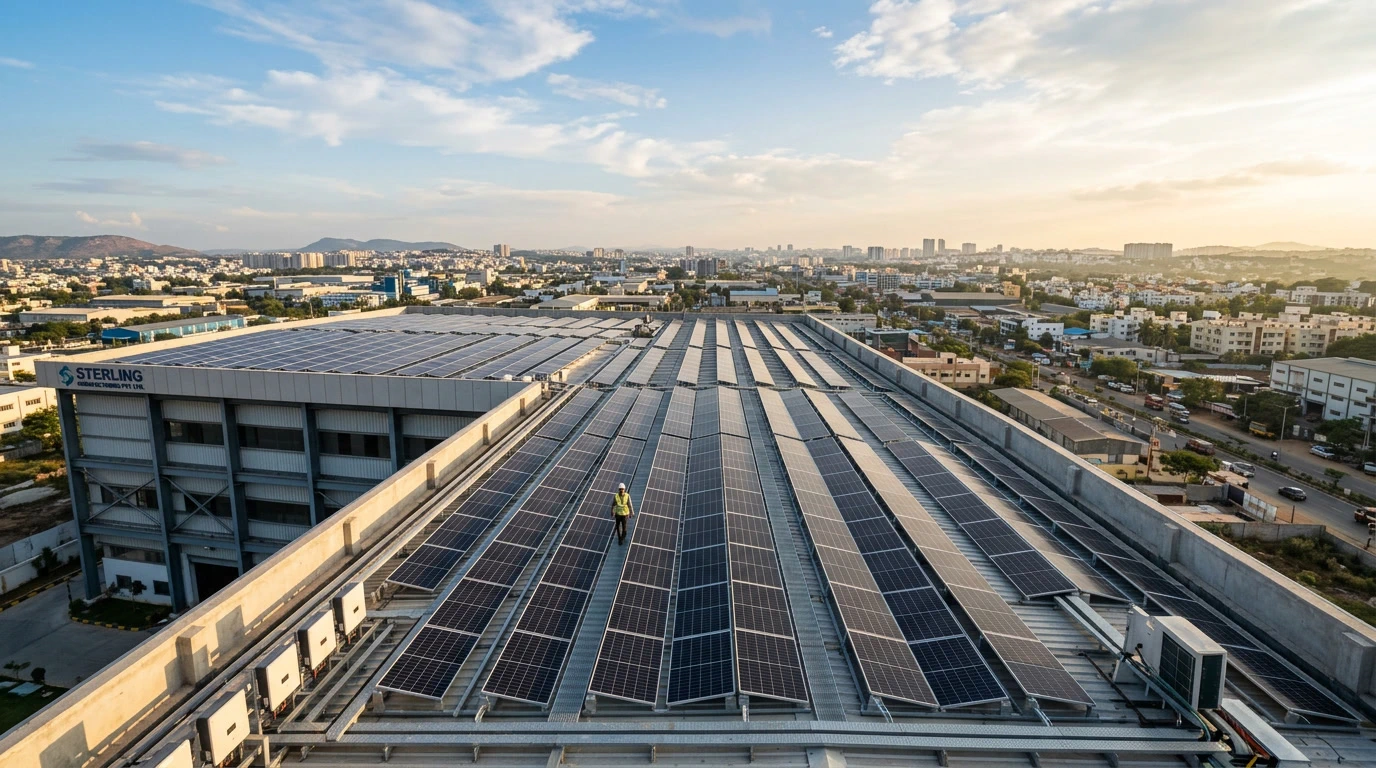
Solar panels installed on a large industrial rooftop where custom engineering is required to work around vents and piping.
Why It's Still Worth It
Despite the added complexity, solar remains one of the most financially compelling levers for energy-intensive pharma and chemical units. On-site solar can materially compress energy costs without disturbing production schedules, and for large chemical clusters, a 1-5 MW on-site plant is often the biggest cost-reduction opportunity available short of renegotiating the base tariff.
Solar also reduces dependency on diesel generator backup, cutting fuel costs and the air quality impact that diesel-reliant operations carry, increasingly relevant as more companies commit to sustainability goals for export markets.
Do These Plants Qualify For Subsidies?
Large pharma and chemical plants typically don't qualify for direct capital subsidies given their scale, but remain eligible for accelerated depreciation and structures like open access or group captive solar, both of which meaningfully improve project economics without a direct subsidy.
Questions buyers ask us.
Yes, though system design needs to account for strict power quality requirements to avoid disrupting sensitive production processes.
Often, yes. Hazardous-area compliance and dense site layouts typically require custom engineering rather than a standard rooftop approach.
Rarely entirely, given the scale and continuous nature of operations, but solar can offset a substantial portion of energy costs.
Large facilities usually don't qualify for direct capital subsidies but benefit from accelerated depreciation and structures like open access or group captive solar.
Because voltage fluctuations can compromise temperature-sensitive or precision-dependent manufacturing processes.
At PowerMore, solar for pharma and chemical facilities starts with understanding the plant's power quality needs, hazardous-area zones, and production schedule, before any system design begins.
Speak to our team to evaluate solar for your pharma or chemical facility.