
Solar Maintenance Cost In India: A Practical Guide For Businesses
What does solar maintenance actually cost for a commercial or industrial system in India, and what's included? Here's a realistic, practical breakdown.
A solar plant doesn't stop needing attention once it's commissioned. It needs it for the next 25 years.
Solar maintenance, formally known as O&M (Operations and Maintenance), is what keeps a plant performing at or near its designed output over that entire lifespan. Skip it, or underinvest in it, and the losses compound quietly, often invisibly, until a business notices its savings aren't what they used to be.
What Does Solar Maintenance Actually Involve?
Solar maintenance covers everything that keeps a commissioned plant running efficiently: cleaning, inspection, repairs, monitoring, and long-term performance management.
It splits into two broad categories: preventive maintenance, the regular, scheduled work that stops problems before they start, and corrective maintenance, the repairs and fixes that happen when something's already gone wrong.
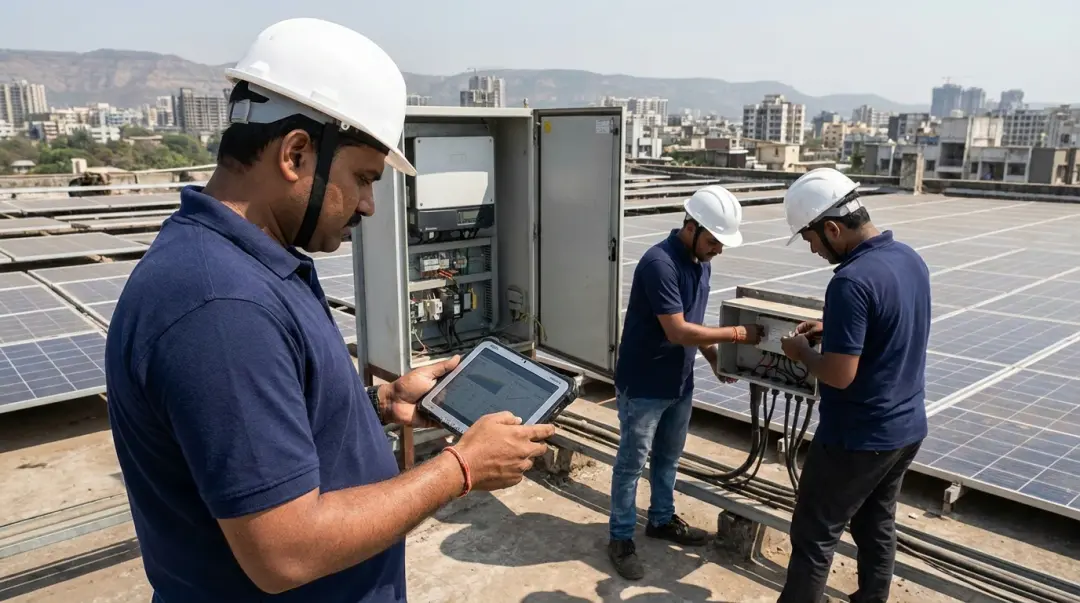
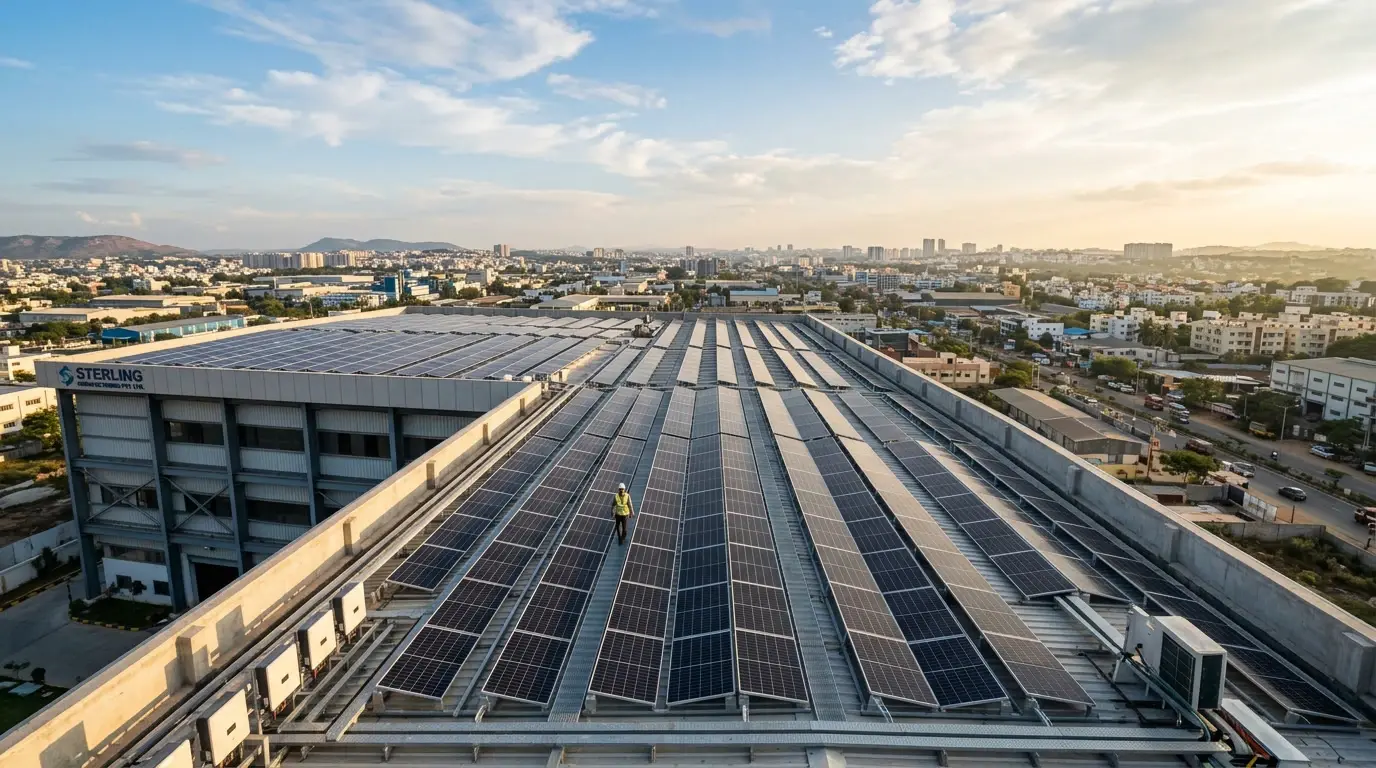
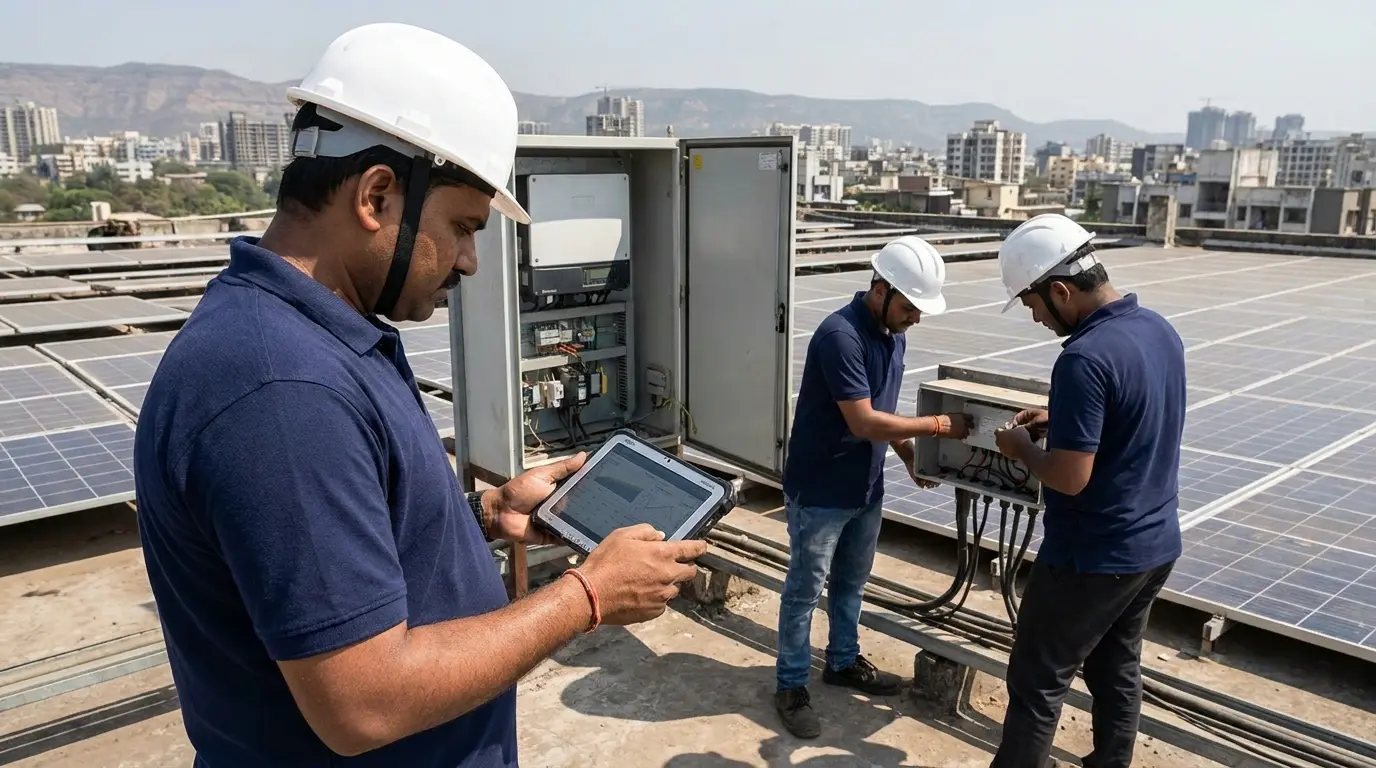
Powermore O&M team inspecting a commercial rooftop solar plant.
Which Solar Model Fits Your Business?
Capex, Opex PPA, or Open Access — get a site-specific recommendation with system size, savings, and payback in 24 hours.
What Does Solar Maintenance Cost In India?
Pricing varies meaningfully by system size and scope, but here's a realistic range based on current market data:
Commercial Rooftop Systems (Above 50 kW)
Annual maintenance typically runs between ₹1,000 and ₹2,000 per kW, translating to roughly ₹1 lakh to ₹2 lakh per year for a 100 kW system.
Large Industrial/Utility-Scale Systems (Per MW)
Annual maintenance costs generally range from ₹1.5 lakh to ₹8 lakh per MW, depending on plant size, location, technology, and the service provider's scope of work. A 1 MW plant typically falls somewhere in the ₹5 lakh to ₹10 lakh per year range.
As A Percentage Of System Cost
Across most commercial and industrial installations, annual maintenance generally works out to roughly 1-2% of the original system investment, a small ongoing cost relative to the asset value and revenue it protects.
A caution on these numbers: maintenance pricing varies significantly by provider, location, and contract scope, so these are planning-stage ranges, not fixed quotes. A dusty industrial zone with heavy pollution exposure will typically need a more intensive (and costlier) maintenance schedule than a cleaner, less exposed site.
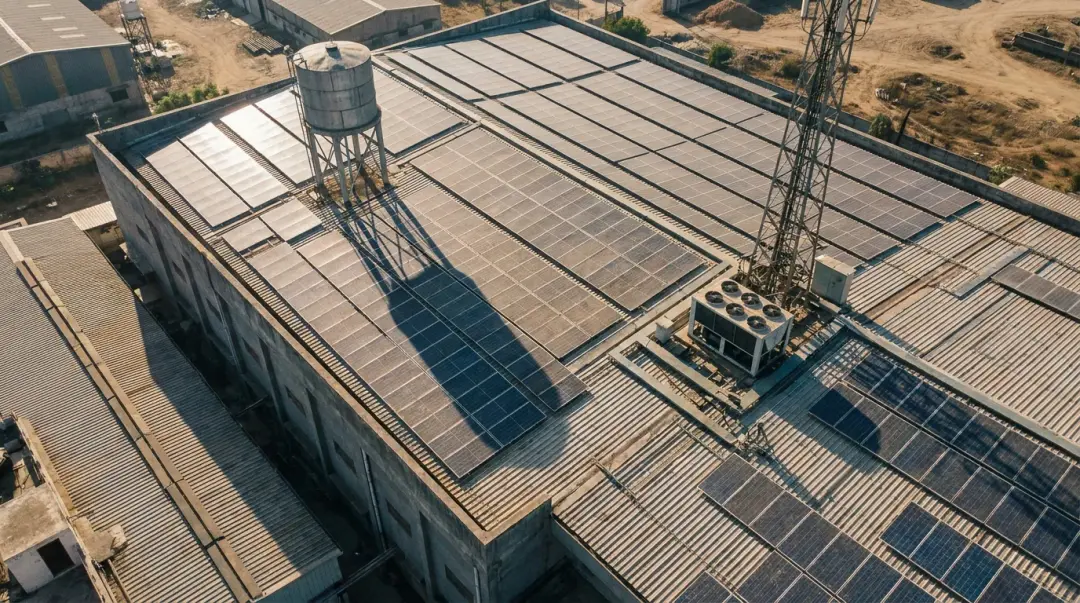
Solar panels being cleaned on an Indian commercial rooftop.
What's Actually Included In A Solar Maintenance Contract?
Panel Cleaning
Dust, bird droppings, and pollution accumulation can meaningfully reduce output if left unaddressed. Standard commercial recommendations call for cleaning twice a month, rising to 2-3 times a month in dust-heavy industrial zones near factories or manufacturing clusters.
Preventive Inspection
Monthly visual checks and quarterly technical inspections, covering wiring, connectors, mounting structure integrity, and corrosion, catch small issues before they become expensive ones.
Inverter Servicing
Inverters are typically checked quarterly, monitoring display readouts, cooling systems, cable connections, and earthing, since inverter issues are one of the most common causes of generation loss.
Performance Monitoring
Ongoing tracking of the plant's actual output against its expected performance ratio (PR), flagging underperformance early rather than after months of unnoticed losses.
Corrective Repairs
Addressing faults, component failures, or damage as they're identified, ideally before they escalate into larger, costlier problems or extended downtime.
Mounting Structure Checks
Annual inspection of structural integrity, bolt tightness, and roof penetration waterproofing, especially relevant for rooftop installations exposed to weather over many years.
What Happens Without Proper Maintenance?
The cost of skipping maintenance isn't always obvious upfront, but it compounds significantly over time.
A solar system without proper maintenance can lose 10-20% of its energy output within just 3-5 years. In dust-heavy industrial environments, uncleaned panels can lose over 50% of their potential output. For a 100 kW system, even a 10-15% output loss translates to roughly ₹10,000-12,000 in lost generation value per month, a number that adds up considerably across a 25-year operational life.
Poorly maintained plants also suffer accelerated degradation and increased downtime, meaning the financial impact isn't limited to lost generation, it can also mean shorter effective equipment life and higher repair costs down the line.

Business owner reviewing solar maintenance contract terms with an advisor.
Is Solar Maintenance Cost Tax Deductible?
For commercial and industrial systems, AMC (Annual Maintenance Contract) costs are generally treated as an allowable operational expense, deductible against business income in the year incurred. This effectively reduces the real cost of maintenance for tax-paying businesses, an often-overlooked benefit when comparing maintenance spend against the value it protects.
How To Evaluate A Solar Maintenance Contract
Scope Of Work
Confirm exactly what's included, cleaning frequency, inspection cycles, monitoring, and whether corrective repairs are covered or billed separately.
Cleaning Frequency Suited To The Site
A standard twice-monthly schedule may not be enough for a dusty industrial location; the contract should reflect actual site conditions.
Performance Guarantees
Some providers offer performance-based contracts with PR (Performance Ratio) and availability guarantees, aligning their incentives directly with the plant owner's actual returns.
Response Time For Repairs
A fast response to faults matters more than it seems; every day of downtime is lost generation that can't be recovered later.
Questions buyers ask us.
Solar maintenance includes panel cleaning, preventive inspection, inverter servicing, performance monitoring, and corrective repairs, all aimed at keeping a plant performing close to its designed output.
For commercial systems above 50 kW, annual maintenance typically costs between ₹1,000 and ₹2,000 per kW, though this varies by location and service scope.
Twice a month is standard for most commercial sites, rising to 2-3 times a month in dust-heavy industrial areas.
It can lose 10-20% of its output within 3-5 years, and considerably more in dusty industrial environments, resulting in real, ongoing financial losses.
Generally yes. For commercial and industrial systems, maintenance and AMC costs are typically treated as a deductible operational expense.
At PowerMore, maintenance isn't an afterthought handed off once a project is commissioned, it's built into the relationship from day one. Every maintenance schedule is designed around a facility's actual environment, dust exposure, location, and system scale, so the plant keeps performing the way it was designed to, for its full 25-year life.
Speak to our team to discuss maintenance for your solar system.