Solar Open Access Explained: A Guide For Large Industrial Consumers
A complete guide to solar open access for large industrial consumers — how it works, applicable charges, and real savings versus grid power.
Large industrial consumers face a specific problem that rooftop solar often can't fully solve: even a fully-utilized rooftop rarely covers the entire electricity demand of a high-consumption facility.
Solar open access exists for exactly this gap. It lets large consumers buy solar power directly from an off-site developer, delivered through the existing grid, without needing rooftop space or plant ownership.
What Is Solar Open Access?
Solar open access is a regulatory framework under the Electricity Act, 2003, that allows eligible commercial and industrial consumers to source electricity from a solar generator of their choice, rather than buying exclusively from their local DISCOM.
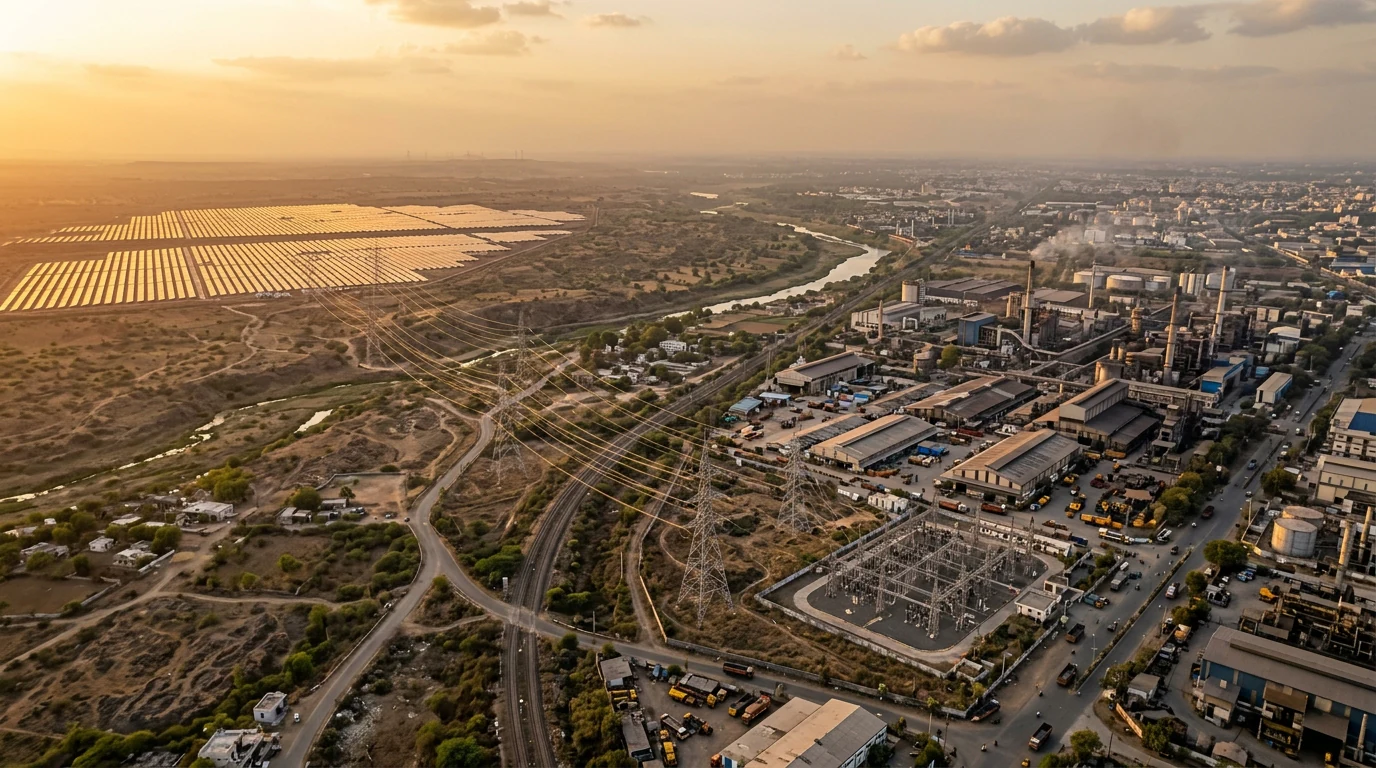
The solar plant, typically a large, off-site installation, feeds power into the state or central transmission grid. The consumer draws an equivalent amount of electricity at their own facility, with the transaction tracked through grid accounting rather than a direct physical wire connecting the two locations.
In plain terms: a factory can buy solar power generated hundreds of kilometres away and have it delivered through infrastructure that already exists.
Which Solar Model Fits Your Business?
Capex, Opex PPA, or Open Access — get a site-specific recommendation with system size, savings, and payback in 24 hours.
How Does Solar Open Access Actually Work?
Step 1: Eligibility Check
Most states allow renewable open access at a minimum contracted demand of 100 kW, though this varies, some states set the threshold higher.
Step 2: A PPA Is Signed
The consumer signs a long-term Power Purchase Agreement with a solar developer, agreeing on tariff and contract duration, commonly running 15-25 years.
Step 3: The Solar Plant Feeds The Grid
The developer's plant generates power and feeds it into the transmission network.
Step 4: The Consumer Draws Equivalent Power
The business draws electricity at its own facility, with the state load dispatch centre and DISCOM accounting for the energy transferred.
Step 5: Billing Reflects The Open Access Tariff, Plus Charges
The consumer pays the agreed solar tariff along with applicable wheeling, transmission, and cross-subsidy charges, still typically landing well below standard DISCOM industrial rates.
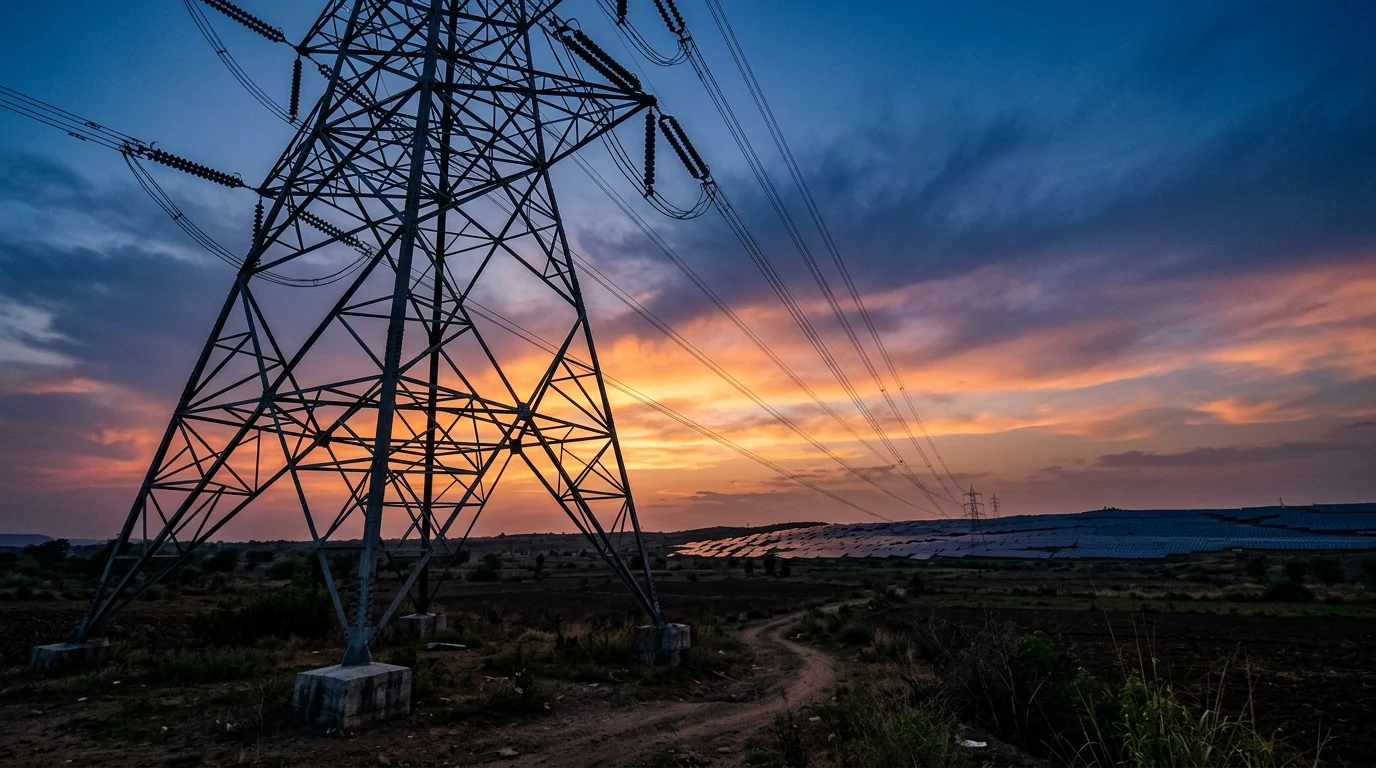
High-voltage transmission tower with power lines running toward a distant utility-scale solar plant in India at dusk.
Why Large Industrial Consumers Are Moving To This Model
Meaningful Cost Savings
Industrial grid tariffs in several states now run high, while open access solar can land at a noticeably lower effective rate once all charges are included, translating into substantial annual savings for high-consumption facilities.
No Rooftop Constraint
Since the plant is off-site, open access removes the ceiling that rooftop space places on how much solar power a facility can actually access.
No Capital Investment Required
Under a standard third-party open access arrangement, the business doesn't fund the plant, it simply signs a PPA and pays for the electricity consumed.
Renewable Purchase Obligation And Sustainability Pressure
Open access has become a genuine compliance tool for RPO targets, not just a cost play, and increasingly, a way for exporters to demonstrate renewable energy usage to global supply chain partners.
The Charges Involved
Open access isn't free of additional costs beyond the solar tariff itself. Consumers typically pay:
Wheeling Charges
Fees paid to the transmission or distribution licensee for using their network to move power from the generator to the consumer.
Transmission Charges
Applicable when power moves across state lines through the central transmission network.
Cross-Subsidy Surcharge (CSS)
A charge that compensates DISCOMs for the revenue they lose when a large consumer shifts away from DISCOM-supplied power, since large consumers typically subsidize lower tariffs for residential and agricultural users.
Even after these charges, the landed cost of open access solar generally remains meaningfully below standard industrial DISCOM tariffs, though the exact savings depend heavily on the state and its specific charge structure.
Open Access Vs Group Captive: What's The Difference?
Open access and group captive are closely related but not identical. Under a standard third-party open access arrangement, the consumer simply buys power from a developer's plant with no ownership stake, meaning cross-subsidy surcharge and additional surcharges apply in full.
Under group captive, a consortium of consumers holds at least 26% equity in the solar plant and collectively consumes at least 51% of its output. This ownership stake typically qualifies the arrangement for exemption from cross-subsidy surcharge, which can meaningfully improve the economics, at the cost of added governance complexity and a capital commitment.
Businesses evaluating this space should weigh the equity commitment and complexity of group captive against the simplicity, but higher ongoing charges, of a third-party open access PPA.
Does Every State Allow Solar Open Access?
Not equally. Open access is regulated by central bodies for inter-state transactions and by individual State Electricity Regulatory Commissions for intra-state ones, and implementation varies significantly.
States like Karnataka, Maharashtra, Gujarat, and Rajasthan have well-established open access markets with clearer procedures and stronger developer ecosystems. Some states have applied restrictions on open access, citing DISCOM revenue concerns, which can affect approval timelines and project feasibility.
This makes it essential to evaluate state-specific rules and charges before committing to a facility's open access strategy, rather than assuming a uniform national framework.

Indian factory owner and a solar advisor in a corporate meeting room reviewing a printed open-access solar PPA document.
Is Solar Open Access Right For Your Business?
Open access tends to make the most sense for large industrial and commercial consumers, typically those with a monthly electricity spend substantial enough to make the additional charges worthwhile, and consumption patterns that can absorb power delivered through the grid rather than directly on-site.
For facilities with available rooftop space, a combination of rooftop solar for base load and open access for additional demand is increasingly common, allowing businesses to maximize their renewable energy share without over-relying on a single mechanism.
Questions buyers ask us.
It's a system that lets large businesses buy solar electricity directly from a developer, delivered through the existing power grid, instead of buying all their power from the local electricity board.
No. The solar plant is built off-site by the developer; the business doesn't need any rooftop or land of its own.
Consumers typically pay wheeling charges, transmission charges, and a cross-subsidy surcharge, in addition to the agreed solar tariff.
Not exactly. Open access is the broader mechanism; group captive is a specific structure within it where consumers hold equity in the plant to reduce certain surcharges.
This varies by state, but many states allow renewable open access starting from a contracted demand of 100 kW.
Open access solar lives or dies on the details most businesses never see, state-specific wheeling charges, cross-subsidy surcharges, banking rules that shift year to year.
PowerMore tracks these regulatory mechanics across states as a core part of structuring every open access deal, not as a footnote after the tariff is negotiated. That's what stands between a PPA that looks attractive on the term sheet and one that actually delivers the savings promised, once every charge is accounted for.
Speak to our team to evaluate solar open access for your business.