

Solar PPA Checklist: 7 Things To Check Before Signing OPEX
A complete checklist for reviewing a solar PPA under the OPEX model, tariff, escalation, exit clauses, and more, before you sign.
A solar PPA under the OPEX model looks simple on paper: no upfront cost, pay per unit, save against grid rates. The real risk isn't the concept, it's what's buried inside the RESCO solar contract, and it rarely shows up until several years in.

Two business leaders reviewing a solar PPA agreement across a boardroom table before signing.
1. Don't Compare Year-1 Tariff. Model The Full Tenure.
This is the single most common mistake businesses make. A Power Purchase Agreement Solar deal quoted at ₹4.20/kWh with a 4.5% annual escalation, a combination Mercom India's 2025 C&I tracker found in 38% of OPEX deals signed that year, can cross ₹8.50/kWh by year 15. Comparing only the headline first-year rate against the current grid tariff hides this entirely.
What to do: Ask for the full tenure NPV projection, not just the opening rate, and run it against a realistic grid escalation assumption (Indian industrial tariffs have risen roughly 6-8% annually over the past decade).

A business owner reviewing tariff-escalation projections on a laptop before signing a long-term solar PPA.
Which Solar Model Fits Your Business?
Capex, Opex PPA, or Open Access — get a site-specific recommendation with system size, savings, and payback in 24 hours.
2. Push For A Low, Clearly Capped Solar PPA Escalation Rate
Escalation clauses typically range 2-5% annually. The negotiating principle here is straightforward: since grid tariffs have historically risen 5-7% a year, even a PPA locked at 1% escalation still improves in relative value every single year. Push for the lowest cap achievable, ideally under 2%, or a flat, zero-escalation tariff if the developer will offer one.
3. Confirm The Minimum Offtake Obligation
This clause specifies how much solar power the business is contractually required to purchase annually, regardless of actual consumption. If a business's load patterns are likely to shift (seasonal production, expansion, downsizing), an inflexible minimum offtake clause can turn into a real liability, paying for power that isn't being used.
4. Check For A Mid-Term Buyout Option
A well-structured OPEX Solar Model includes a pre-agreed buyout formula, letting the business convert from OPEX to CAPEX ownership later if its financial position changes. Without this, the business is locked into paying per-unit rates for the full 15-25 year term with no flexibility to switch to ownership even if it becomes financially attractive to do so.
5. Verify Landlord/Property Rights, If On Leased Premises
If the facility operates on leased property, the RESCO solar contract's viability depends entirely on rooftop access rights. Without a clear landlord NOC (No Objection Certificate) built into the agreement, a developer either prices that risk into a higher tariff or declines to bid altogether, and the business risks losing access to its own solar plant if the lease situation changes.
6. Nail Down Dispute Resolution And Governing Law
For a 15-25 year contract, specify a clear governing law (typically the state where the plant is located) and a defined arbitration mechanism, with a mediation step before arbitration is triggered. Vague dispute clauses become expensive problems only when there's actually a dispute to resolve.
7. Confirm Who Owns O&M, And Vet The Developer Behind It
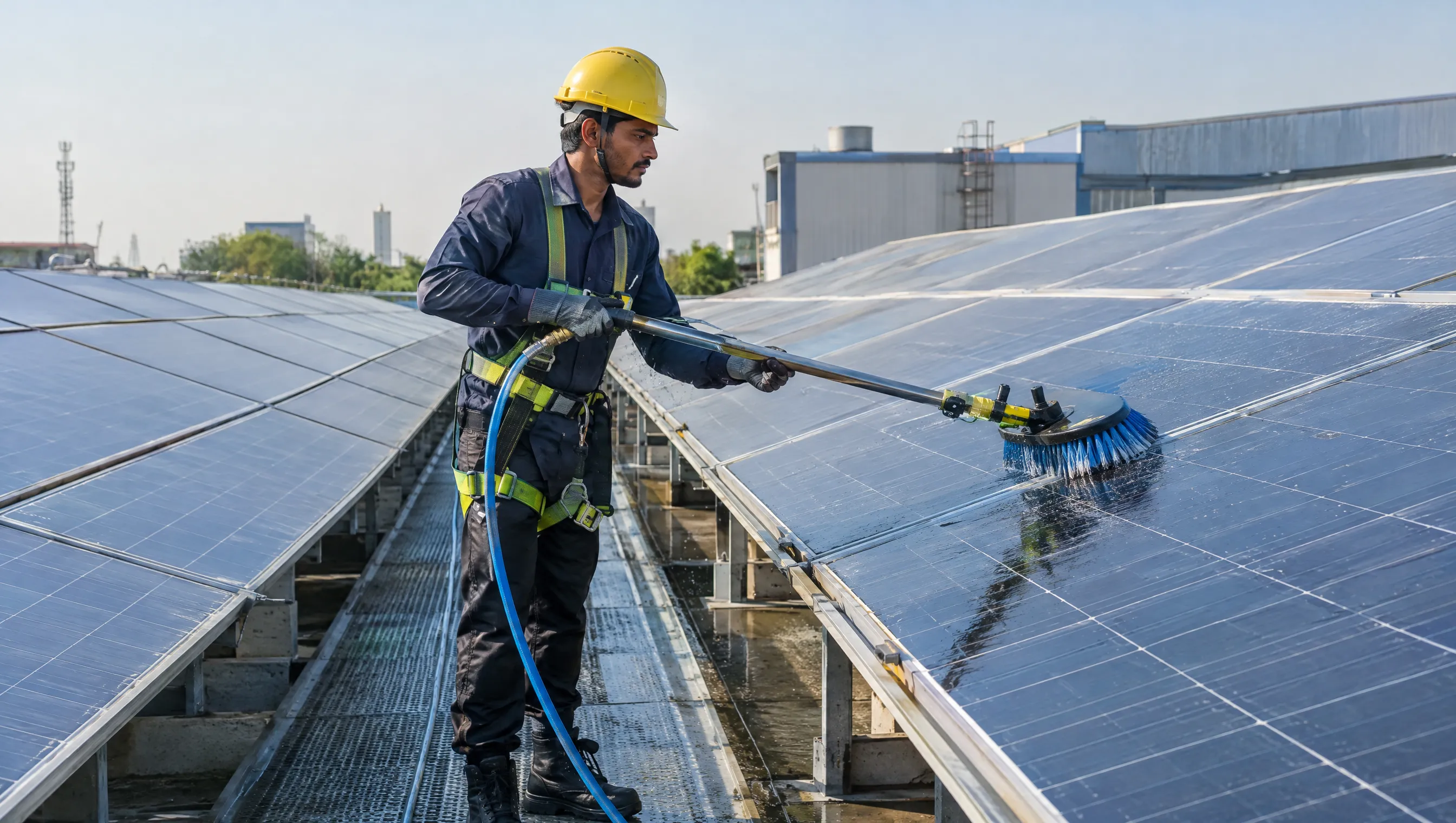
In OPEX, maintenance sits with the developer, that's the whole appeal. But it's worth understanding what O&M cost the developer has priced into the tariff, a realistic AMC assumption sits around 0.5-0.8% of project cost annually. Beyond the numbers, the developer's own track record matters just as much: since the business is tied to this partner for 15-25 years, evaluating them with the same scrutiny used when choosing a solar EPC company is worth the extra diligence upfront.
What Realistic PPA Rates Look Like In 2026
Industrial solar PPA rates in India commonly range ₹2.50-6.00/kWh, varying by capacity, location, and structure. Large industrial consumers (1 MW+) in high-irradiance states like Rajasthan or Gujarat can access the ₹2.50-3.50/kWh tier; mid-scale commercial open access deals typically land in the ₹3.50-4.50/kWh range. Anything meaningfully outside these bands, in either direction, is worth understanding the reasoning behind, before signing.
Questions buyers ask us.
It's a way to get solar power without buying the system, a developer installs and owns the plant, and the business just pays for the electricity it uses.
No. Under a standard OPEX arrangement, the developer covers the full installation cost, and the business pays only for the power consumed.
Most solar PPAs in India run for 15 to 25 years.
The developer. Since they own the plant, servicing and repairs are their responsibility, not the business's.
Only if the agreement includes specific exit terms, which is why it's important to check these before signing, not after.
Usually, yes, PPA rates are typically lower than grid tariffs, though the real savings depend on the escalation clause and how the rate compares over the full contract term, not just year one.
At PowerMore, every RESCO solar contract is modelled on full-tenure NPV, not the headline year-one number, so the numbers a business sees before signing hold up years into the agreement.
Speak to our team before signing your next solar PPA.