String Inverter Vs Central Inverter: What's The Difference?
Comparing string and central inverters for a commercial solar project? Here's how they differ in cost, performance, and which suits which type of installation.
Every solar plant needs an inverter to convert the DC electricity panels generate into the AC power a facility actually uses. The question that follows for any commercial or industrial project isn't whether to use an inverter, it's which type.
String inverters and central inverters are the two dominant choices for commercial-scale solar, and the right one depends less on personal preference and more on the specifics of the site itself.
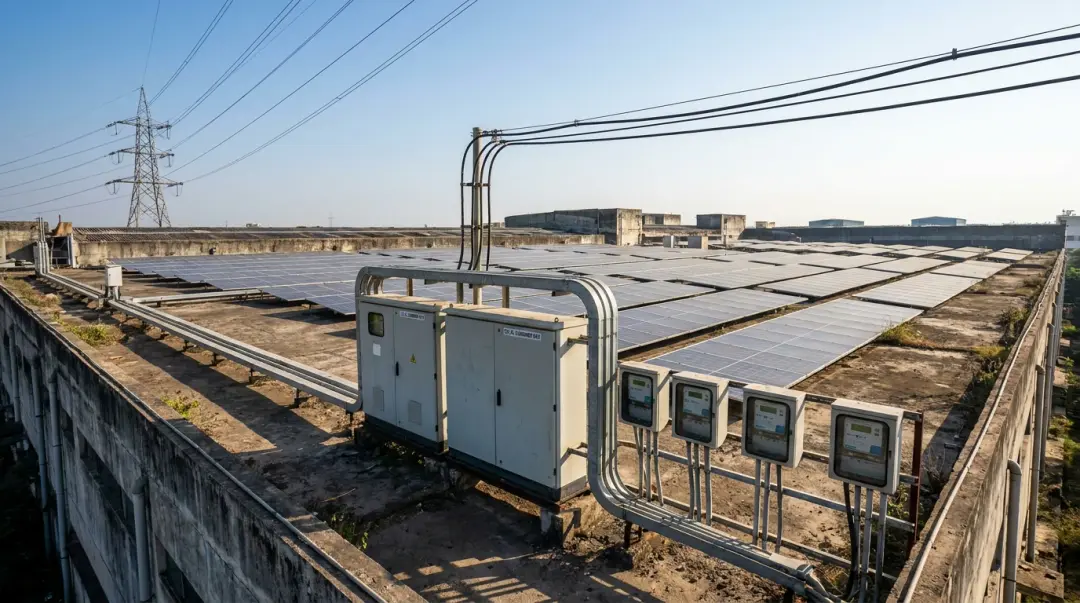
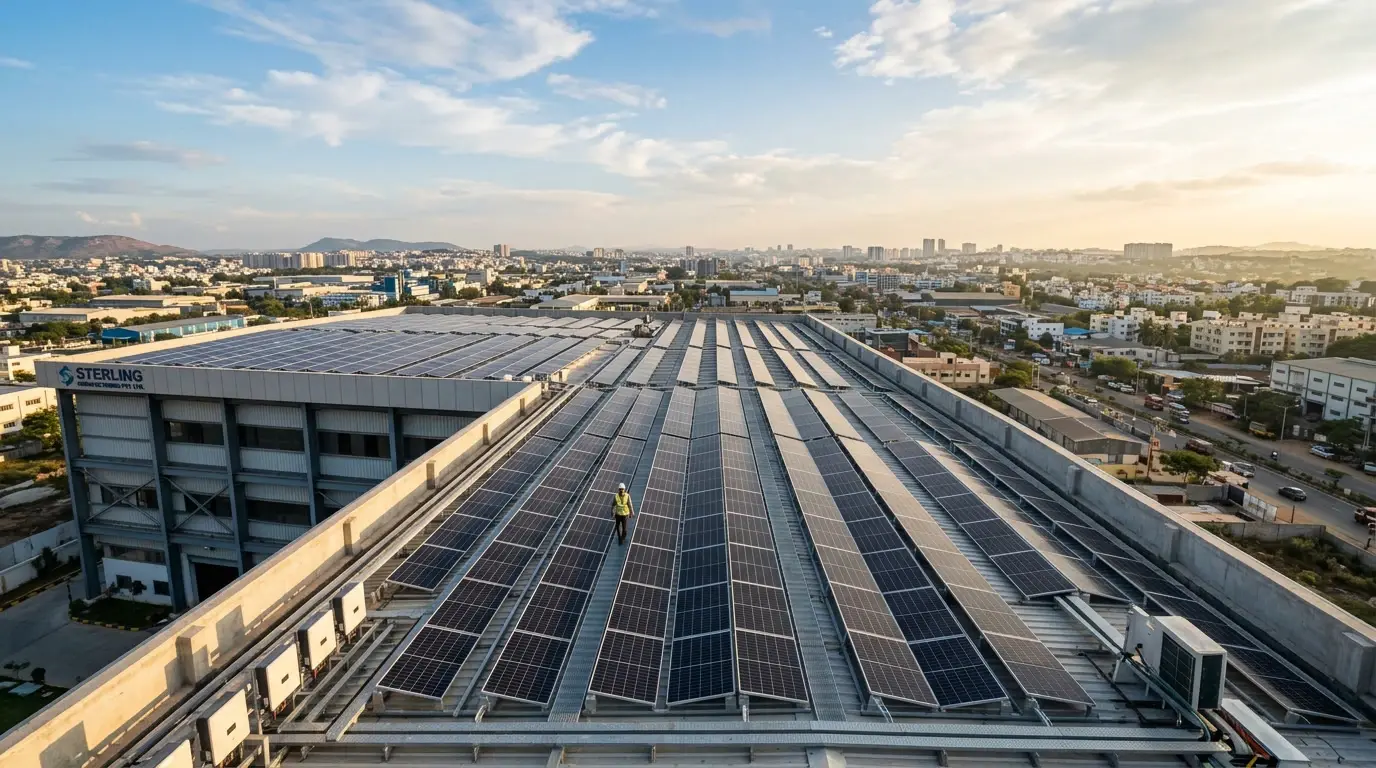
Commercial rooftop with multiple string inverters mounted on the parapet, feeding DC power from adjacent panel arrays.
What Is A String Inverter?
A string inverter connects to a smaller group, or "string," of solar panels, converting the DC power from that specific string into AC power. A larger installation typically uses multiple string inverters working in parallel, each handling its own section of the plant.
Key characteristics:
- Each string operates somewhat independently, so shading or a fault on one string has limited impact on the rest of the system
- Generally easier and less expensive to service, since a single unit can be repaired or replaced without affecting the whole plant
- Well suited to rooftops with multiple orientations, partial shading, or uneven sun exposure across different sections
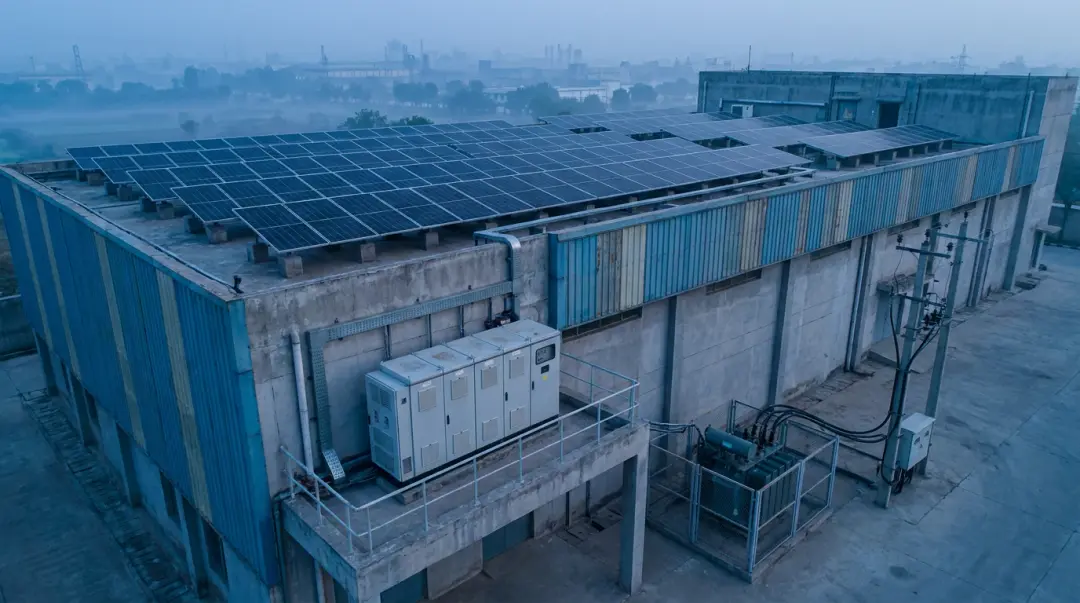
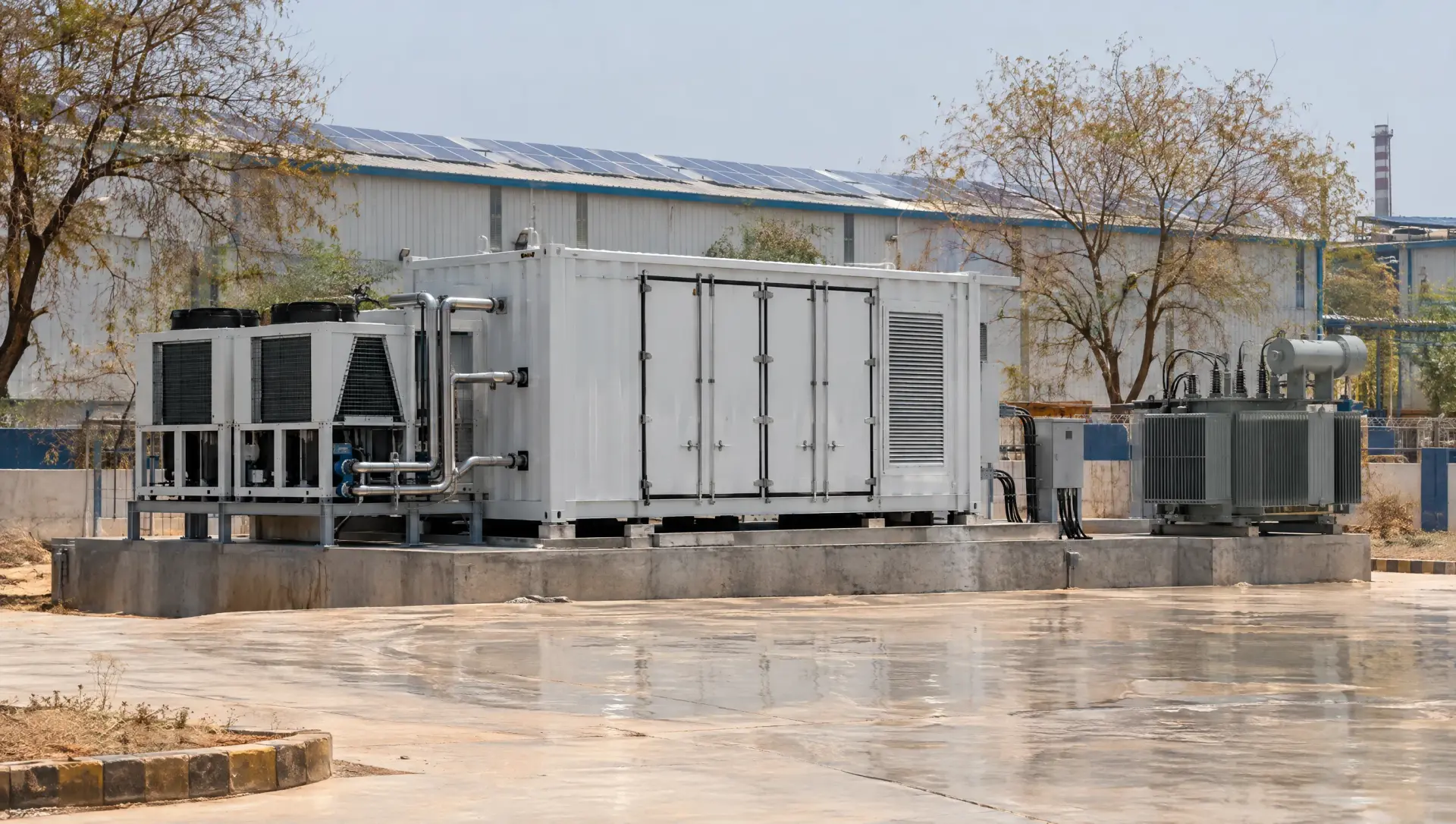
Large solar plant with a central inverter cabinet mounted on a ground platform, consolidating the DC output of an entire array.
Which Solar Model Fits Your Business?
Capex, Opex PPA, or Open Access — get a site-specific recommendation with system size, savings, and payback in 24 hours.
What Is A Central Inverter?
A central inverter consolidates the DC output from a large number of panels, often the entire plant, into a single large inverter unit that converts everything to AC power at once.
Key characteristics:
- Handles very high capacity through one centralized unit, common in utility-scale and large ground-mounted installations
- Generally has a lower cost per watt at very large scale, since one large unit can be more cost-efficient than many smaller ones
- A fault in the central inverter can affect the entire plant's output until it's resolved, since there's no redundancy across separate units
String Vs Central Inverters: The Real Differences
Impact Of Shading Or Faults
With string inverters, shading or a fault on one string affects only that string's output. With a central inverter, the same issue can affect a much larger portion of total generation, since everything runs through one unit.
Scalability
String inverters scale more flexibly, additional strings and inverters can be added incrementally as a facility's needs evolve. Central inverters are typically sized for the full plant upfront, making later expansion less straightforward.
Maintenance And Downtime
A string inverter failure is usually a smaller, faster fix, often without significantly affecting the rest of the plant's output. A central inverter failure tends to mean a larger share of the plant is offline until it's repaired, since there's no equivalent unit picking up the load.
Monitoring Granularity
String inverters typically allow for monitoring at the string level, making it easier to spot underperformance in a specific section of the installation. Central inverters generally provide plant-level monitoring, which can make it harder to isolate a localized issue quickly.
Cost At Scale
For very large installations, central inverters can offer a lower cost per watt due to economies of scale. For mid-sized commercial and industrial rooftops, string inverters are often more cost-effective and practical overall, once maintenance and flexibility are factored in.
Which One Suits Which Type Of Project?
String inverters tend to be the better fit for:
- Commercial and industrial rooftops with multiple roof sections, orientations, or partial shading
- Businesses that value granular, string-level monitoring to catch underperformance early
- Projects where minimizing downtime risk from a single point of failure matters
Central inverters tend to be the better fit for:
- Large, uniform ground-mounted installations with consistent sun exposure across the entire site
- Utility-scale or very large industrial projects where economies of scale outweigh the flexibility benefits of string inverters
- Sites where a centralized, simpler electrical layout is preferred over multiple distributed units
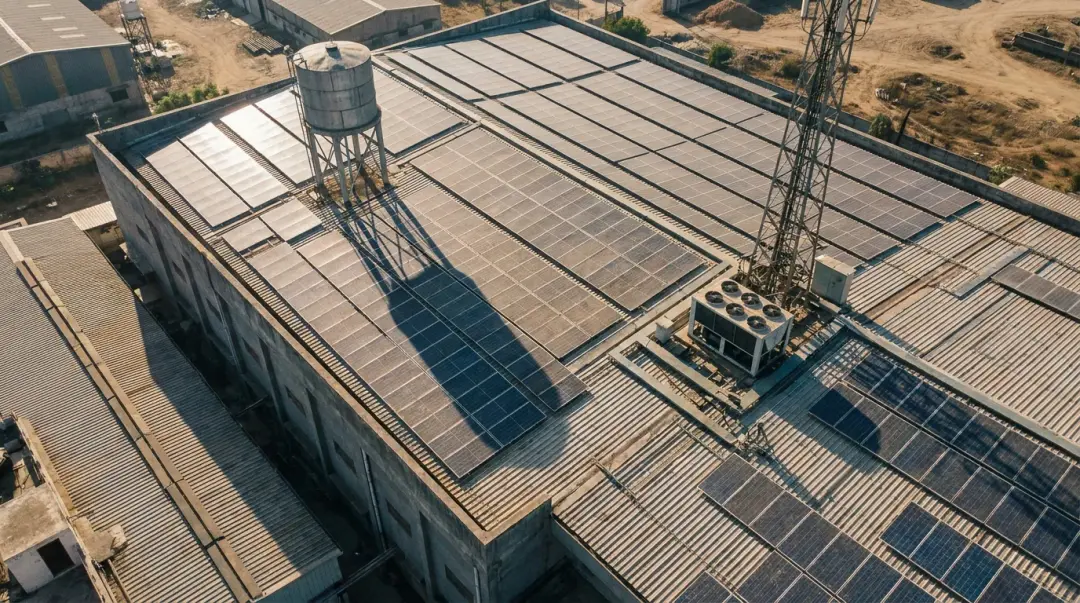
Solar engineer performing shadow analysis on a commercial rooftop with HVAC units and structural obstructions.
Does This Choice Affect Shadow Analysis And System Design?
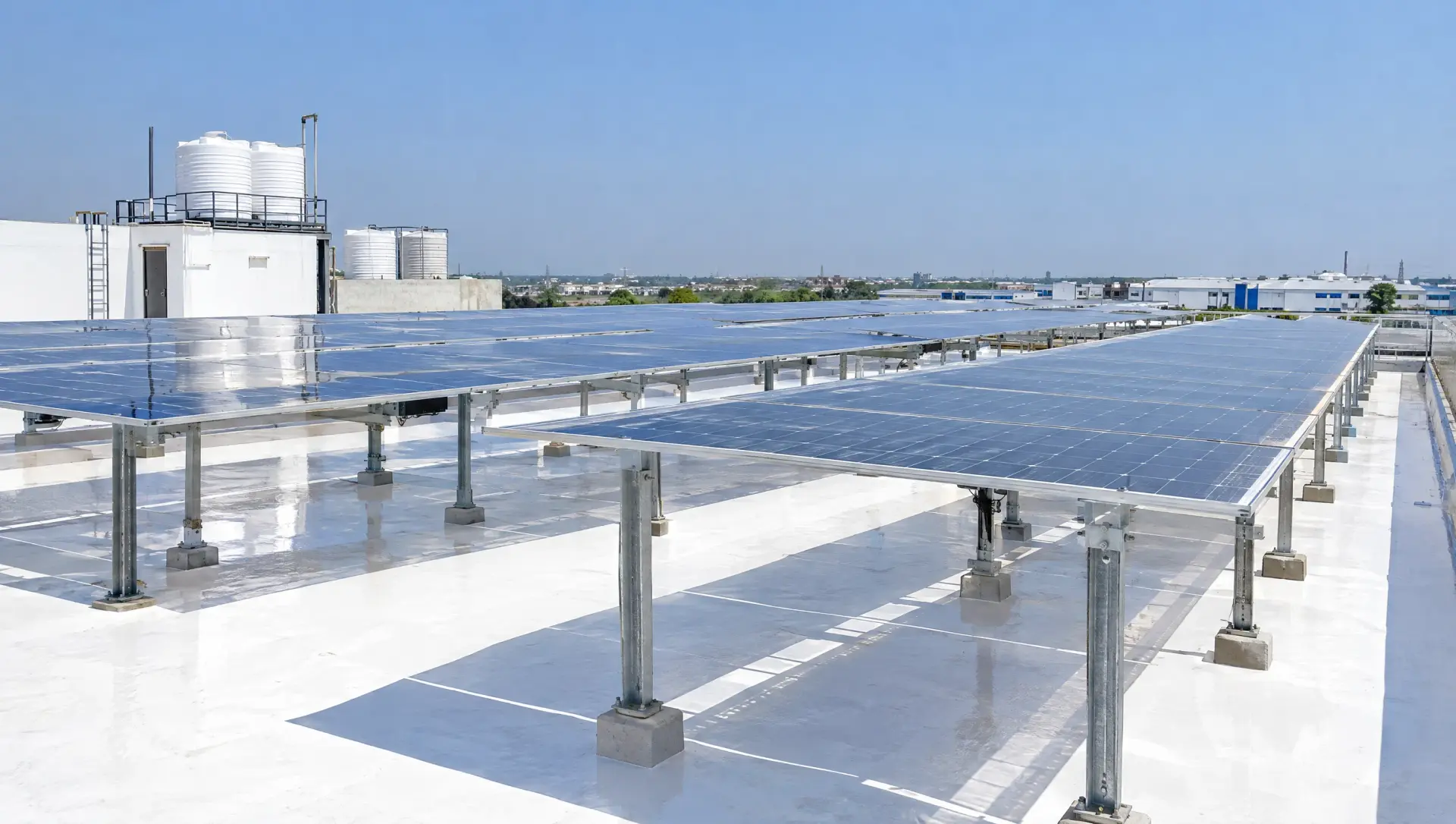
Yes, closely. A site with significant shading variability across different sections, common on commercial rooftops with HVAC units, water tanks, or adjoining structures, tends to benefit more from string inverters, since the impact of localized shading stays contained to individual strings rather than dragging down the entire plant's output.
This is one of several reasons a proper site assessment and shadow analysis should happen before finalizing inverter selection, not after.
Questions buyers ask us.
A string inverter handles a smaller group of panels independently, while a central inverter consolidates the output of a much larger number of panels into a single unit.
String inverters generally handle partial shading better, since shading on one string doesn't significantly affect the output of other strings in the system.
At a very large scale, central inverters can offer a lower cost per watt. For most mid-sized commercial and industrial rooftops, string inverters are often more cost-effective once maintenance and flexibility are considered.
Only the string connected to that inverter is affected, and it's typically a quicker, less disruptive repair compared to a central inverter failure.
Central inverters are more commonly used in utility-scale and large ground-mounted projects, due to their cost efficiency at very high capacity.
At PowerMore, inverter selection isn't a default decision, it's based on the actual site: roof layout, shading patterns, and scale of the installation. That means the choice between string and central inverters is made to fit the specific project, not applied as a one-size-fits-all standard.
Speak to our team to design the right inverter setup for your facility.