
Are Virtual PPAs Legal And Workable In India Yet?
CERC has finalized guidelines for virtual PPAs in India. See what changed, how the structure works, and who it's actually built for.
For years, the honest answer to this question was "legally unclear, proceed with caution." That has changed.
The Central Electricity Regulatory Commission finalized guidelines for virtual power purchase agreements in India through a notification dated December 24, 2025, published in the Gazette on January 28, 2026, followed by a detailed statement of reasons in April 2026 addressing industry feedback. Virtual PPAs are now a recognized instrument under Indian regulation. But recognition and practical workability are two different questions, and the second one still has real conditions attached.
What A Virtual PPA Actually Is
A virtual power purchase agreement is a financial contract, not a physical electricity supply arrangement.
No Physical Delivery
The buyer continues drawing power from its existing grid or DISCOM connection, exactly as before. No electricity physically flows from the renewable generator to the buyer.
Price Settlement Only
The buyer and a renewable generator agree on a fixed "strike price." The generator sells its actual power into the market at the prevailing market price. The difference between the strike price and the market price is settled financially between the two parties, regardless of where the buyer is actually located.
Renewable Attributes Transfer Separately
Renewable Energy Certificates or similar environmental attributes tied to the generation are transferred to the buyer, allowing the buyer to count that renewable output toward its own sustainability or compliance targets.
This structure is why VPPAs are sometimes described as "PPAs without wires": the financial and environmental benefits transfer, but the physical electricity does not.
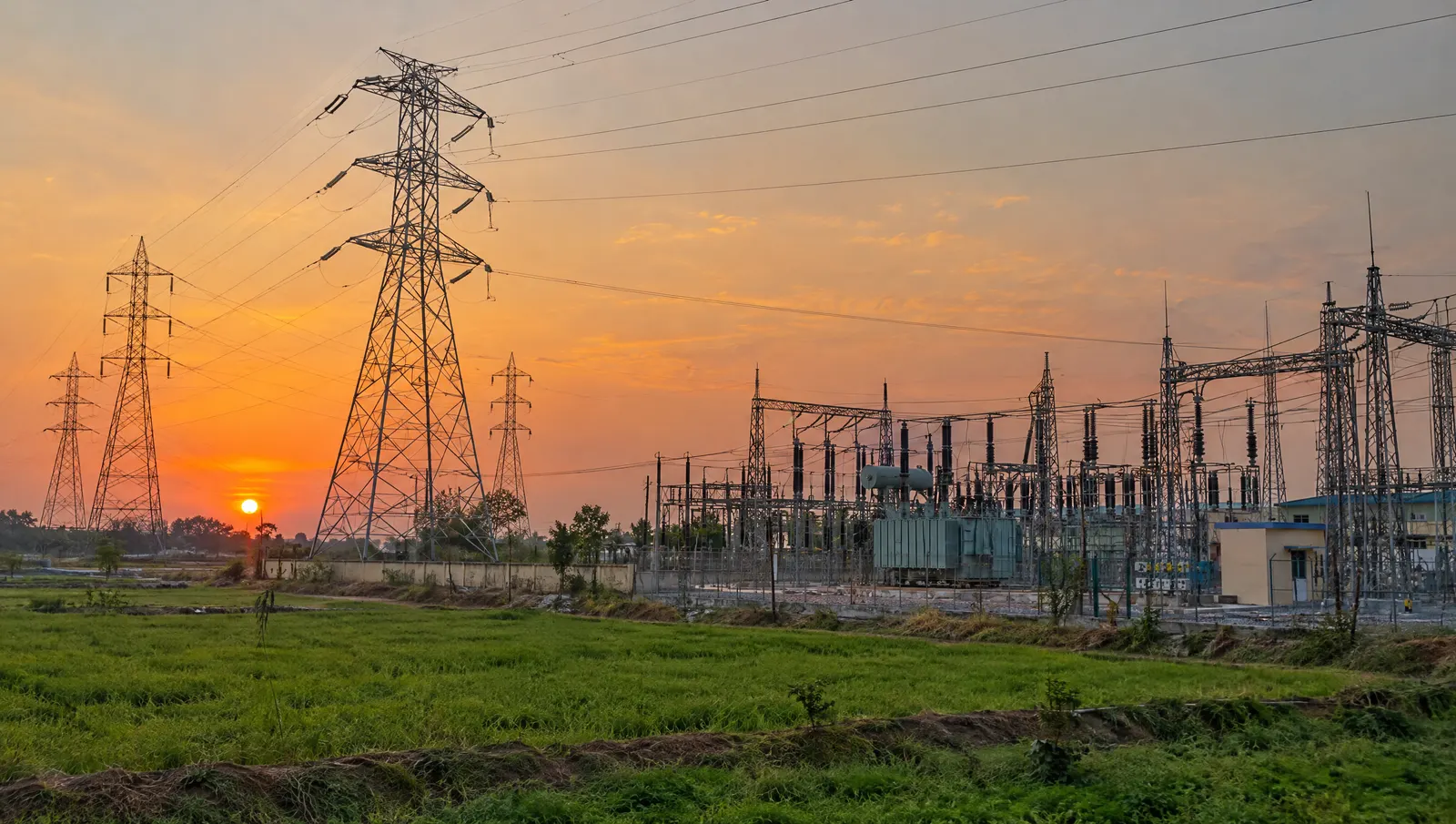
High-voltage transmission towers and a substation in rural India; under a virtual PPA, the buyer keeps drawing power from its existing grid connection.
Which Solar Model Fits Your Business?
Capex, Opex PPA, or Open Access — get a site-specific recommendation with system size, savings, and payback in 24 hours.
Why This Structure Exists At All
A business with facilities spread across multiple states, or with load in a state where local renewable procurement is limited or expensive, cannot always sign a conventional open access or group captive PPA tied to a specific site.
A virtual PPA removes that geographic constraint. The buyer can contract with a renewable generator located anywhere in the country, without needing wheeling arrangements, transmission access, or physical proximity to that generator.
What Changed With The CERC Guidelines
Before this framework, VPPAs existed in India but operated in a grey zone, used by some large corporates without a clear regulator or defined legal status. Jurisdiction was contested between CERC and the securities regulator SEBI, since VPPAs resemble financial derivative contracts as much as power contracts.
SEBI clarified in early 2025 that VPPAs are bilateral, non-tradeable, over-the-counter contracts, placing regulatory oversight with CERC rather than securities law. CERC's subsequent guidelines then defined the structure formally, and a related amendment to Renewable Energy Certificate regulations followed shortly after, introducing formal definitions for VPPAs within that framework.
Following this, the Solar Energy Corporation of India issued a tender in April 2026 to aggregate demand from eligible consumers interested in VPPA-based renewable procurement, working toward competitive price discovery for future VPPA transactions. It is an early sign of the framework moving from paper to active market use.
Who This Is Actually Built For
This is the part that matters most for a business evaluating whether to look into it.
Virtual PPAs are primarily relevant to:
- Large corporates with renewable consumption obligations or sustainability commitments spanning multiple states
- Businesses whose local state offers poor open access or group captive economics
- Organizations seeking renewable attributes for reporting or compliance purposes without needing physical power delivery
- Multi-site operators consolidating renewable procurement into a single contract rather than managing separate state-wise arrangements
It is not, currently, a practical substitute for rooftop solar, open access, or group captive arrangements for a single-site factory or facility with a straightforward local power procurement need. Those routes remain simpler, and typically cheaper, for a business with one or a handful of sites in one state.

Finance and sustainability team at an Indian company reviewing a long-term renewable energy contract.
What A Business Should Still Verify Before Considering One
Even with formal recognition in place, a few things are worth checking before entering a virtual PPA:
- Whether the specific transaction structure aligns with the finalized CERC guidelines, given the framework is still new and market practice is still forming
- How the counterparty's creditworthiness and long-term viability are assessed, since settlement is a financial obligation over a long contract term
- Whether the Renewable Energy Certificate transfer mechanism under the amended REC regulations meets the business's specific compliance or reporting requirement
- Whether a simpler, site-based procurement route already meets the business's needs, before pursuing a more complex structure designed for multi-state portfolios
Questions buyers ask us.
Yes. As of the CERC guidelines finalized in December 2025 and gazetted in January 2026, virtual PPAs now have a defined regulatory framework in India.
A regular or physical PPA involves actual delivery of electricity to the buyer, typically through open access or group captive arrangements. A virtual PPA is purely financial: no electricity is physically delivered, and only the price difference and renewable attributes are exchanged.
The Central Electricity Regulatory Commission regulates VPPAs, following a 2025 clarification from the securities regulator SEBI that placed these contracts outside securities law jurisdiction.
Generally, no. Virtual PPAs are built for large, multi-site corporates managing renewable procurement or compliance obligations across states. A single-site facility is typically better served by rooftop solar, open access, or group captive arrangements.
It is in early stages. Following the CERC guidelines, SECI issued a tender in April 2026 to aggregate demand and work toward competitive price discovery, marking the framework's initial move toward practical implementation.
At PowerMore, we track evolving renewable procurement structures like virtual PPAs to help businesses understand the full landscape, even when a business's own needs point toward a more direct route like rooftop solar or open access.
Talk to our team about the right renewable procurement route for your business.