
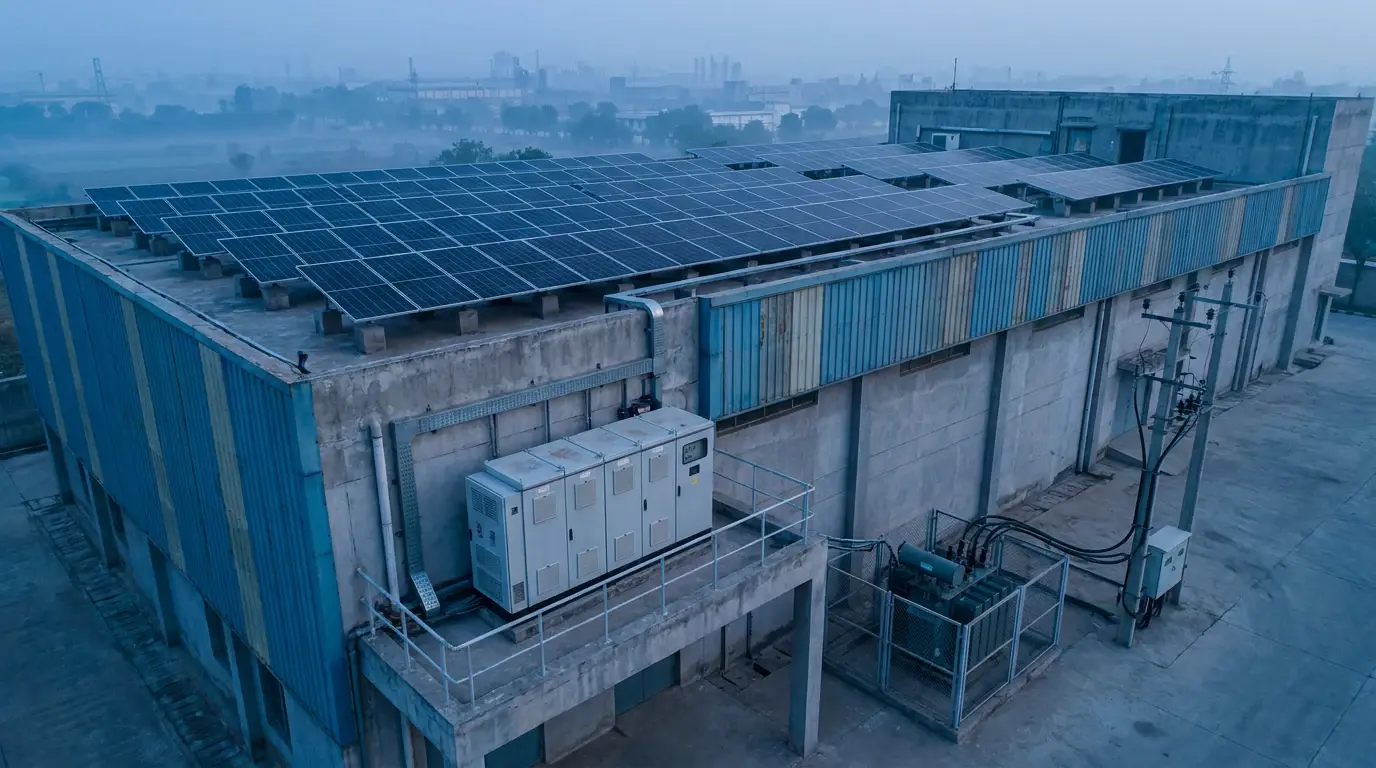
What Is BESS? Battery Storage For Solar Explained
What is a Battery Energy Storage System (BESS) and why does it matter for solar? Here's how BESS works, its costs, and the savings it brings to businesses.
A solar plant has one limitation: it only generates when the sun is out.
For years, that meant surplus daytime generation either got exported to the grid at low buy-back rates or simply went to waste, while the facility still paid full price for grid power at night. Battery Energy Storage Systems, or BESS, are what's changing that equation.
What Is A Battery Energy Storage System?
A BESS is an integrated system of batteries, power conversion equipment, and management software that captures electrical energy and releases it on demand.
Paired with a solar plant, it works alongside the panels: surplus energy generated during the day gets stored in the battery bank instead of being exported to the grid or wasted, and released later, at night, during a power cut, or whenever the facility actually needs it.
In simple terms: solar generates the power, BESS decides when it actually gets used.
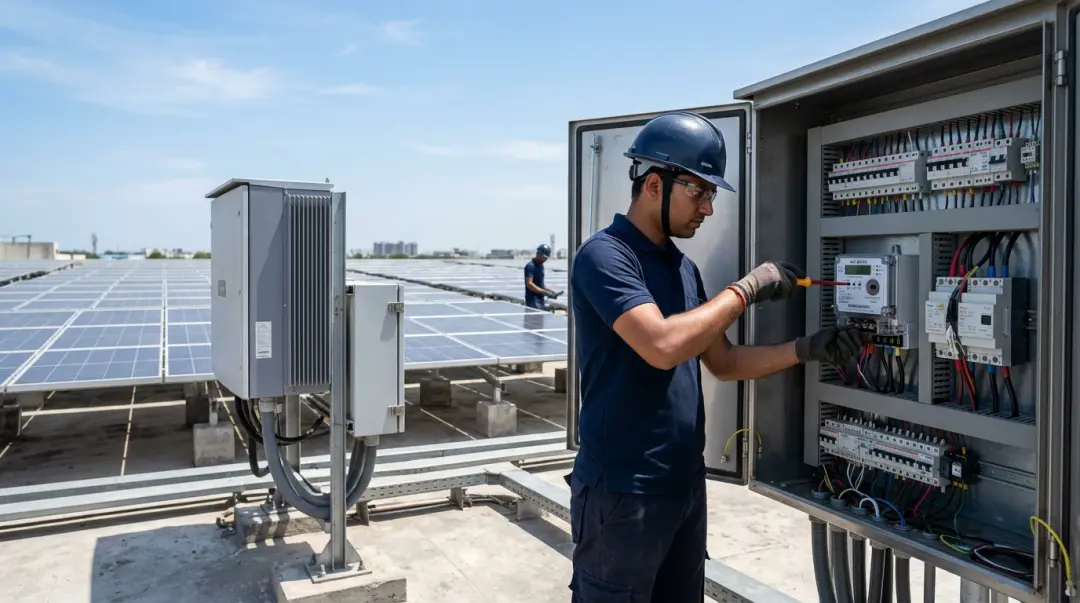
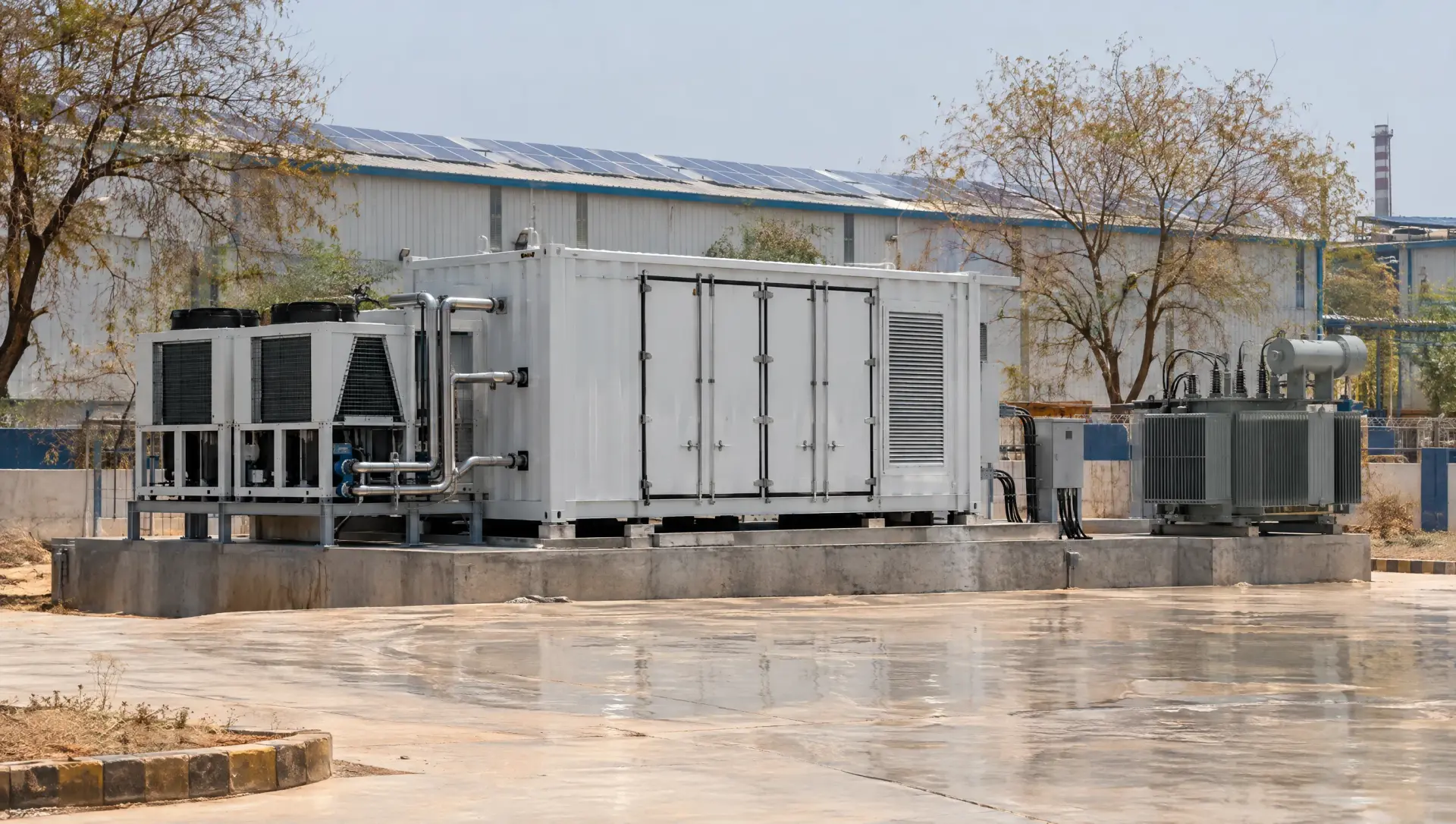
Close-up of a lithium battery storage cabinet installed alongside a solar plant, with inverter and BMS equipment visible.
Which Solar Model Fits Your Business?
Capex, Opex PPA, or Open Access — get a site-specific recommendation with system size, savings, and payback in 24 hours.
What Does A BESS Actually Consist Of?
Battery Modules
Most commercial and industrial systems today use LFP (Lithium Iron Phosphate) cells, valued for their long lifecycle and stability compared to older chemistries.
Battery Management System (BMS)
Monitors battery health, temperature, and charge levels, protecting the system from overcharging or damage.
Power Conversion System (Inverter)
Converts stored DC energy back into usable AC power for the facility.
Energy Management System (EMS)
The intelligence layer that decides when to charge, when to discharge, and when to draw from the grid instead, optimizing for cost and reliability.
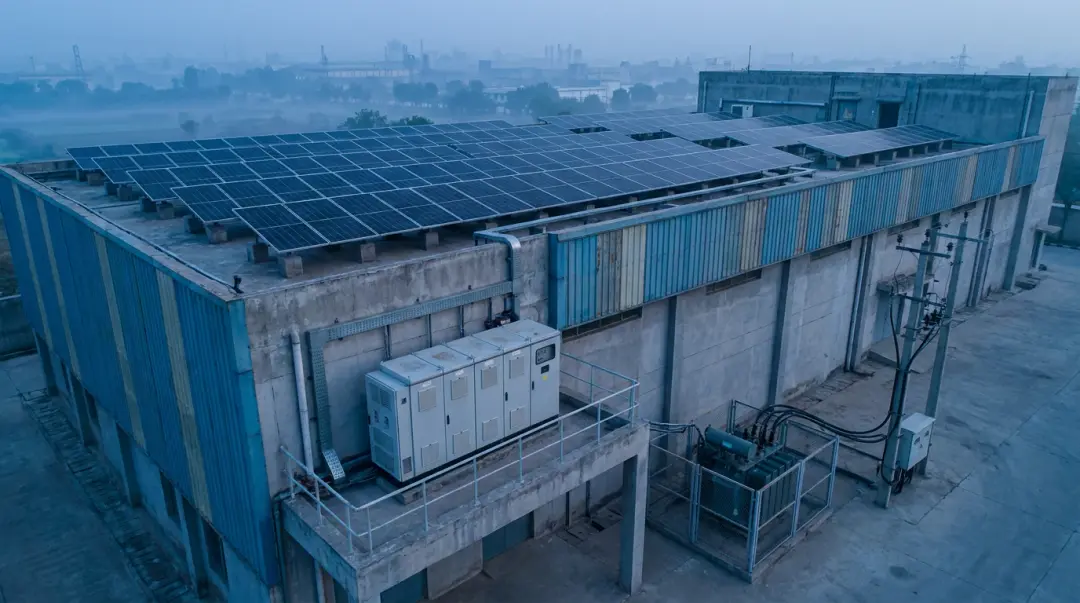
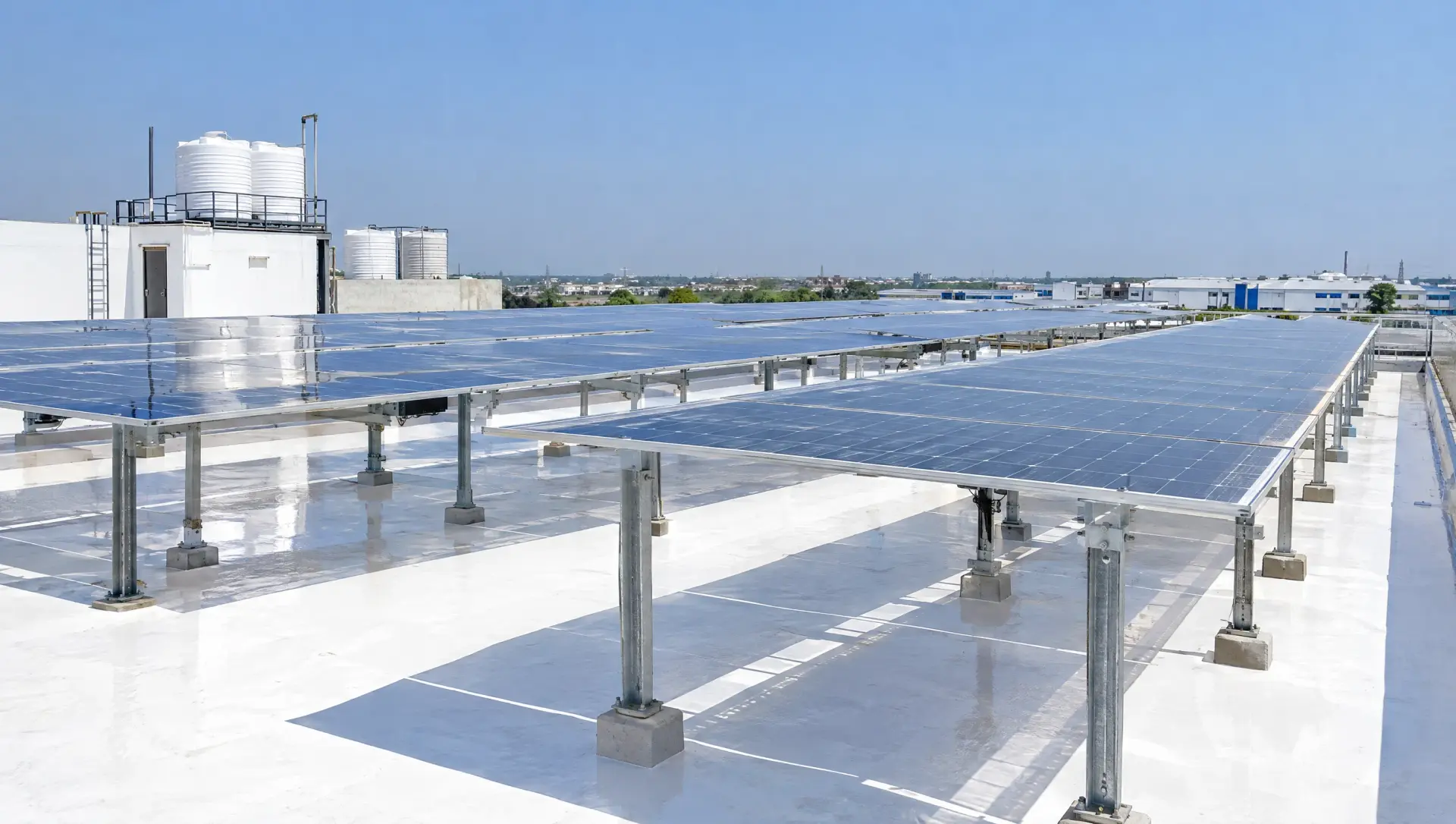
Hybrid solar system on a data centre rooftop showing panels, battery storage cabinet and grid connection working together.
Why Does Battery Storage Matter For Solar?
Peak Demand Shifting
Electricity tariffs are significantly higher during peak hours, typically evening hours. A BESS charges during off-peak, low-cost hours and discharges during peak hours, meaning the facility draws less expensive grid power exactly when it would otherwise cost the most. Businesses on Time-of-Day tariffs can see meaningful reductions in their overall electricity bill as a result.
Maximizing Solar Self-Consumption
Without storage, a solar system's surplus generation is either exported at low buy-back rates or lost entirely once the facility's daytime load is met. BESS captures that surplus and makes it available after dark, dramatically increasing how much of a facility's own solar generation actually gets used, rather than sent back to the grid for a fraction of its value.
Backup During Outages
For facilities where downtime carries a real cost, cold storage, data centres, continuous manufacturing lines, BESS provides seamless backup, keeping critical operations running through a grid outage rather than shutting down like a standard on-grid system would.
A Hedge Against Rising Tariffs
Electricity tariffs in India have risen consistently over time. Investing in BESS today effectively locks in a portion of a facility's energy cost, insulating it from future tariff increases.
What Does BESS Cost, And Is It Worth It?
Costs have fallen sharply in recent years, competitive bids for battery storage in India dropped from roughly ₹10 per kWh in 2022-23 to approximately ₹2.8 per kWh by 2025-26, driven by falling battery prices and improved domestic manufacturing.
For most commercial users, a solar-plus-BESS setup typically delivers a payback period of around 4-6 years, against a system lifespan of 10-15 years, meaning several years of meaningfully reduced energy costs after the investment pays for itself. Businesses on Time-of-Day tariffs commonly report bill reductions in the range of 30-40% once peak-shifting is properly optimized.
Worth noting: exact costs vary by battery chemistry, system scale, and site-specific factors, so these figures should be treated as a general planning reference rather than a fixed quote.
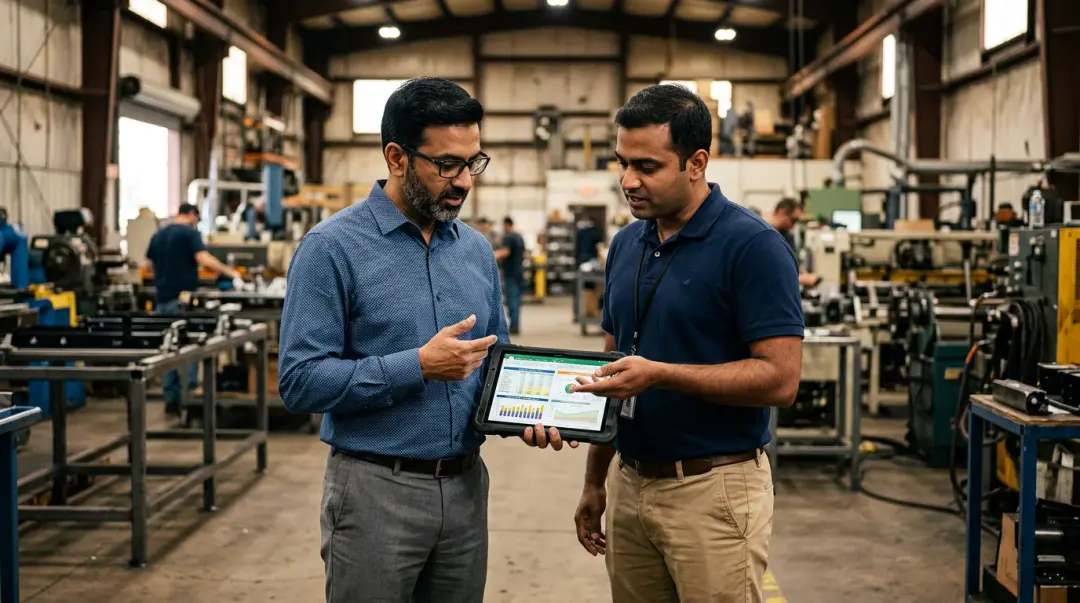
Business owner reviewing a solar-plus-BESS cost breakdown on a tablet with a solar advisor on the manufacturing shop floor.
Is BESS The Same As A Hybrid Solar System?
Closely related, but not identical. A hybrid solar system refers broadly to a grid-tied solar plant with battery backup, allowing it to keep operating during a grid outage.
BESS is the storage component itself, the actual battery, inverter, and management system that makes that hybrid capability possible. In practice, choosing a hybrid solar system means choosing to include a BESS as part of the overall design.
Is BESS Right For Every Business?
Not necessarily. BESS tends to make the most sense for:
- Businesses on Time-of-Day tariffs with a meaningful gap between peak and off-peak rates
- Facilities where power outages carry real operational or financial cost
- Businesses with high daytime solar generation but significant evening or nighttime consumption
- Facilities in states with rising industrial tariffs, where locking in costs today has clear long-term value
Businesses with modest, stable daytime-only consumption and minimal outage risk may find a standard on-grid solar system, without storage, remains the simpler and more cost-effective choice for now.
Questions buyers ask us.
Battery Energy Storage System, an integrated setup of batteries, inverters, and management software that stores and releases electrical energy on demand.
Yes, BESS is typically added to a grid-tied solar system to create what's known as a hybrid solar system, allowing stored energy to be used during outages or peak tariff hours.
Most lithium-based commercial battery systems have a lifespan of 10-15 years, depending on usage patterns and battery chemistry.
Often, yes, particularly for businesses on Time-of-Day tariffs or those where power outages carry real operational costs, with typical payback periods of 4-6 years.
Yes. Unlike a standard on-grid solar system, which shuts down during an outage, a system with BESS can continue supplying power to the facility.
At PowerMore, BESS isn't recommended as a default add-on, it's evaluated against a business's actual tariff structure, outage risk, and consumption pattern. That way, the decision to include battery storage is based on real numbers and real operational needs, not a generic upsell.
Speak to our team to evaluate battery storage for your solar system.